

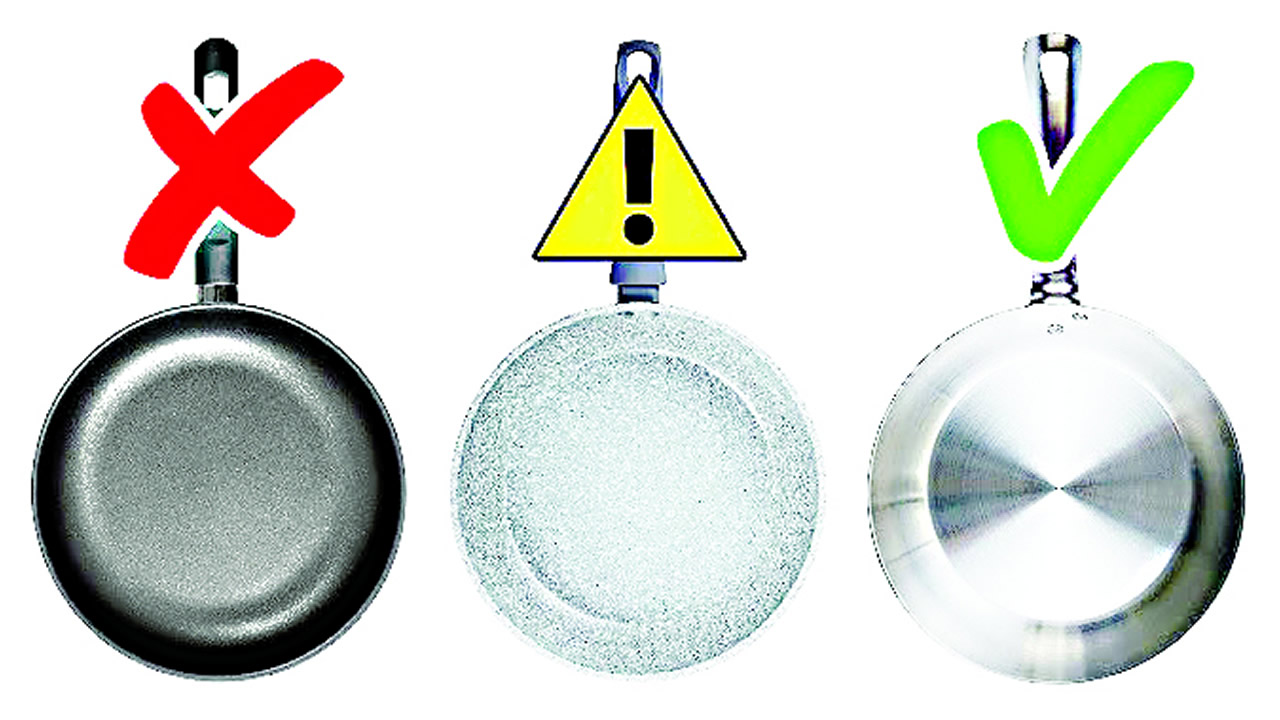
Is your cookware safe? Or is it off-gassing toxic chemicals that get into your food and body? These days, you can choose from an overwhelming number of cookware options: stainless steel, cast iron, ceramic, copper, aluminum, and clay, along with many surfaces marketed as nonstick. Some of these are safe and nontoxic, while others can be bad for the health of your family and pets and even bad for the planet.
So how do you know what the safest cookware is and what types of cookware you should avoid?
Here are a few things to avoid in cookware to maximise safety:
- Anything branded “non-stick:” The phrase “non-stick” really should be a red flag in your cookware collection. Although nonstick cookware can save you the trouble of having to oil your pan to prevent food from sticking to it, nonstick doesn’t mean nontoxic. Many nonstick cookware options have PTFE coatings synthetic polymers that also go by the name Teflon.
Teflon cookware is not a nontoxic option. But if you must cook with nonstick pans, make sure to use low or medium heat and stir with a wooden spoon to minimise chemical exposure.
- Silicone: Technically, silicone baking pans and mats are neutral, but they’re not the best, healthiest option. Some brands (especially the cheaper ones) use fillers that may release toxic fumes. Putting parchment paper on safe cookware is a great alternative to silicone.
- Aluminum: Stainless steel is a safer alternative to aluminum, which can be dangerous if it leaches into your food.
What to Look for in Safer Cookware
Generally speaking, here are a few things to look for in terms of safer alternatives:
- Stainless steel: Nickel-free stainless steel is ideal, since nickel can leach into more acidic foods. Look for stainless steel cookware with the number 18/0 printed on it. This tells you that you’re dealing with a heavy duty, nickel-free product that’s perfect for non-toxic pan roasting, stir frying, and sauteing.
- Cast iron: Cast iron cookware is considered classic for a good reason. It’s great for preparing meats, veggies, burgers, potatoes, and, well, pretty much everything else. When you take good care of your cast iron pans, they can work even harder for you! I share more about how to do this later on in this post.
- Glass: As long as it’s not manufactured with lead, glass cookware is a nice option.
- Enameled cast iron or steel: These materials work well for roasting, braising, stewing, and sauces. Stay away from anything marketed as “non-stick” enameled cast iron. They may be made with PFAs.
















Leave a comment