

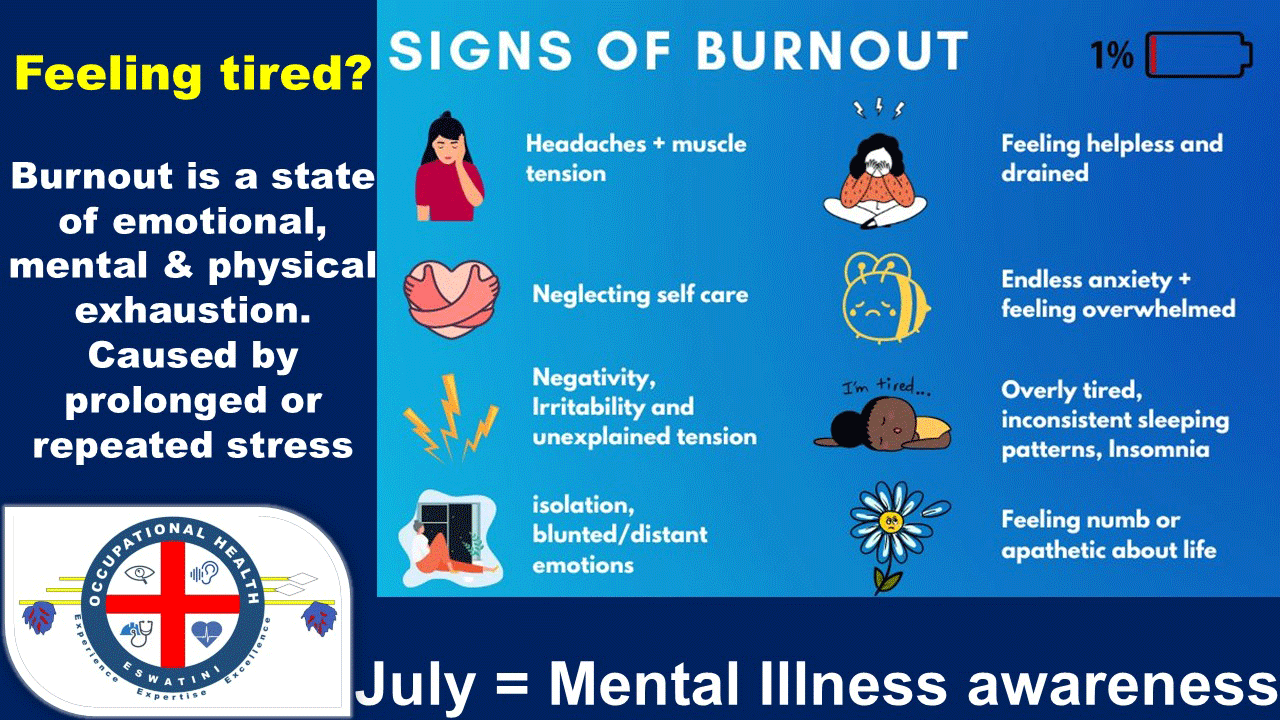
BURNOUT syndrome is more than just stress. It is mostly limited to an occupational condition which affects your mental and physical health as well as your work performance and relationships.
The World Health Organisation (WHO) defines Burnout Syndrome as an unmanaged and chronic occu-pational stress. But some argue that academic studies and caregiving related stress should also be included.
Common work factor triggers include:
• Conflict with supervisors or co-workers.
• Emotional labour.
• Poor working hours, i.e. long and strenuous work shifts, night shifts or regular overtime.
• Role conflict and ambiguity.
• Unrealistic work overload de¬mands.
Common signs and symptoms:
• Exhaustion is one of the most recognised symptoms and con¬sidered to be the ‘core’ of Burnout Syndrome.
• Feelings of dread and demoti¬vation associated with work (or school or caregiving).
• Wandering mind while you’re at work, making focus and complet¬ing assigned tasks difficult.
• Lack of quality sleep
• Inconsistent appetite, i.e. skip¬ping meals, having no appetite or mindlessly eating comfort foods, even when not hungry.
• Cynicism and irritability are im¬portant symptoms and can pres¬ent with irritability or anger to¬wards co-workers and customers.
• Feeling useless and a drop in work efficacy.
• Frequent headaches with severity and frequency often linked to the extent of strain experienced.
• Gastrointestinal symptoms are common with Burnout Syn¬drome. Studies indicate the pres¬ence of symptoms to be as high as 64.5 per cent for stomach pains; 57.2 per cent for constipation, loose bowels or diarrhoea; And 63.5 per cent for nausea, gas or indigestion.
Recovery starts with recognising the symptoms, followed by imple¬menting steps like these:
• Rethink screen time as continual email monitoring or working on the go at all hours of the day can contribute to Burnout Syn¬drome. TIP: Set boundaries and consciously reduce screen time to help reduce symptoms.
• Taking a break can be one of the most powerful tools in recovering from Burnout Syndrome. TIP: Ad¬hering to work breaks and taking leave days could be beneficial.
• Be open to change which will foster your mental health. This could include changes in your work description, workplace or even home environment.
• Talk with a professional about your experience and symptoms. Even though Burnout Syndrome isn’t considered to be a medical condition, it can significantly impact your quality of life.
If left untreated. Burnout Syndrome can affect your career, relationships and your health, i.e. weight gain, increased risk for cardiovascular diseases, Type 2 Diabetes Mellitus, muscle and joint pains and even an early death.
Follow The Times of Eswatini (X) and @dr.thys (Instagram) for more health hacks. Send queries to ohesmngr@gmail.com.


















Leave a comment