

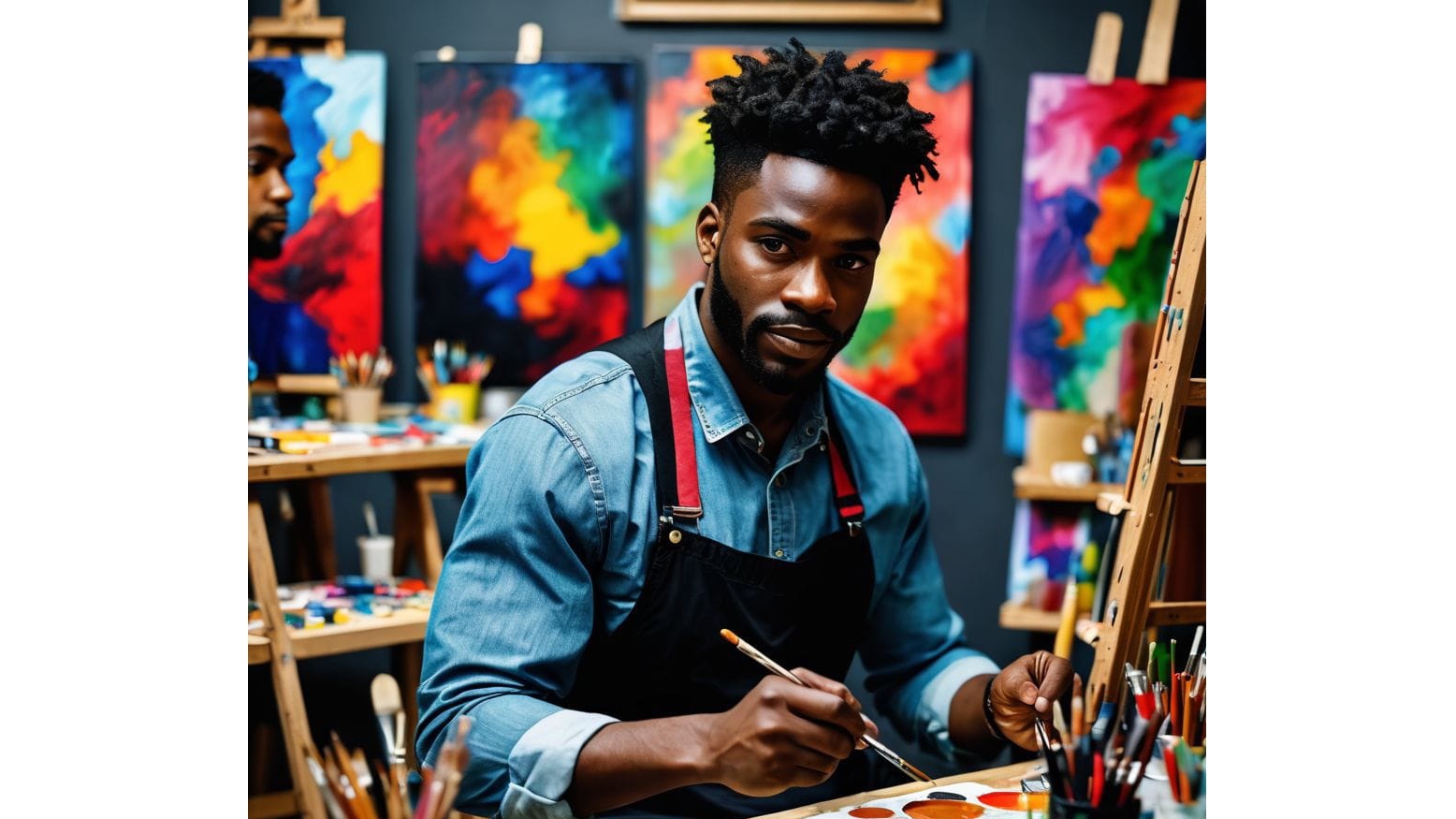
The concept of lifelong learning is no longer a luxury; it has become essential. For mature student Sifiso Zwide, this journey has taken an artistic turn, proving that upskilling is not just about career advancement. It also about unlocking creative potential and personal fulfilment.
Pursuing art: Path to self-expression and success
Currently based in Taiwan as an English teacher, Zwide enrolled in art classes to explore a long-held passion. What started as a hobby has evolved into a serious pursuit of painting, with the potential to transform into a professional path. “As someone who dreams of becoming a recognised artist, this programme has been the perfect foundation. It sharpens my skills, builds my confidence and allows me to explore colour, form and composition—elements essential to expressing my vision on canvas,” he says.
Why up skilling through art matters
For Zwide, learning to paint goes beyond mastering techniques; it’s about adapting to the demands of an ever-changing world while staying creatively fulfilled. “Upskilling is no longer optional, it’s the key to remaining relevant and inspired. Art challenges me to see the world differently, to interpret emotions and ideas visually. This journey isn’t only about personal growth; it’s about developing the discipline and creativity needed to succeed as an artist and contribute meaningfully to society,” he explains.
The discipline behind the canvas
Balancing work, art classes and personal time is no small feat. Zwide admits it requires structure, late nights and occasional sacrifices. “Creativity thrives on discipline,” he says. “I keep a strict schedule for sketching and painting, but I also make time to recharge by reading novels and reflecting on new ideas. Every brushstroke is better when my mind is clear and inspired.”
Zwide’s 7 tips for success in learning art
• Create a practice schedule: Allocate time for sketching, painting and studying art theory.
• Stay organised: Use a journal to track creative progress, deadlines and upcoming exhibitions or workshops.
• Engage actively: Experiment with different mediums and styles rather than only studying them passively.
• Take creative breaks: Step away from the easel to observe nature, visit galleries or read; these moments spark fresh ideas.
• Prioritise well-being: A healthy mind and body translate into better focus and sharper artistic skills.
• Collaborate with fellow artists: Exchange techniques, critique each other’s work and share inspiration.
• Seek mentorship: Guidance from experienced artists or tutors can accelerate growth and refine technique.
Statement of courage
Being a mature student comes with its challenges, late nights, self-doubt and countless hours of practice; but Zwide sees it as a deeply rewarding experience. He says becoming an artist is about more than acquiring a skill – it is a declaration of determination. “Each canvas is proof that it’s never too late to chase a dream,” he reflects. “Painting has taught me patience, resilience and courage. If I can take this leap, anyone with a passion for art can do the same.”
Early works: Glimpse into Zwide’s emerging style
Zwide’s first completed pieces reveal a vibrant colour palette contrasts and textured brushwork. The artwork visible behind him seems to be abstract paintings – bold splashes and blends of vivid colours like red, yellow, blue and green, creating a sense of energy and motion. “My early works are experimental – a journey of finding my voice,” he shares. “Each canvas feels like a conversation between where I’ve been and where I’m going.”













Leave a comment