

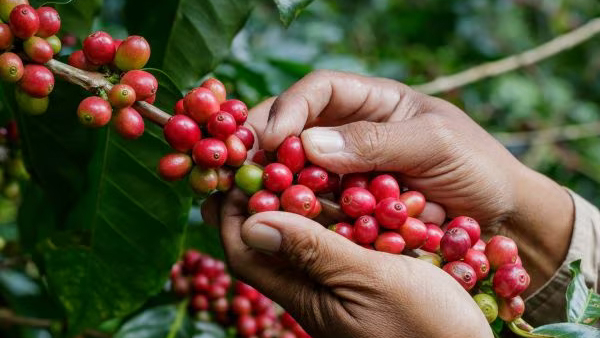
The global coffee market is a multi-billion-pound powerhouse, with consumer demand for high-quality, ethically sourced beans at an all-time high.
While industry giants like Brazil and Colombia dominate, savvy investors are always on the hunt for the next big thing; a new region with untapped potential. In the country, this potential is already brewing, spearheaded by local pioneers and backed by government vision.
Eswatini’s budding coffee sector is anchored by two companies: Mabuda Farm and Eswatini Coffee. The latter is the brainchild of local farmers Patrick Du Pont and Eddie Mkhatshwa, who, starting with just three hectares in 2018, have grown their operations to approximately 4.3 hectares.
Their success led to the formation of the Eswatini Coffee Association (ECA) in 2018, which now represents 228 farmers and has recorded a growth of at least half a tonne every year since its first harvest in 2021. This consistent growth is attributed to the increasing maturity of the coffee trees and a commitment to organic farming methods.
A recent, high-profile visit by Prime Minister Russell Dlamini to Ethiopia’s renowned coffee heartland in Jimma, has laid the groundwork for a bold new economic vision. Far from a casual tour, the prime minister’s trip was a deep dive into a system that has long balanced commercial success with community empowerment.
Prime Minister Dlamini was reportedly impressed by Jimma’s thriving coffee sector, which not only generates substantial income, but also provides a robust employment pipeline for young people through sustainable agroforestry and integrated farming.
“Jimma is the cradle of coffee and we witnessed firsthand how coffee growing sustains livelihoods, especially for our youth,” he said.
The Ethiopian model, he noted, demonstrated how coffee production can be both economically and environmentally sustainable.
The prime minister, who confessed to indulging in six cups of Ethiopia’s finest, returned convinced that Eswatini possesses the ideal resources and climate for coffee cultivation.
“It is time we take coffee cultivation to the next level in the kingdom,” he declared.
“This sector has real potential to transform our economy, create jobs and provide livelihoods, particularly for our young people.”
For investors, this marks a compelling opportunity. Eswatini’s government is clearly committed to a long-term, scalable plan. By adapting Ethiopia’s tried-and-tested systems, the nation isn’t starting from scratch. Instead, it will be utilising proven methods for sustainable farming, processing techniques and market linkages, drastically reducing initial risks and shortening the path to profitability.
The ECA has already taken proactive steps, with a consultant from Burundi visiting to capacitate local farmers on quality and processing before engaging with international markets. The association, which primarily farms Arabica beans, has also introduced the Robusta variety to diversify its offerings. This move positions Eswatini to meet various market demands, including the growing trend for Arabica and Robusta blends, which are popular in brands like Lavazza.
Through government support and the Eswatini Investment Promotion Authority (EIPA), the ECA is already forging international markets in countries like Taiwan.
The association, through its 228 farmers, currently produces green coffee beans, but has acquired a roasting machine through a partnership with the European Union.
This will allow for the production of roasted beans, a crucial step towards creating a value-added product that will be sold in local shops and increase profitability.



















Leave a comment