

Madam,
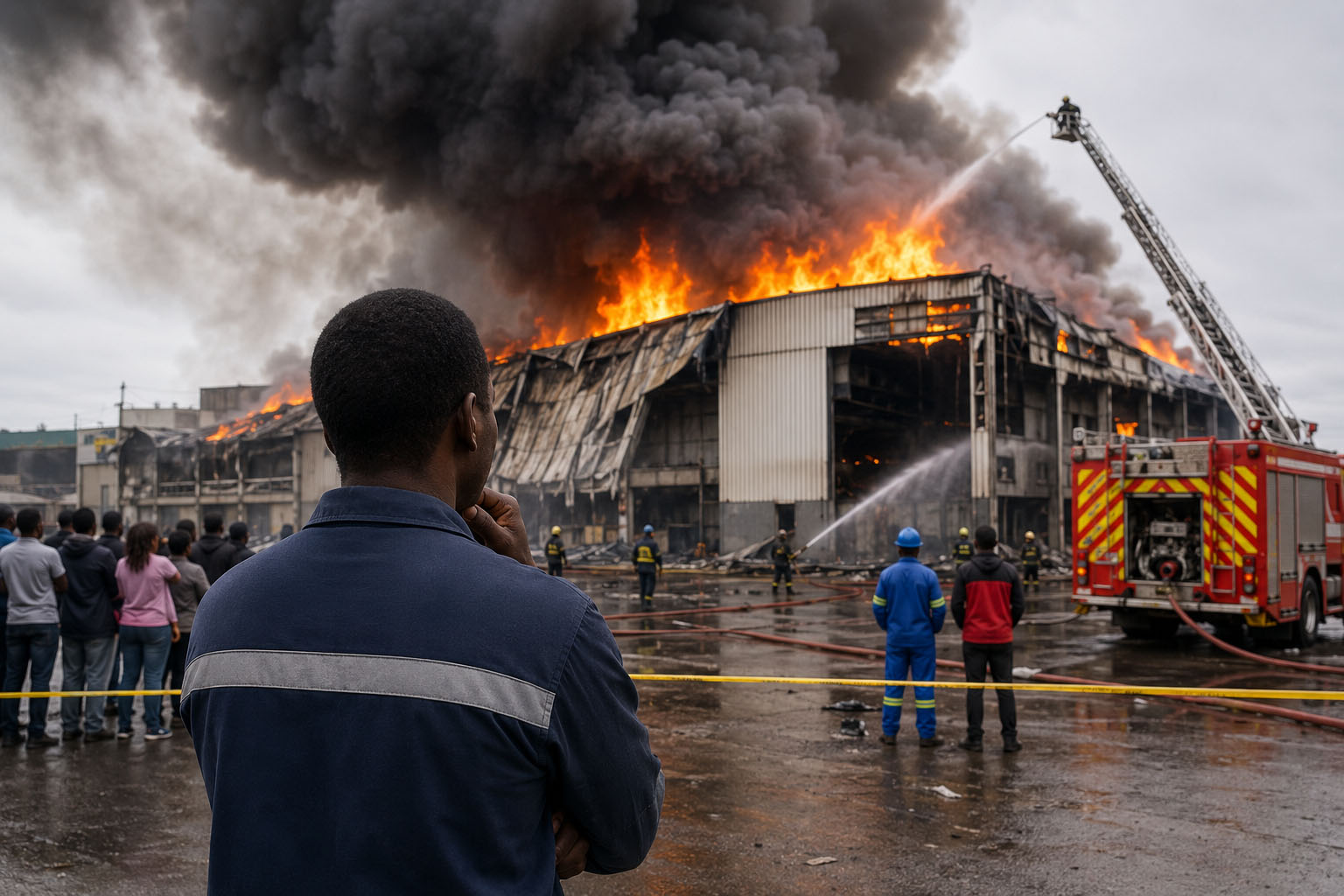
Another business burns. Another plume of black smoke rises above our towns. Another group of workers goes home wondering whether they will ever return to their jobs. And another wave of speculation sweeps across Eswatini.
Our country appears to be experiencing an unsettling pattern of commercial fires affecting shops, warehouses, factories and farms. While each incident has its own circumstances, one common thread has emerged: The public is increasingly asking questions that our institutions are failing to answer.
In the absence of timely and transparent investigations, rumours flourish. Some citizens speculate about electrical faults, others point to negligence, while still others question whether financial incentives such as insurance payouts deserve greater scrutiny. Whether any of these suspicions have merit is not for public opinion to decide; it is the responsibility of investigators.
However, the persistence of these questions reveals something equally troubling: A growing crisis of confidence in our public institutions.
Trust, once consumed by flames, is harder to rebuild than any warehouse. This is no longer simply a matter of fire safety. It is a governance issue.
Every major commercial fire should trigger more than emergency sirens. It should trigger thorough forensic investigations, prompt public communication and accountability where wrongdoing is found. If investigators conclude that a fire resulted from an electrical fault, poor maintenance or an accident, the public should be told. If negligence or criminal conduct is established, those responsible should face the full force of the law. Silence only fuels suspicion.
Government cannot afford to ignore this reality. Leadership is measured not only by how it responds to disasters but also by how it communicates with the people (labakukhetsa) during moments of uncertainty. A vacuum of information is quickly filled by speculation and speculation is rarely kind to public confidence. The political dimension cannot be ignored.
Our leaders frequently speak of attracting investment, promoting industrial growth and creating employment. Those ambitions are commendable, but investment is sustained by confidence. Investors need confidence that businesses are protected by effective regulation, reliable emergency services and a justice system that investigates serious incidents without fear or favour. Citizens, too, deserve confidence that every significant fire is examined with professionalism and transparency.
Parliament should demand answers that belong in the public domain. How many commercial fires have occurred over the past five years? How many investigations have been concluded? How many resulted in criminal prosecutions? What recommendations were made to prevent similar incidents? These are not sensational questions; they are questions of accountability.
The greatest victims of these fires are often overlooked. It is easy to focus on damaged buildings and lost merchandise, but behind every business are ordinary emaSwati whose livelihoods depend on it. Cashiers, cleaners, drivers, security guards, warehouse workers, farm labourers and administrative staff suddenly find themselves without an income. A single fire can wipe out years of service and leave families struggling to pay rent, buy food or keep children in school.
When a workplace burns, it is not only property that is reduced to ashes. Dreams, stability and dignity are also consumed.
This is why fire prevention must become a national priority rather than an afterthought. Businesses should comply with fire safety regulations, conduct regular inspections of electrical systems, maintain firefighting equipment and train staff in emergency procedures. Regulators must also carry out routine inspections and enforce compliance without exception. Prevention is always less costly than recovery.
Insurance also has a role to play. It exists to protect businesses and livelihoods from genuine loss, enabling enterprises to recover after unforeseen disasters.
That protection is essential to any modern economy. At the same time, every substantial claim arising from a commercial fire should be subjected to rigorous assessment so that legitimate claims are honoured and any fraudulent conduct, if uncovered through evidence, is dealt with decisively. Protecting the integrity of insurance ultimately protects honest businesses and policyholders.
Eswatini deserves better than becoming a country where every commercial fire is followed by whispers and unanswered questions. We deserve institutions that communicate openly, investigate thoroughly and reassure the public with facts rather than silence.
The flames may eventually die down, but unanswered questions continue to smoulder. It is time for government, law enforcement, fire authorities, insurers and business leaders to work together to restore public confidence. Transparency should not be viewed as a favour to citizens; it is a duty. Accountability should not begin only after public outrage; it should be embedded in every investigation.
Until that happens, every commercial fire will ignite not only buildings but also doubt.
A nation cannot build a resilient economy on the ashes of uncertainty.
SYM















Leave a comment