


There is a growing need for government to present a transparent plan to stabilise the public finances, restore confidence among those who deliver its projects and ensure that the positive economic growth reaches ordinary households.
While government means well and is attempting to keep the economy moving with numerous projects that create employment, the challenge lies in the ability to balance these initiatives to avoid financial strain that now seems far deeper than what we are told.
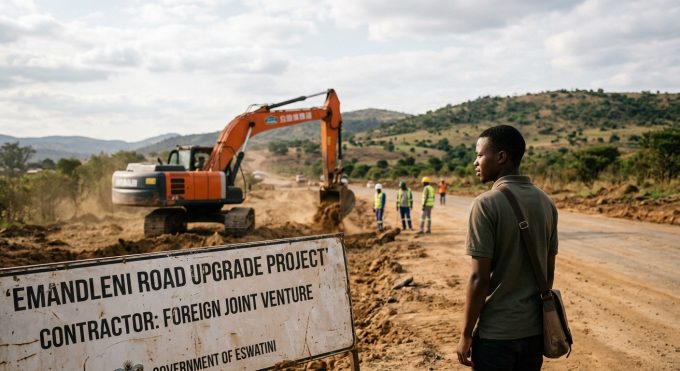
Recent reports have laid bare the scale of the ongoing cash flow crisis. Projects valued at approximately E600 million have ground to a halt or slowed to a crawl. Schools waiting for classrooms, communities needing livestock dipping tanks, water schemes and roads all sit unfinished. Microprojects, the semi-autonomous unit charged with delivering many of these community and ministerial schemes, has been particularly hard hit.
We are becoming more concerned rather than optimistic about the ongoing capital programmes, as the cash to execute them is becoming a struggle to access, while communities, workers and businesses bear the brunt of the cash flow challenges.
Officials have reported a growing struggle to obtain fuel for site inspections. Approval of new projects has stalled because staff cannot travel to constituencies. Contractors have withdrawn from sites, as others continue at a snail’s pace, only by borrowing privately while they wait for government payments that are failing to arrive. Workers, the least visible casualties, have gone unpaid and face the practical difficulties of meeting basic household needs.
Members of Parliament from Ndzingeni, Zombodze Emuva, Mayiwane and Nkilongo have publicly confirmed the paralysis in their constituencies. Storm-damaged bridges and schools remain unrepaired. Service delivery, they say, is being directly undermined.
Principal Secretary in the Ministry of Public Works and Transport, Thulani Mkhaliphi, has acknowledged that major roads, including Lugaganeni–Ekukhanyeni and Maloma–KaHlatsi, have been affected by the same mismatch between project timelines and available cash. The problem, he noted, is not always an absolute absence of money but poor coordination that allows multiple large claims to fall due simultaneously, creating bottlenecks.
Government is preparing to raise a further E1.5 billion in the current financial year in an attempt to address the crisis. Finance Minister Neal Rijkenberg has stated that the budget is fully financed on paper, yet the cash has not all been secured. He has cited several commitments, such as the civil-service salary review and additional roadworks, which were either under-budgeted or added later, creating the gap now requiring budget support.
Economist Sanele Sibiya of the University of Eswatini has issued a warning that every new loan must generate the capacity to repay it. Borrowing that merely fills a financing gap without expanding productive capacity, creating jobs or raising future revenue simply transfers the burden to tomorrow’s taxpayers.
It has been acknowledged at government level that the projected growth of 5.6 per cent (or the IMF’s 4.9 per cent) will not automatically translate into better living standards for the majority.
Business frustration is, therefore, understandable. Local contractors are complaining they are sidelined on projects financed by external loans even as emaSwati will ultimately repay those loans. Those who do win contracts face delayed payments that force them to finance government work from their own balance sheets or bank facilities.
The ultimate effect is a loss of confidence that will make future private-sector participation more expensive. We should avoid at all costs arriving at a situation where the State becomes an unreliable payer, as the consequence of this could render the entire ecosystem of construction, supply and skilled labour paralysed.
A credible stabilisation plan is, therefore, an urgent necessity. We need to be assured of prudent cash flow management. Commitments should not be allowed to overwhelm available funds.
The Microprojects unit and other implementing agencies need reliable operational funding so that monitoring, approval and payment processes do not collapse. Borrowing must be tightly linked to projects with clear, measurable economic returns that expand the tax base. The benefits of public investment must be deliberately designed to reach poorer households through employment, local procurement and improved basic services.
Transparency is more essential now than ever. Parliament and the public need regular, detailed reporting on the status of major capital projects, outstanding contractor claims and the projected debt-service path under different growth scenarios.
Eswatini’s challenges are not unique, but the combination of stalled delivery, rising frustration among contractors and workers and continued recourse to borrowing without a clear repayment narrative is becoming unsustainable.
Government must now set out, in concrete terms, how it intends to align spending with cash, prioritise projects that generate returns, restore the reliability of payments and ensure that economic expansion improves the lives of ordinary emaSwati.













Leave a comment