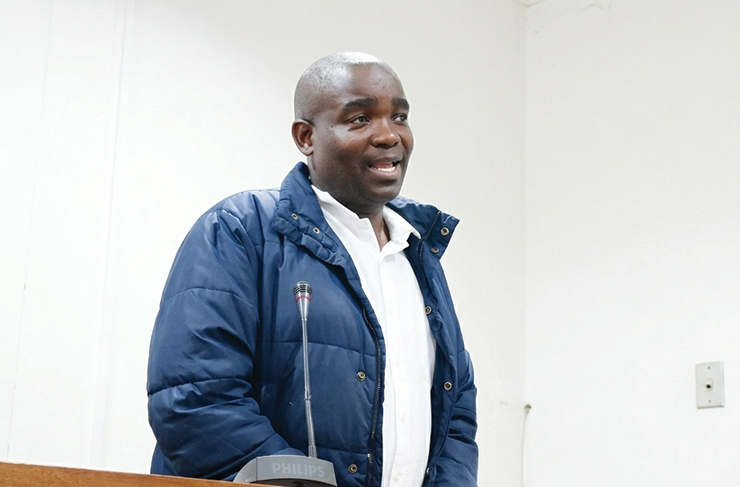
MANZINI – A Cameroonian businessman allegedly paid E15 000 to a man who claimed he could assist with renewing his work permit and processing company documents, but the promised papers were never delivered.
Sazi Wisey Ngcamphalala (43) of Mobeni under Chief Mshikashika II, appeared before the Manzini Magistrates Court on October 2, 2026, charged with theft under false pretences after allegedly obtaining the money from Calvin Tchikayo in June 2026.
The case was heard before Magistrate Sihle Dludlu, where Ngcamphalala pleaded guilty to the charge.
According to the charge sheet, Ngcamphalala allegedly misrepresented to Tchikayo that he could assist with renewing his work permit, knowing that the representation was false, thereby inducing him to part with E15 000.
Testifying before the court, Tchikayo, a businessman residing at Fairview, said he met Ngcamphalala when the accused visited his shop and introduced himself as an agent who could assist with company documentation.
Tchikayo told the court that Ngcamphalala initially demanded E7 000 to facilitate the process, which he paid in cash. However, the complainant said that the following day, the accused contacted him again, claiming that the amount was insufficient to complete the process and demanding a further E7 500. Tchikayo said he subsequently deposited the money into Ngcamphalala’s First National Bank (FNB) account, bringing the total amount paid at that stage to E14 500.
The complainant further testified that, a few days later, Ngcamphalala contacted him for a third time, saying another E500 was required to finalise the process. Tchikayo said he sent the additional amount through mobile money, bringing his total payments to E15 000. Despite making the payments, the businessman told the court that he had not received the promised documents. He said the accused repeatedly assured him that the documents would be delivered soon, but the process remained incomplete.
Tchikayo explained that he would not have parted with the money had Ngcamphalala not promised to assist him. He eventually reported the matter to the police and sought assistance from his lawyer. When given an opportunity to respond to the allegations, Ngcamphalala pleaded guilty to the charge and admitted receiving E15 000 from Tchikayo. However, in explaining the circumstances surrounding the matter, the accused told the court that the documents were being processed through the Immigration Department and that the process had been delayed by compliance-related requirements.
Ngcamphalala said the process had not yet been completed and undertook to repay the complainant the full amount. He promised to repay the entire E15 000 by December 2026.
The matter is expected to return to the Manzini Magistrates Court on January 14, 2027, to establish whether the accused has fulfilled his undertaking and repaid the complainant.
It is worth noting that the arrest of the suspect comes against the backdrop of a series of investigations into the alleged black-market sale of government documents.
In April 2024, this publication reported that a Home Affairs probe had uncovered allegations that some civil servants were providing government services from their homes, with documents allegedly being sold outside official channels.
The documents reportedly included work permits, passports, national identity cards and birth certificates.
In August 2025, reports on an alleged syndicate involved in the fraudulent issuance of government documents raised further concerns about work permits allegedly processed without the required supporting documents and the possible misuse of ministry computer systems and staff credentials. The investigations continued into 2026. In March, the ministry reportedly launched internal investigations covering officials’ activities over a 20-year period to establish whether government documents had been irregularly issued. The following month, the Times of Eswatini reported that five immigration officers had been suspended with pay pending investigations into allegations concerning permits issued to more than 100 foreign nationals.