
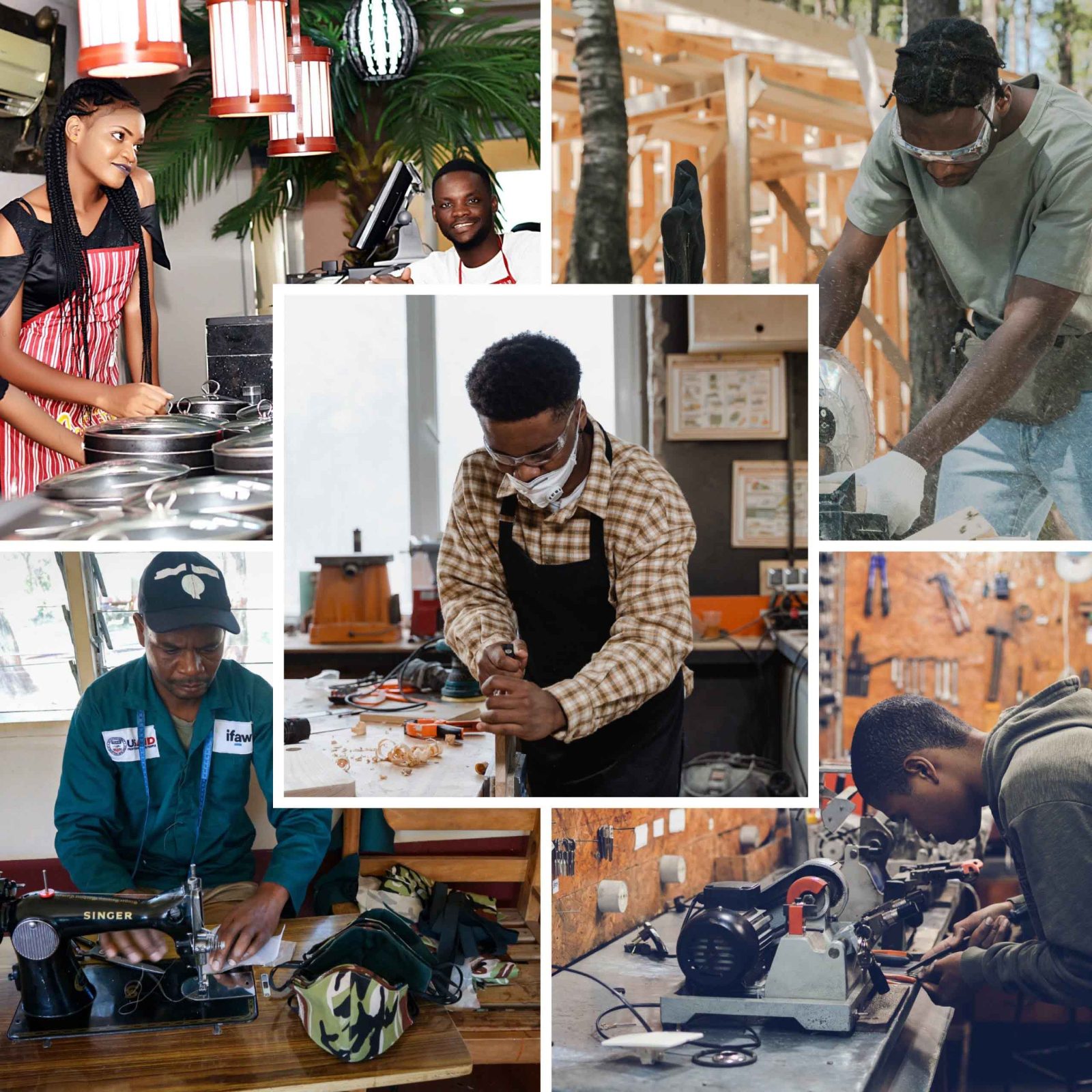
MBABANE – Local small businesses in Eswatini face growing threats from foreign competition, rising operating costs and limited access to finance, raising concerns about their survival and contribution to economic growth.
This warning has been raised by Economist Dr George H. Choongwa, Coordinator at the Southern African Research Foundation for Economic Development (SARFED), who argues that local small and medium-sized enterprises (SMEs) risk losing ground to foreign-owned businesses with stronger operational models, market networks and access to financing.
In a policy brief titled ‘Local SMEs might face extinction due to foreign takeovers: Government to guard against business failure’, Dr Choongwa cautions that without stronger policy interventions, indigenous businesses could increasingly struggle to compete, potentially contributing to economic stagnation.
He notes that SMEs are regarded as the backbone of sustainable economic growth and development, but those operating in Eswatini continue to face both external and internal economic pressures that threaten their survival and competitiveness.
One of the major concerns highlighted is the vulnerability of local enterprises within supply chains, particularly those supplying larger companies.
Dr Choongwa explains that many local SMEs operate under a business model in which they supply established firms through confirmed orders, but often wait for periods of at least 30 days to receive payment.
This arrangement creates working capital pressures, particularly when businesses are simultaneously dealing with escalating commodity prices and disruptions in global markets.
He warns that some enterprises may struggle to sustain operations, while waiting for payments, as they still have to meet their day-to-day financial obligations.
The economist further links the challenges facing SMEs to the country’s broader socioeconomic conditions, including unemployment, inequality and declining household purchasing power.
According to the policy brief, unemployment among young people aged between 15 and 24 years stands at more than 52 per cent.
Choongwa also cites estimates indicating that approximately 54 per cent of the population lived below the Lower Middle Income Consumption poverty line of US$4.20 per day, based on purchasing power parity (PPP) for 2021, in 2025.
The country’s Gini coefficient of 51.2 is also highlighted as an indication of uneven income distribution.
He argues that escalating living costs disproportionately affect lower-income households, which spend a larger share of their income on essential goods and services such as food, fuel, housing and electricity. The brief estimates that lower-income households spend between 40 and 50 per cent of their income on basic essentials, leaving them particularly exposed to further price increases.
Dr Choongwa cautions that persistent inflation could also erode the country’s middle-income population by pushing more households towards poverty, with wider implications for economic security and the country’s development ambitions. On the possibility of foreign business takeovers, he argues that the majority of indigenous businesses form part of Eswatini’s middle class and that their weakening could have wider economic consequences.
He cautions that failure to introduce policies that strengthen local enterprises against an increasingly competitive business environment could result in foreign businesses gaining greater dominance in the domestic market.
However, dr Choongwa emphasises that the issue should not be treated as a political matter, but rather approached through comparative economic analysis and practical policy interventions.
He observes that foreign enterprises often enjoy operational advantages through better market information, strategic networks, bulk purchasing and selling arrangements, as well as easier access to financing.
According to him, these advantages enable foreign businesses to benefit from economies of scale, placing many locally owned enterprises at a competitive disadvantage.
He argues that improving the competitiveness of local businesses should not necessarily mean restricting foreign participation, but creating a fairer business environment in which indigenous enterprises can become more sustainable.