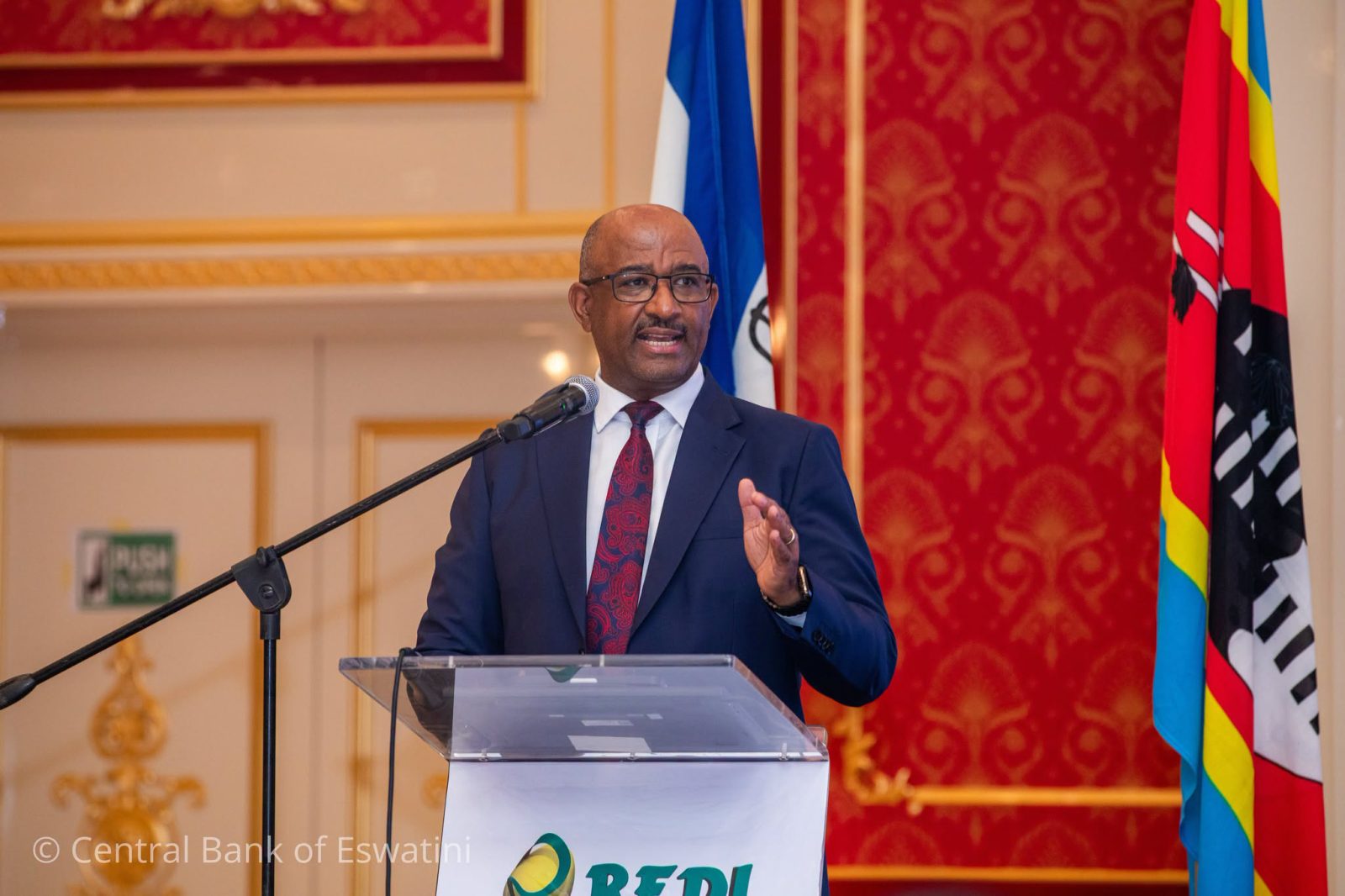
MBABANE – The Central Bank of Eswatini has kept its discount rate at 7 per cent, despite rising inflation, as policymakers balance price risks against economic growth and financial stability.
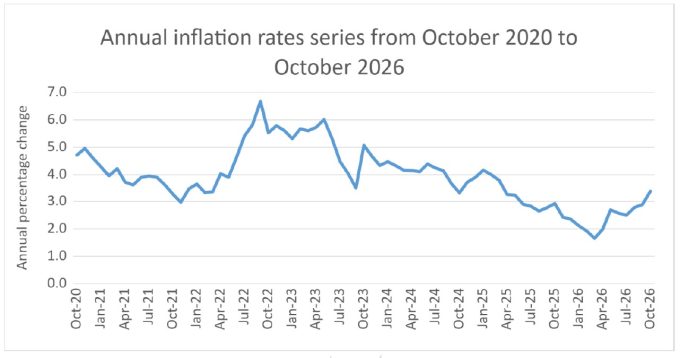
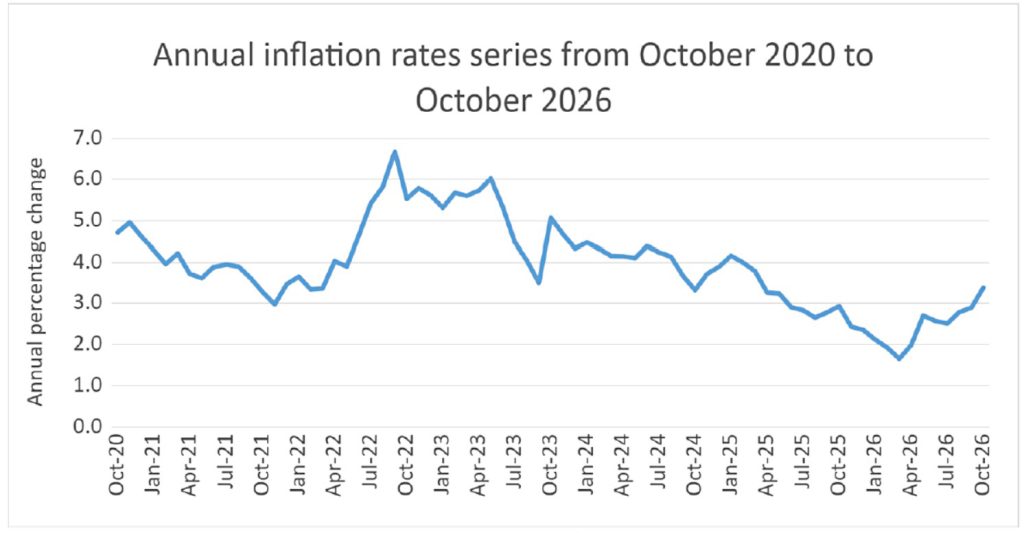
The decision, announced on Friday, by the Central Bank of Eswatini (CBE), was in line with economists’ expectations, with the Monetary Policy Consultative Committee (MPCC) opting against tightening monetary policy despite mounting inflationary pressures. Consequently, the prime lending rate will remain unchanged at 10.50 per cent until the next monetary policy meeting, meaning individuals and businesses borrowing from commercial banks will not face an immediate increase in borrowing costs. The decision comes at a time when the country’s headline inflation rate has accelerated, increasing by 0.5 percentage points to 3.4 per cent in October 2026, from 2.9 per cent recorded in September. According to the latest Consumer Price Index (CPI) report released by the Central Statistical Office (CSO), the October inflation rate was also 0.5 percentage points higher than the 2.9 per cent recorded during the corresponding month in 2025.
More significantly, monthly inflation accelerated to 0.9 per cent in October from 0.2 per cent in September, indicating that consumer prices increased at a considerably faster pace during the month under review. The increase was driven largely by transport and housing-related costs, which continued to exert pressure on household expenditure. Transport recorded annual inflation of 6.9 per cent, compared to 0.9 per cent in October 2025, while housing, water, electricity, gas and other fuels registered an annual increase of 6.8 per cent. The two categories were also the biggest contributors to the headline inflation rate, accounting for 1.9 and 1.1 percentage points, respectively, while education contributed a further 0.2 percentage points.
The housing category, which carries the largest weighting in the consumer price basket at 27.69 per cent, recorded a monthly increase of 1.3 per cent.
Within transport, the pressure was particularly pronounced in fuels and lubricants for personal transport equipment, which recorded annual inflation of 41.6 per cent. The category also increased by 13.2 per cent month-on-month in October. The broader transport category increased by 2.3 per cent during the month, compared to 0.8 per cent in September, with the CSO attributing the movement mainly to higher prices for fuels and lubricants as well as motor cars. Meanwhile, food and non-alcoholic beverages, which account for 20.15 per cent of the consumer price basket, offered some relief to consumers, recording annual inflation of negative 0.1 per cent.
This suggests that while food prices remained relatively contained, households continued to experience increased pressure from transport and housing-related expenditure. The report further shows that goods inflation stood at 4.0 per cent in October, compared to 2.4 per cent for services, while prices for goods increased by 1.0 per cent month-on-month. Administered prices, which are prices regulated or influenced by government and public authorities, recorded annual inflation of 11.0 per cent, compared to 1.4 per cent for non-administered prices. The monthly increase in administered prices was 2.2 per cent.
The CBE, in explaining its decision to maintain the prevailing interest rate, acknowledged the acceleration in domestic inflation but noted that the overall rate remained relatively moderate. The bank said the increase to 3.4 per cent was primarily driven by higher price indices for transport and housing and utilities, while relatively contained food prices and slower increases in clothing and footwear, alcoholic beverages and tobacco, recreation and culture, and miscellaneous goods and services somewhat counteracted the increases. Despite maintaining the rate, the committee acknowledged that risks to the inflation outlook had increased since its previous meeting. Meanwhile, the bank’s assessment of domestic economic activity also formed part of its considerations in maintaining the prevailing monetary policy stance.
The domestic economy expanded by 6.5 per cent year-on-year in the second quarter of 2026, following revised growth of 5.9 per cent in the preceding quarter. According to the CBE, the expansion was broad-based, reflecting positive contributions from the primary, secondary and tertiary sectors of the economy.
The bank also reported that credit extension remained robust, while the domestic financial system continued to be sound, liquid and adequately capitalised. However, there were indications of increasing pressure on loan repayments, with non-performing loans (NPLs) growing by 5.3 per cent month-on-month to reach E1.3 billion in September 2026. The NPL ratio also increased from 6.2 per cent in August to 6.4 per cent in September, highlighting the continued challenges facing some borrowers in servicing their debt obligations. On the external position, gross official reserves stood at E11.4 billion as at November 13, 2026, equivalent to 2.6 months of import cover.
The bank said it was closely monitoring the foreign exchange reserves position and would intensify efforts to protect reserves and build buffers.
Meanwhile, public debt increased moderately during October to reach E43.9 billion, equivalent to 42.5 per cent of gross domestic product (GDP).
The CBE’s decision also mirrors developments in South Africa, Eswatini’s major trading partner, where the South African Reserve Bank (SARB) Monetary Policy Committee maintained the repo rate at 7.25 per cent during its Thursday meeting.
The South African decision was also in line with economists’ expectations, with the country’s Central Bank opting against adjusting borrowing costs despite an acceleration in headline inflation. According to the CBE’s assessment of regional economic developments, South Africa’s headline inflation increased to 5.2 per cent in October 2026 from 4.5 per cent in September.
Despite this increase, the SARB lowered its inflation forecast for 2026 to 4.3 per cent, from 4.4 per cent, while retaining its medium-term projections at 4.0 per cent for 2027 and 3.2 per cent for 2028. The South African economy, however, contracted by 0.3 per cent in the second quarter of 2026, following growth of 0.5 per cent in the preceding quarter. The SARB maintained its economic growth forecasts at 1.2 per cent for 2026, 1.7 per cent for 2027 and 1.9 per cent for 2028.
The CBE noted that global monetary policy conditions remained relatively restrictive as Central Banks continued to balance inflation risks against economic growth considerations.
Globally, inflation is projected at 4.7 per cent in 2026 and 4.1 per cent in 2027, while global economic growth is expected at 3.1 per cent and 3.4 per cent over the same respective years, according to the latest International Monetary Fund projections cited by the CBE.
Looking ahead, the Eswatini Central Bank said monetary policy decisions would remain data-dependent, with the bank continuing to monitor developments affecting inflation, economic activity, financial stability and the sustainability of the exchange-rate arrangement.
It warned that it would not hesitate to implement the appropriate policy stance, should there be signs of further inflationary pressures or emerging challenges to the sustainability of the exchange-rate peg.