

MBABANE – The Eswatini Youth Revolving Fund (YERF) approved a total of 33 businesses for young entrepreneurs, with a combined funding value of E1 306 514 across four regions.
This is contained in the Ministry of Sports, Culture and Youth Affairs’ second quarter performance report, covering the period between July and September 2025.
The report reflects that during the period under review, the majority of funded beneficiaries were male, representing 58 per cent of the total.
The males also received a higher loan amount, with a total of E818 953, compared to E487 561 allocated to female beneficiaries.
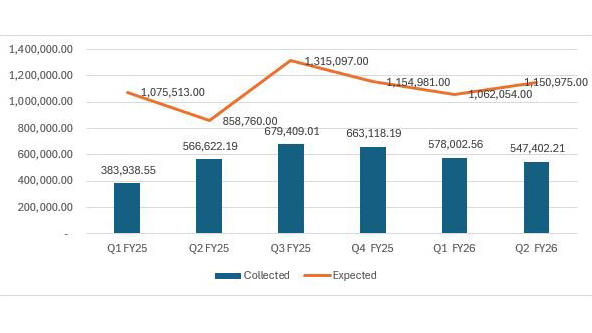
During the quarter, the fund collected a total of E547 402 in loan repayments, representing 48 per cent of the total expected receipts of E1 150 975.
This amount includes both regular repayments under current loan agreements and recoveries through debt collection efforts.
Compared to the previous quarter’s collection of E578 003, there was a decline of approximately five per cent.
“It is important to note that reconciliations for September 2025 had not been completed at the time of reporting, so actual figures may be slightly higher.
The reported amount excludes accounts under litigation and payments made through lawyers that had not yet been remitted at the time of compiling this report,” reads the report.
It reflects that the fund is continuing to implement vigorous collection strategies, which include, among other measures, calling beneficiaries, sending letters of demand and reminders via e-mail and SMS systems, blacklisting non-responsive beneficiaries, instituting legal action and repossessing valuable items to recover outstanding balances.
Furthermore, the report depicts that the fund has introduced loan repayment campaigns and education initiatives on credit management and compliance, including associated risks and these efforts have significantly improved beneficiaries’ understanding of their obligations and fostered open communication with their mentors regarding payment status and challenges.
“The number of paying beneficiaries remained above 90 in the first two months of the quarter.
“However, a decline was observed in September, where the count fell from 92 in August to 87, reflecting the same downward movement seen in loan collections,” reads the report.
According to the report, these loans were administered by the Swaziland Imbita Women’s Finance Trust, commonly known as ‘Imbita’, from the inception of the fund in 2009 until 2015.
*…
Agriculture has largest share of non-performing loans
MBABANE – Agriculture accounts for the largest share of non-performing loans, contributing 53 per cent of the total impairment, while manufacturing records the lowest share.
The report reflects that within the agriculture sector, a breakdown by value chain indicates that piggery accounts for the highest level of impairments at 32 per cent (E1 694 053.92), followed by vegetables at 25 per cent (E1 312 323.26), poultry at 21 per cent (E1 129 470.57) and feedlots at 9 per cent (E493 761.12).
Smaller proportions were recorded in forestry at 5 per cent (E286 265.82), beans at 3 per cent (E143 947.17), and goats and maize at 2 per cent each (E109 537.91 and E99 177.03, respectively). Beekeeping accounted for 1 per cent (E79 044.26).
“The fund had suspended lending to feedlot enterprises due to persistent underperformance and similar trends observed in other financial institutions.
“Piggery was also previously suspended, but has since been reinstated as an eligible sector for funding, subject to strict monitoring and oversight,” reads the report.
*Full article available in our publication.



















Leave a comment