

I am deeply moved by the strides the Government of the Kingdom of Eswatini is making to restore dignity through housing, especially for the poor and the elderly. In February, I commended the minister for Finance for tabling a budget that broke new ground: for the first time, it included a dedicated allocation for housing emaSwati. That decision was more than fiscal, it was moral.
Equally, inspiring is the nkwe spirit embodied by the deputy prime minister. Her swift, visible presence in times of disaster is not just symbolic, it is leadership in action. She stands with the people, first on the scene, reminding us that governance is not about distance but proximity.
We are led. Additionally, we are witnessing a shift: Housing is not just shelter, it is a catalyst. It restores dignity, anchors families and unlocks dormant economic potential. It is the foundation upon which inclusive development can flourish.
Public health benefits
Beyond dignity and economic activation, housing is a cornerstone of public health. Safe, stable shelter reduces exposure to the elements, overcrowding and communicable diseases. It enables better sanitation, nutrition and mental well-being. For the elderly and vulnerable, it offers protection and peace of mind. When the State invests in housing, it is not merely constructing walls it is fortifying the health infrastructure of the nation.
Social capital
Housing also strengthens social cohesion. It anchors families, stabilises communities and fosters a sense of belonging. Children raised in secure homes are more likely to thrive in school, while adults gain the psychological safety to pursue work, education and civic engagement. In rural and peri-urban areas, housing development can reverse migration pressures and revitalise local economies. It is a tool for inclusion, not just infrastructure.
Equity
Finally, housing is a lever for intergenerational equity. When families own or access decent housing, they build assets that can be passed on. It breaks cycles of poverty and dependency, allowing future generations to start from a place of stability. Given that our land tenure and traditional structures intersect with modern development, housing can be a bridge, honouring heritage while enabling progress.
Local public works projects
Housing is a powerful economic stimulant. Its construction generates jobs across sectors, from bricklayers and carpenters to transporters and hardware suppliers. As communities gain access to stable housing, they attract micro-enterprises, retail activity and service providers, creating localised economic ecosystems. Secure tenure enables households to invest in home-based businesses, agriculture or education, multiplying returns. In underserved areas where infrastructure is limited, formal housing can catalyse land value appreciation and unlock dormant assets for productive use.
Engaging community-based constructors in the housing programme accelerates delivery and embeds ownership and sustainability at the grassroots. By equipping local contractors with training, tools, and contracts, government stimulates microeconomic growth, while fostering pride and accountability and a localised multiplier effect. This approach transforms housing from a top-down intervention into a participatory development process, where communities are not just beneficiaries, but co-creators of their own dignity.
As we continue to house our people, we must safeguard this noble initiative from two critical risks: dependency and corruption. Housing should empower, not entrench passivity. Beneficiaries must be engaged as active participants, with clear pathways to ownership, maintenance and community stewardship. To preserve the integrity of this effort, transparency and accountability must be embedded throughout. Procurement, contractor selection and beneficiary targeting must be shielded from political interference and rent-seeking behaviour. Housing must remain a symbol of dignity and progress, governed by principles that uplift rather than pacify.
To prevent economic dependency, the housing programme must be designed as a launchpad for opportunity. This involves integrating housing with vocational training, microfinance access and support for local enterprise development. Ownership models should promote responsibility and asset-building. When communities participate in planning, construction and upkeep, they become stewards of their own development. In this way, housing becomes more than shelter, but a platform for productivity, resilience and long-term empowerment.
Safeguarding against corruption requires robust governance mechanisms at every stage. Government must publish clear eligibility criteria, transparent contractor selection processes and budget allocations for public scrutiny. Independent audits and real-time monitoring systems should be institutionalised, with civil society and community representatives actively involved in oversight. Digital platforms can enhance transparency by tracking project progress and expenditures, while whistleblower protections and strong enforcement deter abuse. When citizens trust the process and officials are held to account, housing becomes not just infrastructure, but a testament to ethical leadership and inclusive development.
Your flowers
Let us continue to champion policies that put people first. When emaSwati are housed, they are empowered. When they are empowered, the nation rises. In this spirit, we must give the deputy prime minister her flowers. Her unwavering presence, swift response in times of crisis, and deep connection with communities exemplify servant leadership. She reminds us that dignity is not restored by policy alone, but by proximity, compassion and action. May her example inspire all of us to lead with empathy and to build a nation where every liSwati has a place to call home.
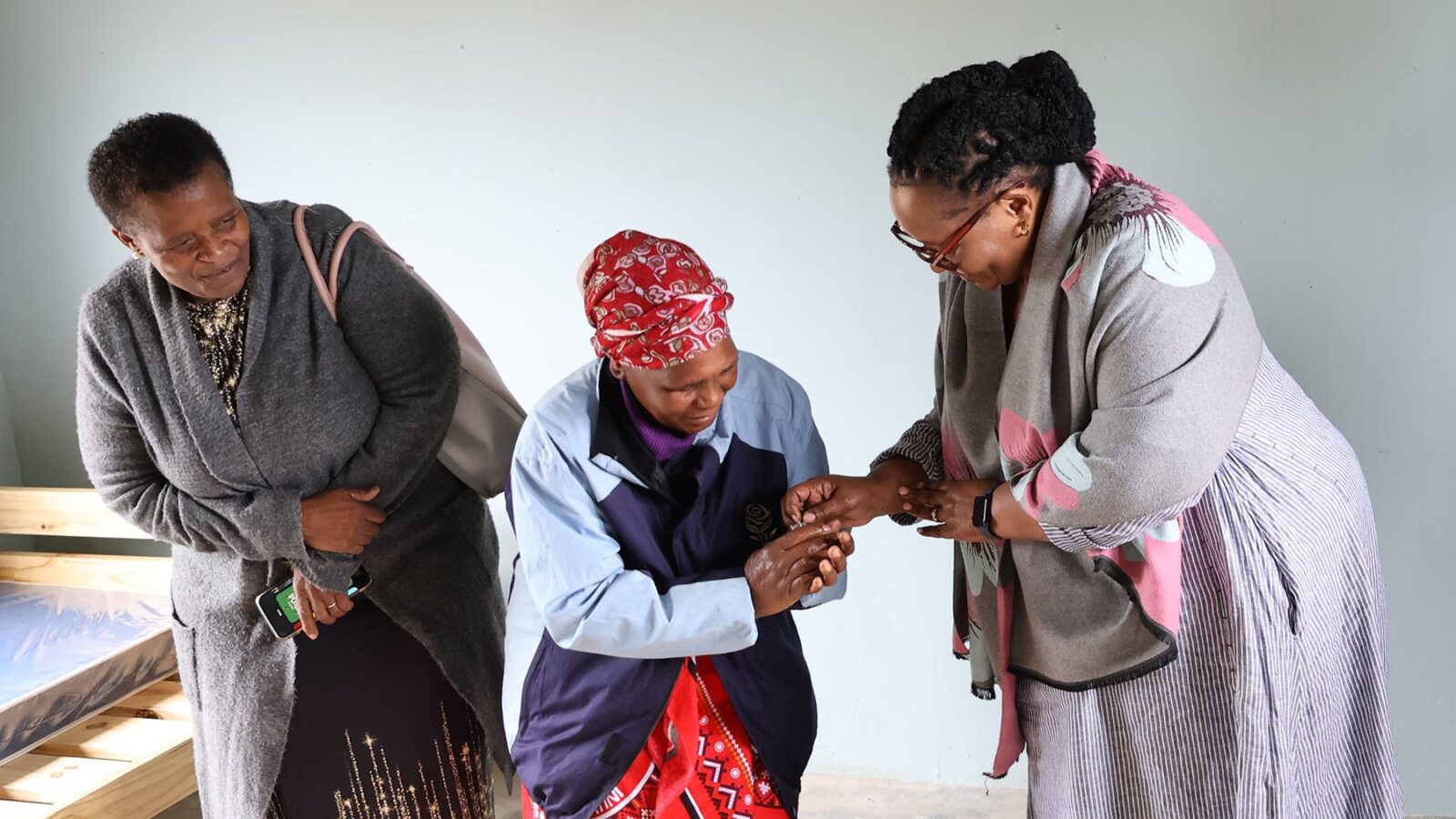
Gogo Nomsa Lukhele (63) receiving the keys to a two-bedroom house, from DPM Thulisile Dladla (R) while Ludzeludze MP Nomkhosi Masuku (L) looks on. The house was built by government, through the DPM’s Office and NDMA.



















Leave a comment