

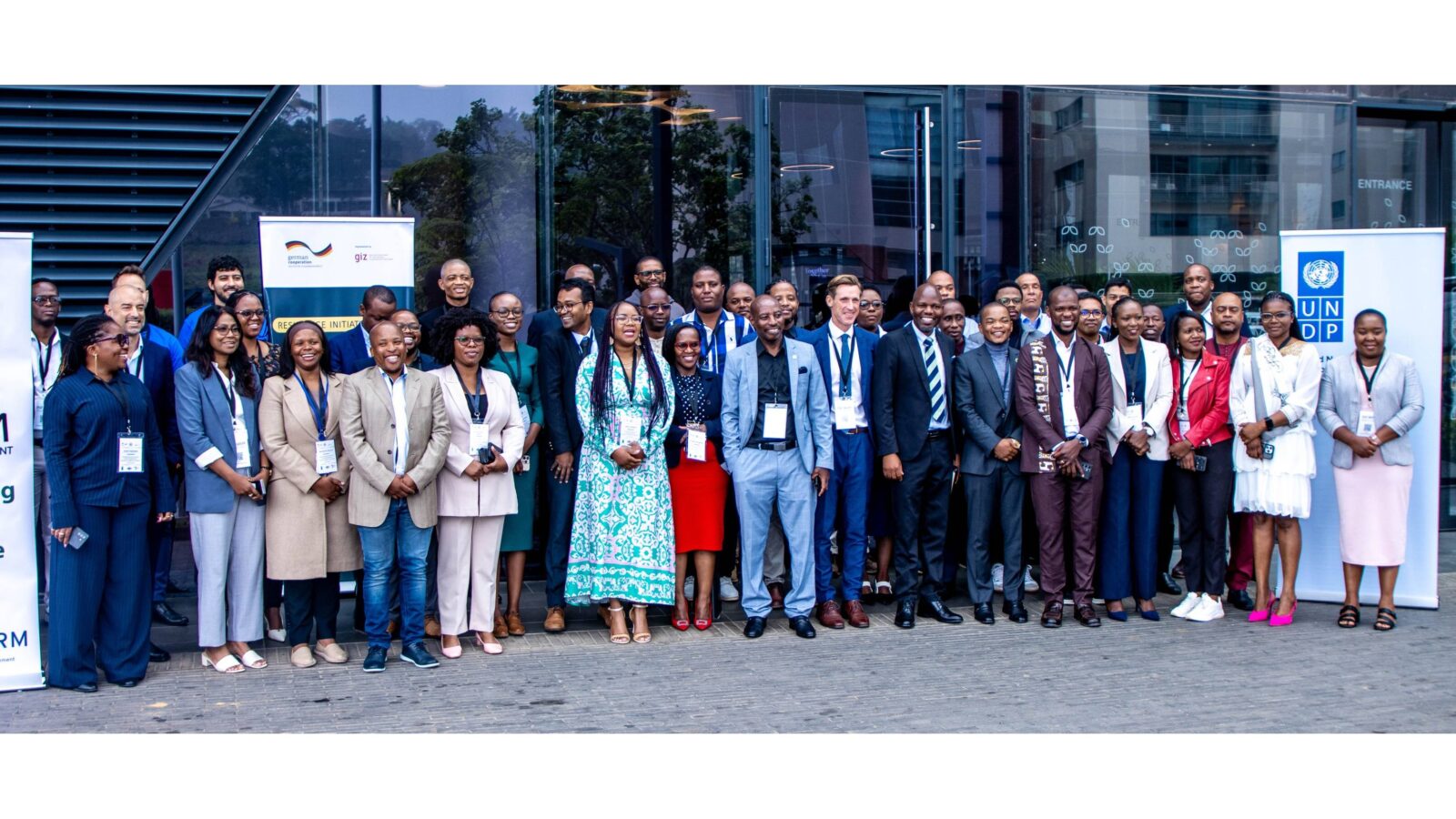
The Third Workshop on the INFORM Subnational Risk Model, held in Mbabane from October 7 to 9, 2025, brought together disaster risk reduction and humanitarian experts from 14 SADC member States. Hosted by Eswatini’s National Disaster Management Agency (NDMA) with support from UNDP, the African Union Commission, GIZ and the SADC Secretariat, the workshop extended earlier efforts held in Johannesburg and Windhoek. Its purpose was to refine the use of the INFORM model, a data-driven tool designed to anticipate, understand and manage disaster risks across the region.
The model provides governments with a systematic way to assess hazards, vulnerabilities and coping capacities. By applying these elements to planning, countries can identify areas of greatest risk and prepare before crises occur. For our mountainous kingdom, this approach has already begun to transform the way national institutions address disasters.
The country’s Subnational INFORM Risk Index has enabled planners to detect vulnerabilities in specific regions and prioritise resources accordingly. This localisation of risk data allows for early action in flood-prone or drought-affected communities, limiting damage to livelihoods and infrastructure. It also improves coordination between ministries, ensuring that disaster risk management is integrated into health, agriculture and development planning, rather than treated as a stand-alone function.
UNDP Resident Representative Henrik Franklin described the model as a driver of change in how risk is perceived and managed. He argued that development loses direction when it is not guided by an understanding of risk, a view that echoes global shifts towards anticipatory governance. NDMA Chief Executive Victor Mahlalela explained that by embedding the model into Eswatini’s national systems, the country has improved its capacity to anticipate hazards and respond strategically. This change from reactive to preventive planning is indicative of a growing recognition that preparedness is more cost-effective than recovery. SADC’s engagement in the process suggests that regional resilience depends on long-term planning, rather than emergency response alone.
Programme Coordinator Dr Pious Vusi Ncube observed that the model aligns with Agenda 2063’s vision of a peaceful and resilient Africa, linking continental aspirations to local application. This alignment matters because it places evidence-based risk assessment at the centre of regional cooperation. By hosting the workshop, the kingdom contributes not only as a participant, but as a regional facilitator of knowledge, gaining technical experience that advances its institutional credibility within SADC.
The benefits for Eswatini go over and above improved disaster readiness. The use of the INFORM model strengthens data management and analytical capacity, areas often underdeveloped in smaller economies. It also increases opportunities for collaboration with international agencies, which are more likely to channel technical and financial support to countries with established risk systems.
The value of structured risk modelling can be seen in countries that adopted similar systems. In the Philippines, local authorities have integrated risk models into planning frameworks, leading to fewer fatalities during typhoons and more efficient emergency response. In Indonesia, detailed hazard mapping has informed resettlement and infrastructure decisions, reducing casualties during volcanic eruptions. Kenya’s adaptation of county-level risk frameworks has strengthened drought monitoring and improved food supply management. These examples show that when governments use data to guide decisions, they limit losses, protect development gains and reduce dependency on external humanitarian aid.
GIZ’s Ria Hidajat noted that effective partnerships ensure that data turns into policy rather than remaining academic. She said the INFORM Index, supported by the German Federal Ministry for Economic Cooperation and Development, has been designed to bridge gaps between research and government planning. Adama Bamba of the African Union Commission added that multiple and intersecting crises – from climate shocks to epidemics – demand collective approaches to managing risk. He observed that no state can manage such threats in isolation, and that building systems capable of anticipating complex hazards is now essential.
In essence, the country’s participation in the INFORM process reinforces its regional standing, while addressing domestic vulnerabilities. The ability to identify and act on specific threats allows the country to protect key sectors such as agriculture and water supply, which are repeatedly exposed to climate variability. The INFORM model also supports social stability by reducing the likelihood of displacement and livelihood loss that follow severe weather events. With proper application, the data gathered can inform education campaigns, public infrastructure investments and community-level preparedness, turning risk awareness into a continuous aspect of governance.
However, success depends on more than technology. To maintain relevance, the model requires ongoing investment, skilled personnel and political continuity. Data collection must remain consistent, and findings must be translated into clear policy action. Without these conditions, the model can become another well-intentioned framework that fails to influence real decisions. Regional cooperation also depends on sustained dialogue between SADC States, as shared risks – such as transboundary droughts and disease outbreaks – require shared responses.
The INFORM model’s introduction in Eswatini and across SADC represents a quiet transformation in how governance engages with uncertainty. By embedding data-based analysis into planning, countries begin to treat disaster management as part of development, rather than a temporary reaction to crises. For Eswatini, this change has practical and strategic benefits: it saves resources, protects citizens and attracts partnerships that build national capacity. The test will be in how consistently the model is applied across sectors and how effectively insights turn into everyday policy. If implemented with discipline, the approach positions Eswatini and its neighbours to manage risks before they escalate into humanitarian emergencies. In a region repeatedly exposed to climate shocks and economic strain, that foresight may prove the most reliable form of resilience.
Comments: bongwebagcinile@gmail.com

















Leave a comment