

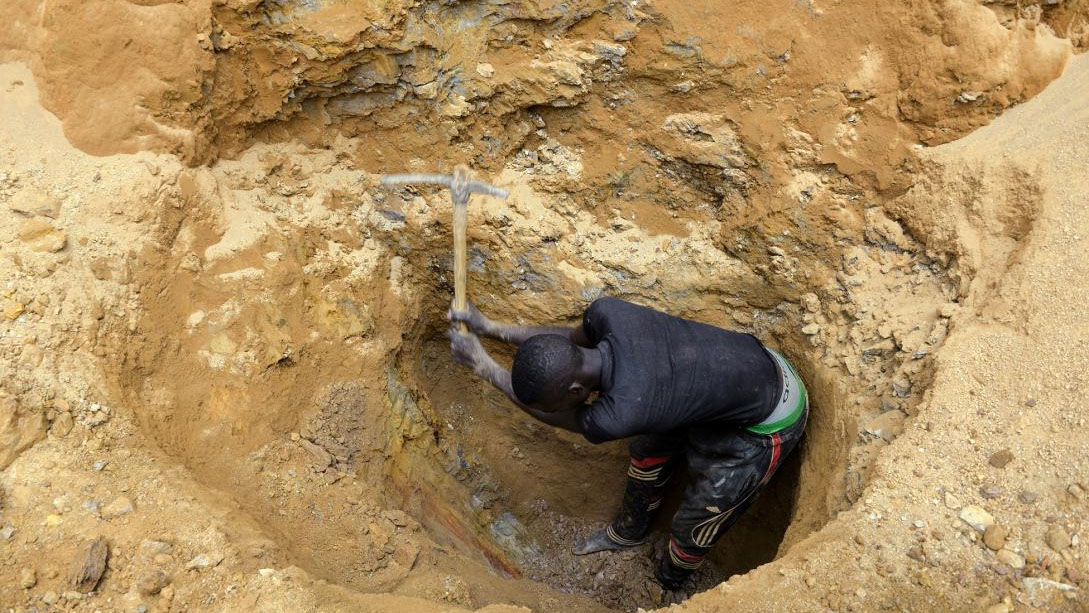
Given the level of reporting surrounding illegal mining in the kingdom, I found it befitting to put pen to paper and weigh in on the debate. The issue has gained traction in recent years, not only because of its environmental and legal implications, but also due to its complex socio-economic undercurrents. As the country positions itself for mineral-led development, the rise of informal and unregulated mining activities demands a sober, multidimensional analysis. One that neither romanticises survivalist enterprise nor vilifies communities operating outside the law.
Rise of informal extraction
Illegal mining in the kingdom is no longer a fringe activity. While the formal mining sector remains a modest contributor to GDP, the surge in prospecting licences and artisanal interest, particularly in gold and coal, has exposed regulatory gaps and enforcement challenges. The Ministry of Natural Resources and Energy, through its Mining Department, is tasked with overseeing the sector, yet its reach is limited in remote areas where informal operations flourish. These activities often evade oversight, undermining both State revenue and environmental safeguards. The result is a shadow economy that thrives on weak institutional control and rising demand for extractives.
Economic lifeline or legal liability?
Yet, to understand illegal mining solely through a legal lens is to miss its economic significance. In communities grappling with unemployment and limited access to formal livelihoods, informal mining offers a source of income, especially for youth and marginalised groups. The extraction and sale of high-demand minerals like gold can stimulate local trade in tools, food and transport services, creating microeconomic ripple effects. For many, it is not a choice but a necessity. These activities, while technically unlawful, represent a form of economic agency in a context where formal opportunities are scarce.
Hidden costs of illegality
However, these short-term gains come at a steep cost. Unregulated extraction leads to land degradation, deforestation and water pollution. The use of toxic substances such as mercury, reportedly trafficked through black-market channels, pose severe health risks, including lung and brain damage. These environmental and health hazards are compounded by unsafe working conditions, child labour and community tensions. Moreover, the informal nature of illegal mining means that the State loses out on licensing fees, taxes and royalties, weakening its ability to reinvest in infrastructure, education and health services.
Governance, rule of law at risk
The governance implications are equally troubling. Illegal mining erodes the rule of law and fosters a culture of impunity. It complicates efforts to implement responsible mining practices and undermines public trust in institutions. In some cases, it has led to violent confrontations between miners and law enforcement, further destabilising already fragile communities. The absence of clear land rights and community benefit-sharing mechanisms exacerbates these tensions, making it difficult to distinguish between criminal enterprise and survivalist endeavour.
Sustainable solution
The question that begs an answer is: What can be done? The answer lies in a multi-pronged strategy that combines enforcement, formalisation and community engagement. First, the Mining Department must be capacitated to monitor and enforce compliance. This means more inspectors, better equipment and stronger inter-agency coordination. Second, government should introduce simplified licensing schemes for small-scale miners. By lowering the barriers to entry and incentivising legal compliance, through access to markets, training and safety equipment, informal actors can be transitioned into the formal economy.
Third, public awareness campaigns are essential. Communities must be educated on the environmental and health risks of illegal mining, as well as the benefits of formalisation. These campaigns should be delivered in vernacular and tailored to the realities of daily lived experiences in hot spot areas. Fourth, community-based surveillance and reporting mechanisms can foster local accountability. When communities are empowered to monitor their own resources, they become partners in governance rather than passive recipients of state intervention. Finally, mining governance must be integrated into broader rural development strategies. Illegal mining is often a symptom of deeper structural issues; Poverty, landlessness and lack of opportunity. Addressing these root causes requires investment in education, agriculture and infrastructure. It also demands a shift in how we think about development: from top-down enforcement to bottom-up empowerment.
Case studies
Ghana, Tanzania and Ethiopia have implemented small-scale mining licensing schemes to formalise artisanal operations. These frameworks offer simplified permits, technical training and access to markets, helping reduce illegality, while boosting livelihoods. Ghana’s model notably increased tax compliance and environmental oversight among registered miners.
Reframing the debate
Eswatini stands at a crossroads. The mineral sector holds promise, but only if it is managed responsibly and inclusively. Illegal mining is not just a legal problem, but it is a socio-economic phenomenon that reflects the aspirations and frustrations of communities on the margins. To address it, we must move beyond punitive approaches and embrace a vision of development that is just, participatory and sustainable.
The debate on illegal mining must, therefore, be reframed. It is not a question of whether to crack down or look away, but of how to build a system that recognises informal livelihoods while protecting public goods. That is the challenge before us and the opportunity.

















Leave a comment