

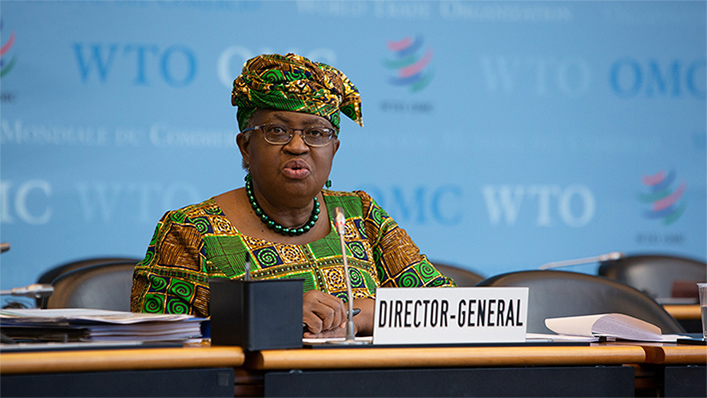
MBABANE – Dr Ngozi Okonjo-Iweala, Director General of the World Trade Organisation (WTO), on Thursday, delivered a pointed assessment of global trade tensions and a cautious but optimistic outlook for Africa’s economic future.
Speaking at the University of KwaZulu-Natal’s Westville Campus during the 19th Chief Albert Luthuli Memorial Lecture, Dr Okonjo-Iweala said the international trading system is under strain from escalating unilateral tariffs and declining multilateral cooperation.
She warned that increased protectionism by major economies threatens the stability of global markets, noting that recent tariff hikes had sharply raised duties on several countries, including South Africa.
“Trade requires a tremendous degree of trust,” she said.
“When that trust breaks down, it becomes harder for goods to move and for countries to grow.”
Despite these pressures, she said that nearly three quarters of world trade still operates under WTO rules, which she described as “the plumbing of the global economy,” often unnoticed until problems arise.
Eswatini has been a member of the WTO since 1995 and actively participates in its activities, including its trade policy reviews and agreements. The country is working to grow its export-oriented economy and has ratified the Trade Facilitation Agreement (TFA) and the African Continental Free Trade Area (AfCFTA) to improve its trade landscape.
Dr Okonjo-Iweala spent much of her 30-minute address outlining the stakes for African economies in an evolving global trade landscape.
She argued that the continent’s long-standing position as a supplier of raw materials remains a barrier to growth, and that African countries must focus on manufacturing, value addition and regional integration if they hope to compete more effectively.
“Africa’s share of global trade has stagnated below 3 per cent for decades,” she said. “We cannot continue exporting commodities without capturing more value at home.”
She called AfCFTA one of the most promising tools for economic diversification, but said bureaucratic barriers, weak infrastructure and inconsistent implementation still hinder cross-border trade.
Transporting goods between African countries, she noted, often costs significantly more than shipping them to markets outside the continent.
Dr Okonjo-Iweala also highlighted the growing importance of digital trade and services, saying Africa’s young population and expanding tech sector position the continent to benefit if regulatory frameworks keep pace.
She emphasised the need for women and small businesses to be better integrated into these emerging sectors, citing a new 50-million-Dollar fund aimed at supporting women engaging in digital commerce.

















Leave a comment