

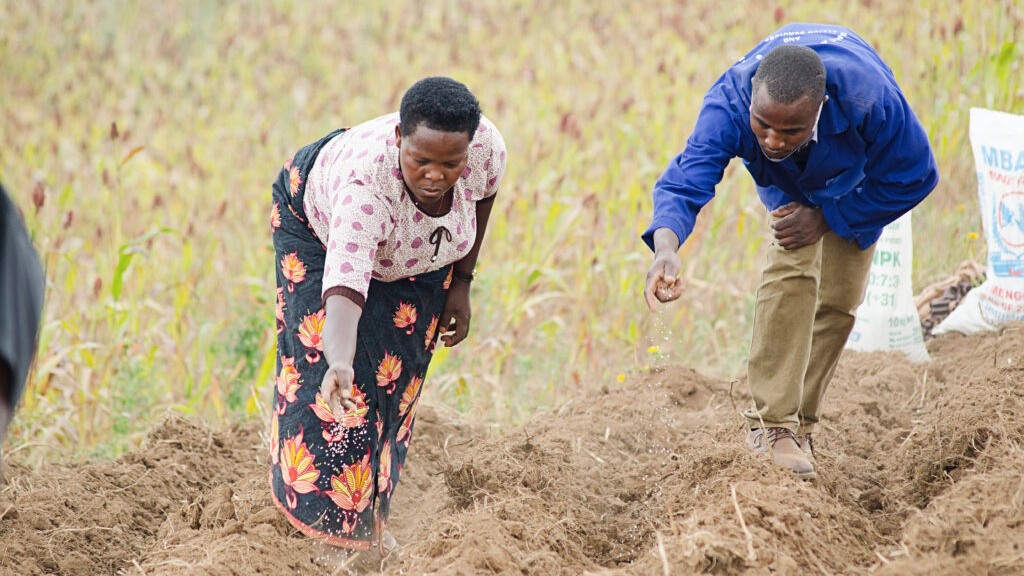
As the farming season approaches, one of the most important decisions a farmer will make is the choice of seed.
The quality of seed planted determines not only the yield but also the resilience of the crop against challenges such as drought, pests and diseases.
In Eswatini and across the region, many farmers are already preparing their fields, but successful farming begins long before the first furrow is ploughed; it starts with understanding and safeguarding the seed.
Seed is the very foundation of farming; it is that part of a plant which, when planted, will emerge, grow and eventually produce the desired harvest. Without quality seed, even the best farming practices may fail to deliver results.
In this guide, Head of the Seed Quality Control Services in the Ministry of Agriculture Sandile Makama unpacks what every farmer should know about maize seed; how to choose the right variety, common causes of poor germination, attributes of good quality seed and best practices for storage.
Choosing right maize variety
Farmers often differ on what they consider the ‘ideal’ maize variety, depending on individual needs and preferences.
For example, one farmer may select a variety stable in yield even in poor seasons, while another prefers a heavier seed weight for better milling prices and a third may prioritise sweetness and drought tolerance.
Variety selection also depends heavily on regional conditions and planting time. A variety bred for low-rainfall areas will thrive under drought but may fail in the Highveld, where excessive rainfall can encourage leaf diseases, cob rotting and excessive plant growth with poor cob formation. Similarly, planting time matters; some varieties perform poorly if planted outside their recommended window.
Farmers must also guard against disease incidence. Early or late-season planting increases the risk of maize streak virus, requiring a tolerant variety. In humid areas, grey leaf spot thrives, causing serious damage unless resistant varieties are planted.
Finally, the intended use of the maize determines variety selection. For green mealies, consumers prefer large, clean cobs with a mildly sweet taste and a long drying period for repeated harvesting. For grain sales, high kernel weight is essential, often achieved by long-season varieties.
Causes of poor field emergence
Despite choosing the right variety, farmers often face poor germination. Common causes include:
1. Dead seed – Seed loses vigour over time, especially when stored improperly near volatile chemicals, fertilisers, in hot or humid conditions or directly on the floor.
2. Sprouted seed – Exposure to moisture before planting may trigger incomplete germination, killing the seed.
3. Deep placement – Planting seeds too deeply (25–30 cm) delays or prevents emergence, often producing weak, pale seedlings.
4. Fertiliser scorching – When seed comes into direct contact with basal fertiliser, moisture is drawn out, killing the seed. Fertiliser must always be mixed with soil before planting.
5. Cracked or broken seed – Incorrect planter plates can damage seed. Farmers should match seed grades with the correct plate type to avoid breakage.
Attributes of good quality seed
Quality seed is the farmer’s insurance policy for a strong harvest. Packaging should be tamper-proof, clearly labelled with variety name, germination percentage, purity and grade. True quality seed has:
- Varietal purity – Seeds reproduce true to type, retaining all genetic and physical traits.
- Physical purity – Seeds are free of weeds, inert matter and foreign seeds.
- High germination – Seeds should produce strong, vigorous plants under favourable conditions.
- Freedom from seed-borne diseases – Particularly important in beans, where up to 50 per cent of diseases can be transmitted through seed.
Best practices for seed storage
Even the best seed loses its value if stored poorly. Ideal storage conditions include:
- Good ventilation and low humidity.
- Protection from insect pests, rodents and microorganisms.
- Cool temperatures, away from direct sunlight.
- Separation from volatile chemicals, poisons and fertilisers.
- Storage on pallets, away from walls, to prevent dampness and allow easy inspection.
- Keeping seed lots organised by variety and delivery date for easier monitoring.
A farmer’s success is deeply tied to the seed they plant.
“Choosing the right maize variety, preventing germination losses, recognising the attributes of quality seed and storing it under proper conditions are all critical steps that ensure healthy fields and bountiful harvests. As we step into the farming season, farmers must remember strong seed is the foundation of a strong harvest. By investing time and care in seed selection and management, they secure not only food for their families but also income and resilience for the year ahead,” said Makama.

















Leave a comment