

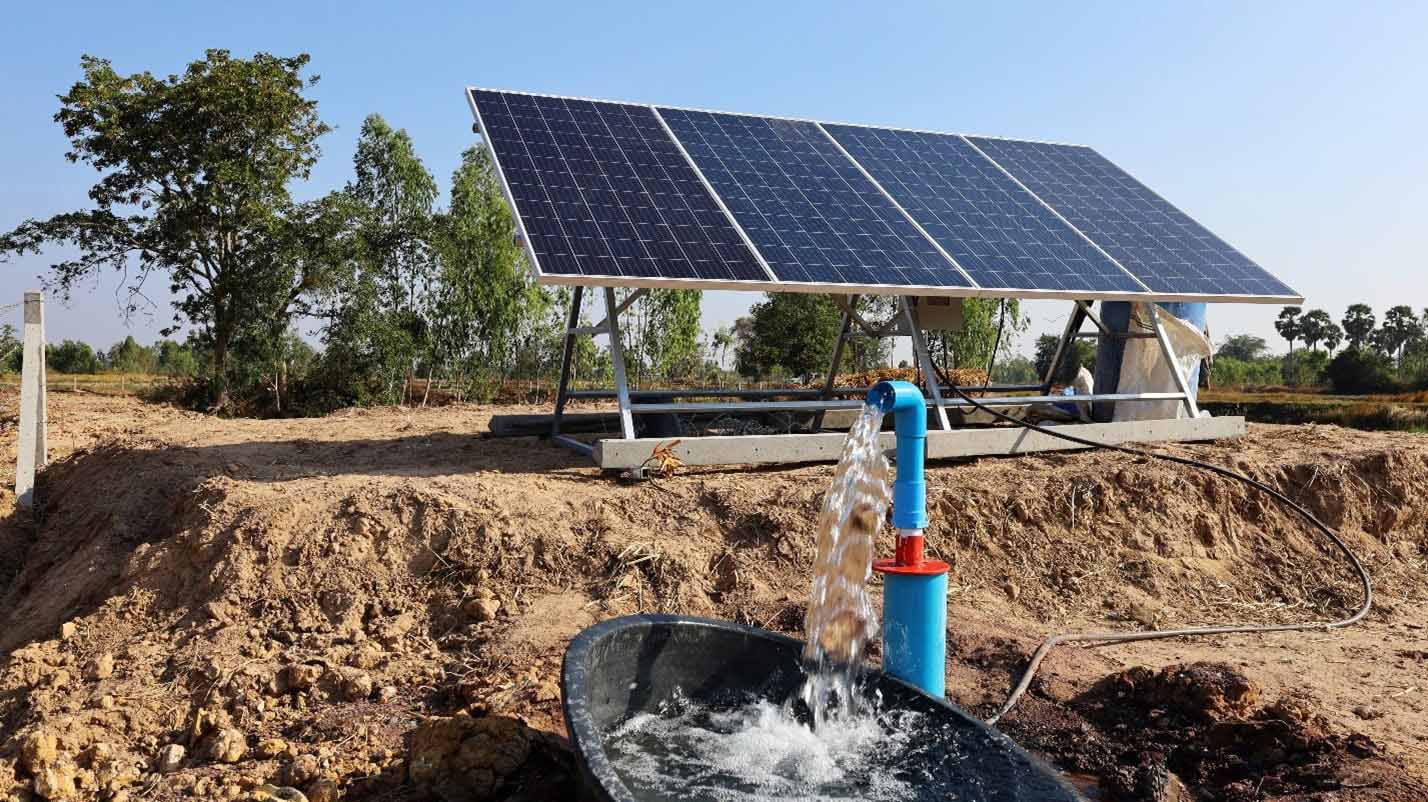
As Eswatini continues to explore sustainable solutions for agriculture, livestock and domestic water supply, solar-powered water pumps are emerging as a practical and cost-effective alternative to grid electricity and diesel-driven systems.
With abundant sunshine across most parts of the country, solar pumping technology offers a reliable way to move water while reducing long-term operating costs.
Ecosy Energy Director, Mpendulo Dlamini, sheds light on how these systems work, what determines their cost and how they are used in real-life settings.
How solar water pumps work
At the heart of solar pumping technology is a simple but efficient operating principle. As Dlamini explains: “Solar water pumps principle of operation is quite similar to a normal electric pump, what differs is that the pump solely relies on the solar power for all its operation.”
A solar pump system is made up of three main components. According to Dlamini: “The system comprises of three main elements, which are solar panels, pump controller, pump.” The process begins with the solar panels, which convert sunlight into electricity. “The solar panels generate the power in DC signal. Which is then fed to the controller.”
The controller plays a central role in managing the system’s operation. “The controller is the brain of the system, in this case, the pump in the water will be instructed by the controller.”
Once the correct conditions are met, the pump begins operating. “The pump will operate when it gets adequate voltage signal and hence it will start pumping water to the tanks.”
How much do they actually cost?
While solar pumping systems are an investment, they offer long-term savings by eliminating monthly electricity or fuel costs. At Ecosy Energy, pricing starts at an accessible level.
… why solar water pump prices vary
Dlamini notes, “At Ecosy Energy, the water pumps start from E37 000, including installation.” However, he stresses that there is no one-size-fits-all price. “The cost are determined after a feasibility study on site, the bigger the pump, the higher the price.” Each installation is tailored to the client’s specific water needs and site conditions.
What determines installation costs?
Several technical and environmental factors influence the final cost of a solar pumping system. Dlamini outlines the key considerations, “Cost of installation is determined by many factors. size of the pump, type of pump, pump brand, well depth and distance from pump to the tanks.”
Brand selection also plays a role. “The brands differ as usual. They also vary in terms of price according to their brands.” Pump size directly affects the size of the solar array required. “The size of pump is another factor. A bigger pump in kilowatt (kW) will need a bigger kilowatt-peak (kWp) from the solar panels, which means more panels are needed.”
Water source depth is equally important. “The well depth is also another factor since that will increase the distance between pump and the tanks, therefore, more kW power is needed. That will mean more panels and a larger pump size is needed.”
Usage and system independence
One of the key advantages of solar pumps is their independence from the electricity grid. Dlamini explains: “At Ecosy Energy, we provide solar pump systems which are independent.” These systems are designed to operate during daylight hours.
“The pumps work during the day when there is plenty sunlight. It does not need to be coupled with batteries since.” Even cloudy conditions do not bring operations to a halt. “It even works during cloudy days since the panels work during that weather.” However, pumping stops at night when there is no sunlight. “The system works during daylight and during the night it stops pumping.”
With proper assessment and installation, these systems can deliver reliable performance for years and for a quote, you can contact Ecosy Energy at 7684 0484.




















Leave a comment