

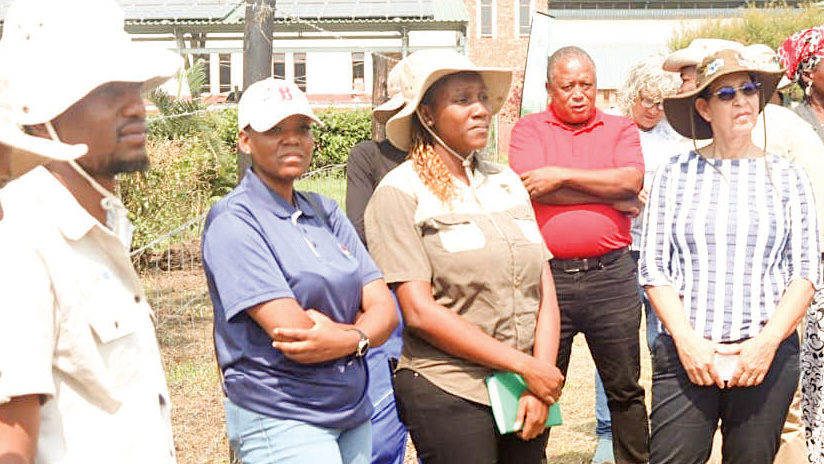
PELUM Eswatini, in collaboration with University of Eswatini (UNESWA), Eswatini National Agricultural Union (ESNAU) and COSPE, has inaugurated an Agroecology Demonstration Site at UNESWA’s Luyengo Campus. This initiative establishes a practical platform for advancing sustainable agriculture and strengthening Eswatini’s role in agroecological innovation across Southern Africa.
A living laboratory – The site functions as a living laboratory, integrating teaching, research and farmer-led experimentation. It facilitates co-learning among smallholder farmers, students and researchers, combining indigenous knowledge systems with scientifically grounded agroecological practices. The objective is to develop resilient, low-external-input farming systems that enhance soil functionality, improve productivity stability and support sustainable rural livelihoods.
Institutionalisation of agroecology – Currently, four UNESWA students are undertaking empirical research on bio-inputs, soil health dynamics and agronomic performance within integrated production systems. This contributes to the institutionalisation of agroecology within tertiary education curricula, ensuring that future agricultural professionals are equipped with competencies aligned to climate-resilient and resource-efficient farming systems. Notably, the initiative adopts a participatory research model, positioning farmers as co-researchers and innovation partners rather than passive beneficiaries.
Decentralised demonstration – Complementing the Luyengo site is the Ezulwini Urban Garden (Agroecology Demonstration and Training Centre), which extends agroecological application into urban contexts. Collectively, these platforms demonstrate the adaptability of agroecology across diverse agro-ecological and socio-economic settings, reinforcing its relevance for food system transformation, climate adaptation and inclusive development.
Regional initiative – The initiative is further embedded within a regional learning network spanning Kenya, Ethiopia and Zimbabwe. This transnational exchange framework strengthens knowledge diffusion, supports context-specific innovation and enhances the scalability of agroecological practices across Africa.
Why agroecology matters for smallholder farmers
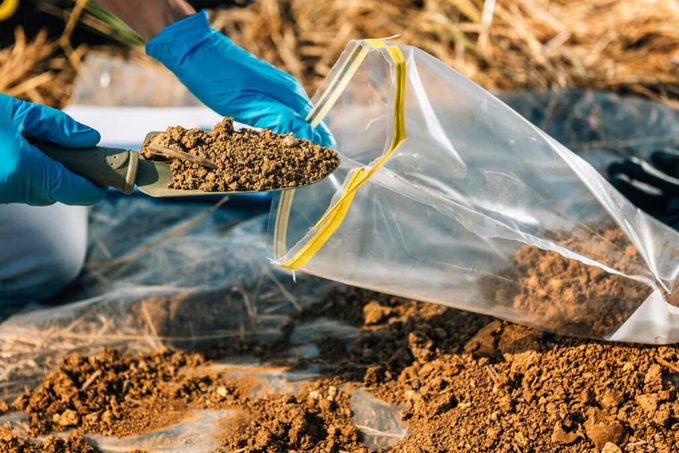
Soil system regeneration: Agroecological practices prioritise biological soil management through organic amendments such as compost and manure. These inputs improve soil structure, microbial activity, nutrient cycling and water retention, thereby sustaining long-term productivity without reliance on synthetic agrochemicals.
Economic resilience and input sovereignty: By reducing dependence on external inputs, agroecology lowers production costs and exposure to volatile input markets. The use of locally available resources and bio-inputs enhances farm profitability while strengthening farmers’ autonomy and financial stability.
Participatory innovation systems: The farmer-led approach fosters collective learning, adaptive experimentation and knowledge co-creation. This ensures that innovations are contextually relevant, scalable and responsive to local production constraints and opportunities.
Diversified and integrated production systems: Agroecology promotes crop diversification, mixed farming and crop–livestock integration, which enhance ecological synergies, optimise resource use efficiency and buffer farming systems against climatic and economic shocks.



















Leave a comment