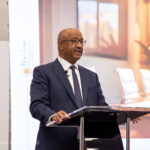
MBABANE – Prime Minister Russell Mmiso Dlamini is expected to table his response to a motion questioning his leadership style.
According to the House of Assembly Order Paper circulated by the Office of the Speaker on Thursday, the PM is expected to table the response tomorrow during a sitting scheduled for 2:30pm.
As reported by this publication, the PM accepted the motion, which was moved on June 10, 2026.
The motion was moved by Mbabane East MP Welcome Dlamini and calls on the PM to explain how what the MP termed his disruptive leadership style is consistent with the Tinkhundla System of Government, as established under the Constitution of the Kingdom of Eswatini and the Tinkhundla framework.
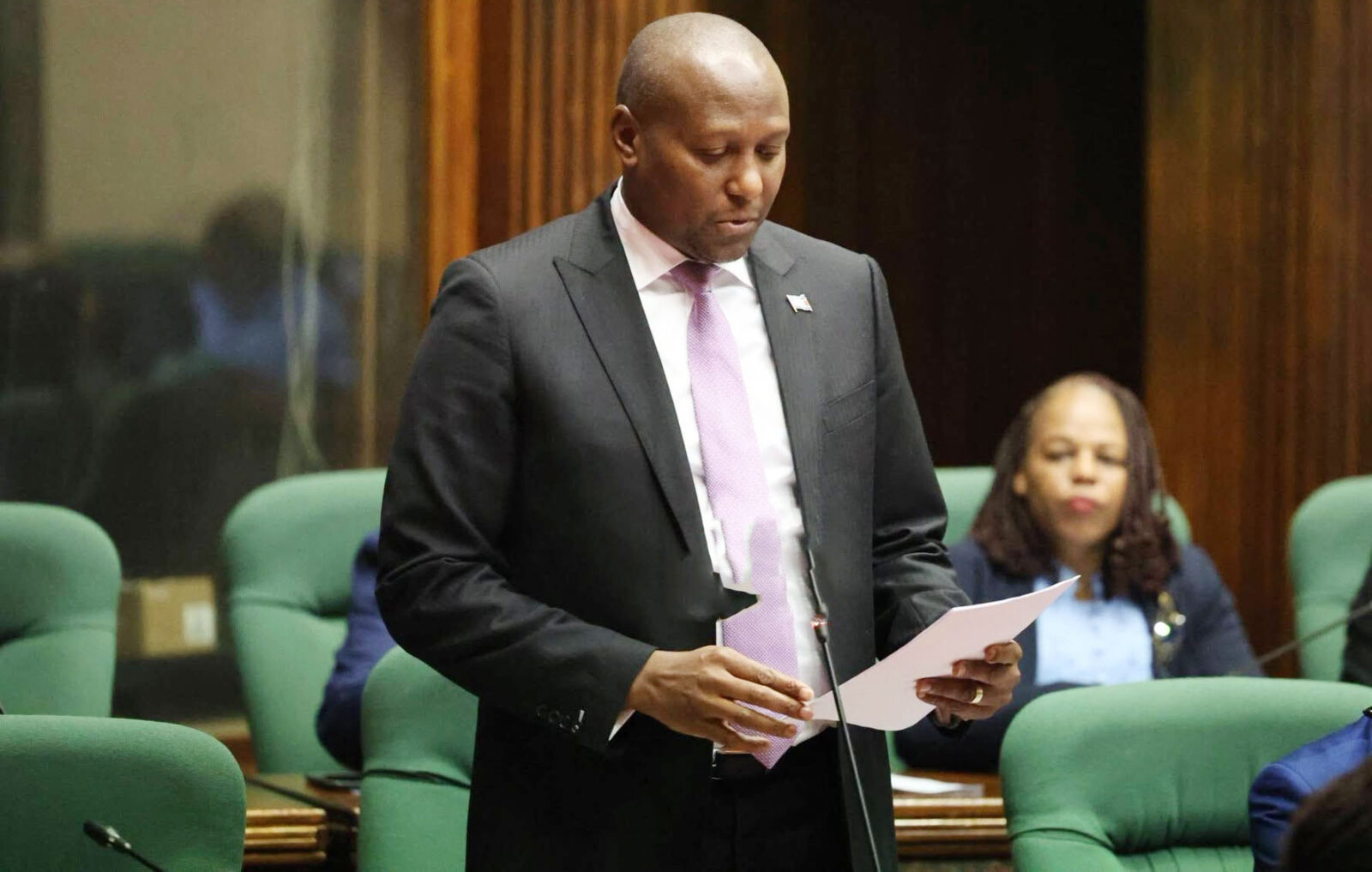
When debate on the motion began, the PM stood up and said he accepted it and would bring responses.
The PM said he had planned to respond on the same day, but the mover and seconder had added new information.
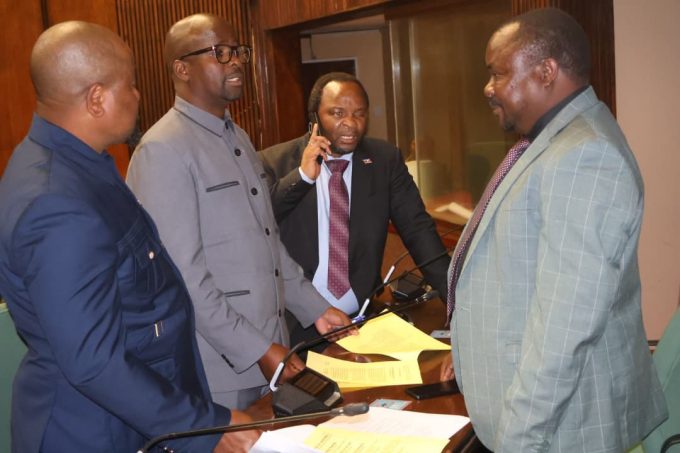
During the portfolio committee debate on the PM’s Office on Thursday, Lobamba MP Michael Masilela registered his disappointment over the matter.
Masilela said he had engaged Speaker Jabulani Mabuza and raised several issues, including the motion.
“I was disappointed when the prime minister accepted the motion and said he would provide a response. I want to state this: When I look at the prime minister, I look at the appointing authority. I respect this authority,” he said.
Elaborating, Masilela said when he looked at the PM, he saw the country’s governance structure.
“I do not see him as a person. Anything he says, I expect him to know that he represents government. Whatever has happened, I request him to put it aside. When we see him, we see government,” he said.
Masilela said he did not care who the PM had to respond to, whether the media or MPs, adding that he should put the matter aside.
Meanwhile, according to the motion, the PM has also been asked to outline how the leadership style affects the doctrine of collective responsibility within Cabinet, particularly whether it upholds or undermines the principle that all ministers are jointly accountable to His Majesty the King-in-Parliament for Government policies and actions.
The Mbabane East MP also called on the PM to detail the impact of the leadership style on service delivery across all sectors, including its effects on the efficiency, coordination and effectiveness of public service programmes, development projects and the welfare of emaSwati.
Furthermore, the MP moved that the PM’s response be accompanied by specific examples, timelines and measurable indicators to enable members to assess the compatibility of the leadership approach with the Tinkhundla System and its implications for good governance.
Ngudzeni MP Charles Ndlovu seconded the motion.
Towards the end of March, the PM, in an address to Parliament, defended key budget allocations, warning that misconceptions and insufficient information risked undermining critical government systems and national progress.
He began by addressing the e-Cabinet system, for which an allocation of about E5 million had been proposed for removal.
The PM said the recommendation to reduce the budget to zero stemmed from misinformation.
Drawing from Cabinet experience, he said its operations depended on a structured and confidential system that ensured proper preparation, secure deliberations and accurate record-keeping through formal minutes. According to the PM, the system is no longer functional and urgently requires restoration. He argued that eliminating the allocation would render Cabinet inoperative.
“If we reduce it to zero, we are saying Cabinet must be non-functional,” he cautioned, adding that such a move would disrupt Cabinet proceedings and slow down Government operations across the country. He said the amount was modest and meant to repair and sustain essential functions, not to introduce extravagant upgrades. Turning to another component, an automated system project under Head 3: Private and Cabinet, the PM highlighted the importance of a system that prioritises planning, monitoring, evaluation, accountability and learning.
He said the system was central to improving service delivery, a key demand raised during national consultations at Sibaya.
He acknowledged that the country’s planning processes were flawed and often characterised by irregular practices that had become accepted over time. He said the system would ensure that planning was done systematically and strategically before budgets were formulated. By aligning national priorities, such as those outlined in the Grand Plan and National Development Strategy (NDS), with budget allocations, the system would prevent what he called a ‘popcorn” approach, where projects were added each year without coherent direction.
Invoking guidance from King Mswati III, the PM referenced the directive to adopt the ‘nkwe’ approach, which calls for unity and coordinated action in national development. He warned that, without a clear shared direction, planning efforts would remain ineffective. He said the proposed system would ensure disagreements took place within a structured framework that kept the country on course.King Mswati III, the PM referenced the directive to adopt the ‘nkwe’ approach, which calls for unity and coordinated action in national development. Without a clear and shared direction, he warned, planning efforts would remain ineffective.
The proposed system would not eliminate disagreements, but rather ensure that they occur within a structured framework that keeps the country on course.
The PM reiterated that many legislators had not been adequately informed about the need for these systems, which had contributed to their reluctance to support the allocations. He urged MPs to seek accurate information and avoid bias when making decisions with far-reaching implications. In a broader appeal, the PM reminded legislators that ministries did not belong to individuals or surnames, but to the nation.
He said decisions made in Parliament should reflect this principle and prioritise citizens’ welfare. Through his address, the PM sought to reframe the budget debate as one grounded in facts, national interest and long-term planning, while urging Parliament to act with clarity, responsibility and a shared commitment to development.
PM provided clarification
Earlier in March, the PM clarified reports that a Cabinet minister had been fired.
The clarification was contained in the report of the PM’s Office Portfolio Committee on the debate of the ministry’s annual performance report for the 2025/2026 financial year and budget estimates for 2026/2027.
In a rebuttal, Dlamini described the claims as ‘not true’, saying it would be contrary to his mandate to obstruct programmes designed to improve service delivery.