… in agro-ecological zones
By Mthobisi Buthelezi
Choosing the right seed and ensuring its quality are the foundation of successful crop production. Soil Science and Plant Nutrition Research Officer in the Department of Agricultural Research and Specialist Services at the Ministry of Agriculture, Bongani Mvubu shares that farmers face diverse conditions across the Highveld, Middleveld, Lubombo and Lowveld, making it critical to select varieties adapted to local agro-ecological zones, while also ensuring seed purity, vigour and resistance to insects, diseases and drought. In this article, Mvubu integrates best practices on maize seed selection and seed quality control to provide farmers and extension workers with a practical guide:
Understanding the agro-ecological zones
- Highveld: Cooler temperatures, higher rainfall (seasonal), higher elevation → best suited for medium-to-late maturing varieties that tolerate cooler nights and longer growing seasons, (130–150 days. These varieties may require timely and appropriate amount of fertilizer application and moisture management to reach full potential.
- Middleveld: Moderate rainfall/temperatures, variable soils → flexible, medium-maturing varieties (110–130 days). Soil testing and balanced fertiliser application improves performance.
- Lowveld: Hot, dry, drought-prone often sandy soils → requires early-maturing (<95 days), drought and heat-tolerant varieties. Pair seed choice with conservation agriculture practices (mulch, tied ridges) to conserve moisture.
Key considerations in choosing a variety
- Farmer preferences and end-use
- Grain for milling/consumption: high kernel weight, disease resistance.
- Green mealies: large, sweet cobs that allow staggered harvest.
- Animal feed: yellow maize varieties.
- Resistance to insect-pests and diseases
- Select varieties tolerant to maize streak virus, grey leaf spot, stem borers, and fall armyworm.
- Consider local prevalence of striga (witchweed) and fungal diseases.
- Maturity and season fit
- Match days to maturity with rainfall patterns. Early varieties help escape drought in Lowveld; longer-season types exploit Highveld rainfall.
- Yield vs. stability
- Hybrids: higher yields (up to 40 per cent more than OPVs) but require annual seed purchase and higher inputs.
- Open-Pollinated Varieties (OPVs): cheaper, adaptable, allow seed saving, but lower yield ceiling.
- Seed quality certification: use certified seed (purity, germination, freedom from seed-borne disease).
Attributes of good quality seed
Good seed must:
- Have varietal purity (true to type): Seeds are varietally pure when they reproduce true to the variety, transmitting all its characteristics, genotypical as well as phenotypical.
- Show physical purity (free from weed seeds, inert matter): Seeds are physically pure when they are free of weeds, inert matter, seeds of other crops and they have a uniform appearance.
- Guarantee high germination rates (>90 per cent): Seeds with good germination have the ability to produce vigorous plants under favourable conditions. Good germination is one of the first essentials for good quality seed.
- Be free of seed-borne pathogens: Seeds can be a dissemination media of the diseases as well as acting as a primary inoculum source for diseases.
- Be properly packaged with certification tags and company logos.
Common problems leading to poor germination
- Dead seed: due to poor storage near chemical products (poisons, herbicides, paints paraffin), high humidity, or direct sunlight.
- Sprouted seed: premature germination in storage under moist conditions.
- Deep placement: planting too deep (>25 cm) delays or prevents emergence.
- Fertilizer scorching: when fertilizer directly contacts seed.
- Cracking or breaking of seed: caused by improper planter plate selection.
Seed quality checks at purchase (quick checklist)
- Buy certified seed from reputable dealers (look for labels/certificates).
- Check packaging date and storage conditions. Avoid old/poorly stored seed.
- Look for germination guarantee and percentage on bag (aim for >90% for good seed).
- Inspect for insect pests, mould, dampness or broken kernels.
- If unsure, perform a simple germination test: place 100 seeds between moist paper towels and count sprouts after 5–7 days.
Seed treatment, spacing and sowing considerations
- Seed treatment: Use recommended insecticidal/fungicidal seed treatments to protect seedlings from soil pests and seed-borne disease (follow label and safety rules).
- Sowing date: Match the variety’s maturity to the rainfall pattern, sow early enough to use the start of rains but avoid sowing into a false start.
- Planting density: Adjust plant population to variety’s vigour and moisture availability. In drought-prone Lowveld reduce populations slightly; in Highveld use recommended higher populations for hybrids.
- Fertiliser: Based on soil test; split applications (side-dressing) often improve efficiency.
Hybrid vs. Open-Pollinated Varieties (OPVs)
| Aspect | Hybrids | OPVs |
| Yield | High (6–14 t/ha for long-season hybrids), 40% higher than conventional varieties | Moderate (stable under varied conditions) |
| Uniformity | High, suited for mechanized harvest | Low, less predictable |
| Input Needs | Require fertilizer, good management | Perform under low-input systems |
| Seed Cost | Expensive, must buy annually | Cheaper, can save seed |
| Stress Tolerance | Bred for specific stresses | Naturally adaptable across conditions |
Characteristics of different maize hybrids
| Long season varieties | Days to maturity: 150-155 Potential yield: 7-14 T/Ha |
| Medium season varieties | Days to maturity: 135-145 Potential yield: 5-12 T/Ha |
| Short season varieties | Days to maturity: 120-130 Potential yield: 4-8 T/Ha |
| Ultra short season varieties | Days to maturity: 95-115 Potential yield: 2-4 T/Ha |
Practical farmer guidelines
- know your zone: Identify whether you are in the Highveld, Middleveld, or Lowveld.
- Match variety to end-use: Decide if maize is for household, commercial, or livestock.
- Check seed quality: Always buy certified seed, check packaging date, and inspect condition.
- Handle and store properly: Avoid chemicals, heat, and dampness; use pallets and ventilation.
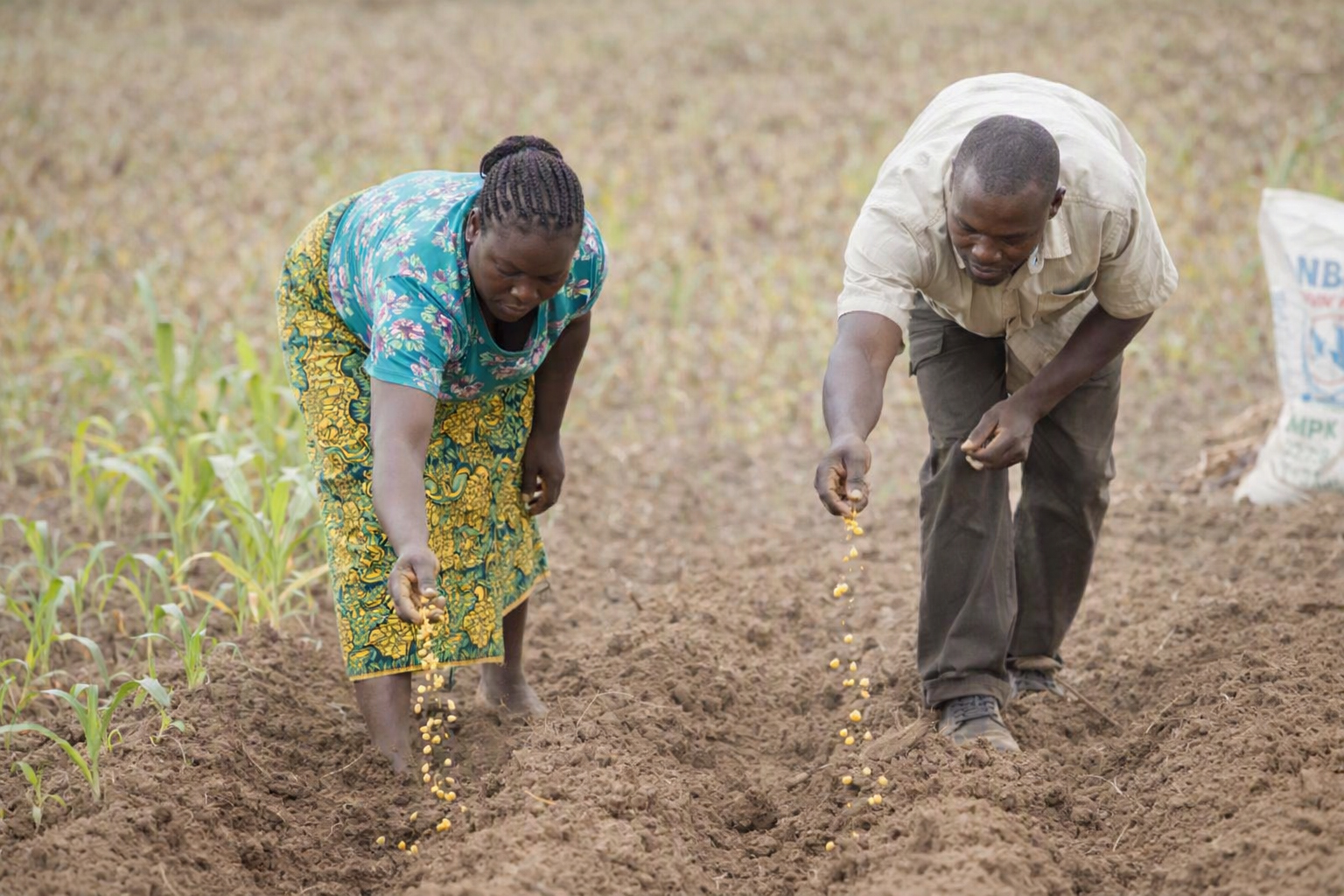
- Plant correctly: Use proper depth (5–7 cm), spacing, and fertilizer placement.
- Adopt moisture conservation: Mulching, tied ridges, and timely planting improve success.
- Monitor and manage: Scout for pests, rotate with legumes, and apply integrated pest management.