Sincere apologies for again bringing death – and not the best aspect of it either – to this page in such a short time. Yet, reflecting upon the issue, though not compromising that apology, the most fundamental component of life on this Earth is humanity. That is the human race, our behaviour and destiny. Death has its place there.
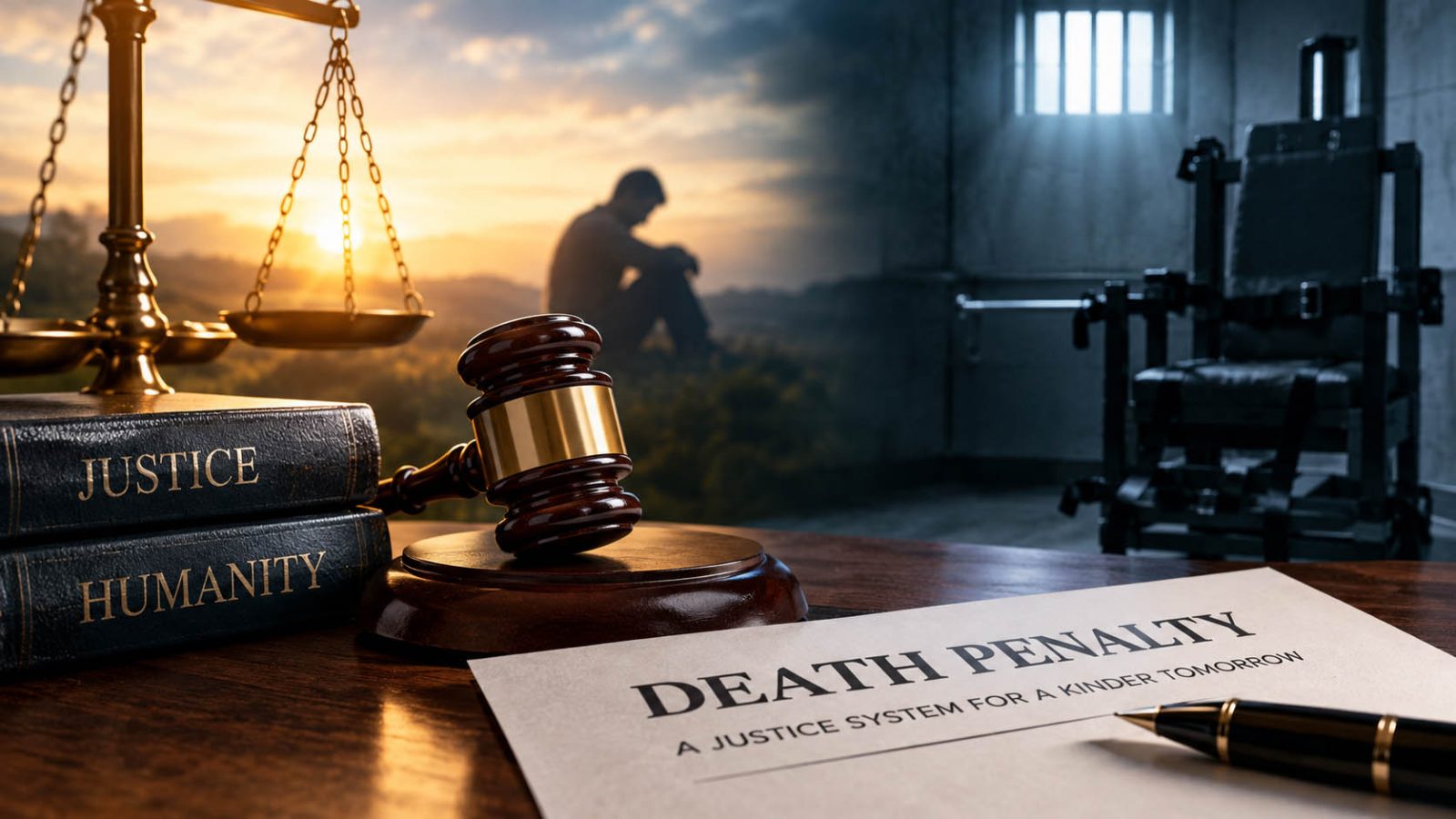
This article is devoted to one aspect of death: The penalty for very serious crime, and especially the current discussions around one criminal case in the USA and a personal confession by the writer.
Around 70 per cent of countries of the world have abolished or placed an indefinite moratorium on the penalty of death for the most serious crimes by any individual found guilty by a judicially authorised national court. There are different motives and explanations regarding the shift away from the death penalty.
The first reason, and perhaps the most powerful, is that as society moves forward in time it accepts more comprehensively that it is wrong to deprive a person of life, whatever the circumstances. That does not, of course, define precisely where you are allowed to cross the line and kill in battle, whether formal battle or personal defence in a civil context. That is left to the national courts to ensure that justifiable homicide keeps one well outside the ambit of the death sentence. Furthermore, societies – not all, but I will spare you the ugly detail – have steadily over the years improved, if I may use the word in a humanitarian sense, the methods of execution. We won’t dwell on those today, except to recognise that even the most civilised of methods of execution have demonstrated fragility in the course of execution; and even in the most respectable method – lethal injection.
To many it is simply barbaric to deprive a person of life in such a cold, calculating manner and a very painful one, albeit for a few seconds. Though in some schools of thought, the perpetrator of the most horrific murders has not behaved as a human being and is not entitled to be treated like one. Privately, most people might have that view. However, as history has shown, there is always the risk of executing an innocent person, though significantly reduced after the advent of DNA evidence. Where a person, incorrectly judged guilty, has been jailed, the subsequent pardon for wrongful imprisonment enables the resumption of normal life and, in many countries, the award of a very substantial amount of financial damages.
If, however, you’ve executed an individual, later found to be innocent, you cannot bring that victim back to life. Well, not yet, but with AI and the exponential rate of progress in technological innovation, it seems that nothing will be impossible in practical terms. I would place the ultimate bet on no one being able to predict progress in the key areas one century from today. That’s cheeky, of course, since, if wrong, I won’t be around to ‘pay up’.
Capital punishment, as the death penalty is known, has also been viewed through the centuries as a serious potential deterrent. In a broad, non-statistically proven sense, it is not likely to work. There is no counterfactual evidence; merely ‘would you have committed the murder if there was the death penalty?’ The perverted human mind that carries out the most appalling crime(s) that attract the death penalty rarely considers the implications of getting caught and punished for the crime(s) about to be committed.
There is also political pressure prevailing in certain parts of the world among the ‘clubs’ such as the European Union, with most countries complying with this for no good reason to object and abstain. It is likely that where there is a moratorium, this is simply the most practical intermediate stage towards complete abolition.
Last week there was the botched execution of Christa Pike, an American woman and survivor of serious abuse, who committed a horrible murder in 1992 and had been on Death Row for over 30 years. The failed execution was by lethal injection. Then, having tried to take her life, they’re now trying to save her life; perhaps the U-turn of the century. A good one, though. At the time of writing, she is in a critical condition, with the likelihood of death or survival with almost certain brain damage. My confession – I want her to recover fully and live to receive remission of the death penalty and perhaps be simply given prison for life, with a full mental assessment. She has served a substantial term of incarceration, with execution waiting on the doorstep throughout. The Bible advocates proportional justice (an eye for an eye), though later personal grace (turn the other cheek). It seems a fair and respectful view that God might decide that this woman has received full retribution for her crime; that enough is enough.
And when the US authorities bring the planning sheet to the table, why not eliminate the ridiculous disparity between States over the death penalty? One set of laws, one means of delivery. Achieving national uniformity, proudly broadcast to the world, with those marching in the new national uniform. Couldn’t resist that one.