For years, one of the most uncomfortable questions surrounding COVID-19 has been what happened to people who dared to question the dominant narrative.
During the pandemic, questioning vaccination policies could quickly turn a person into a pariah. Doctors, scientists, journalists and ordinary citizens who challenged aspects of the response were often dismissed as conspiracy theorists, accused of spreading misinformation or pushed out of conversations that were supposedly about science. Now, years later, hearings such as Canada’s Allison Inquiry are bringing some of those voices back into the public conversation.
A recent video featuring Dr Peter McCullough’s testimony at the inquiry has reignited an argument that was never properly settled: When governments and health authorities were asking billions of people to accept a new type of vaccine during an unprecedented emergency, how much questioning was allowed? McCullough has made some very serious claims about COVID-19 vaccines, including allegations concerning spike-protein research and vaccine injuries. Those claims should be investigated rather than simply accepted or dismissed. The same principle should apply to the claims of people who say their health changed after vaccination.
The question is not whether every vaccine injury story must automatically be accepted as proof of causation. It is whether every credible complaint deserved to be heard. That distinction matters. COVID-19 vaccines were developed and deployed with extraordinary speed. That speed was understandable in the middle of a global emergency, but it also created an uncomfortable ethical question. Long-term effects, by definition, cannot be fully known before enough time has passed. Governments were asking people to make decisions under uncertainty. The ethical responsibility in such circumstances should have been openness about that uncertainty. Instead, much of the public debate became binary. You were either ‘pro-vaccine’ or ‘anti-vaccine’. There was little room for someone to say: I believe vaccines may save lives, but I also want questions about safety investigated.
That should never have been an unreasonable position. In fact, some concerns that were initially treated as misinformation eventually became recognised safety issues. In 2021, the World Health Organisation acknowledged a likely causal association between mRNA COVID-19 vaccines and myocarditis and pericarditis, particularly among younger males. WHO called for continued monitoring and reporting of adverse events.
That does not prove every illness reported after vaccination was caused by a vaccine. It does, however, make one lesson impossible to ignore: listening to safety concerns is part of science.
So where was the morality when people were told, directly or indirectly, that refusing vaccination could cost them employment, access to services, travel opportunities or social acceptance? Where was the humility when people who said they had been injured were sometimes treated as though their experiences were inherently fraudulent?
And where was the curiosity when people described new symptoms, recurring illnesses or health problems they believed had never troubled them before? Some people have described developing conditions after vaccination that they believe were connected to the shot. Others say dormant health problems returned. Some report neurological symptoms, heart problems, severe fatigue or other unexplained changes. Their stories are not automatically medical proof, but neither are they automatically lies.
That is where the debate should have been from the beginning. The existence of vaccine-related adverse events is now acknowledged by mainstream health authorities. WHO’s current guidance continues to state that approved COVID-19 vaccines provide protection against severe disease and death, while also acknowledging side effects and continuing safety surveillance.
Both realities can exist at once. A vaccine can provide benefits at the population level while some individuals experience serious adverse effects. Recognising one does not require denying the other. The same principle should apply to the people who warned during the pandemic.
Were all of them right? Certainly not. Were all of them wrong? Nope.
The Allison Inquiry has given a platform to Canadians who say they were injured following COVID-19 vaccination, while testimony from figures such as McCullough has reopened fierce arguments about vaccine safety, research and pandemic policy.
Whether the most controversial allegations withstand rigorous scientific scrutiny is another matter. That scrutiny is precisely what should happen.
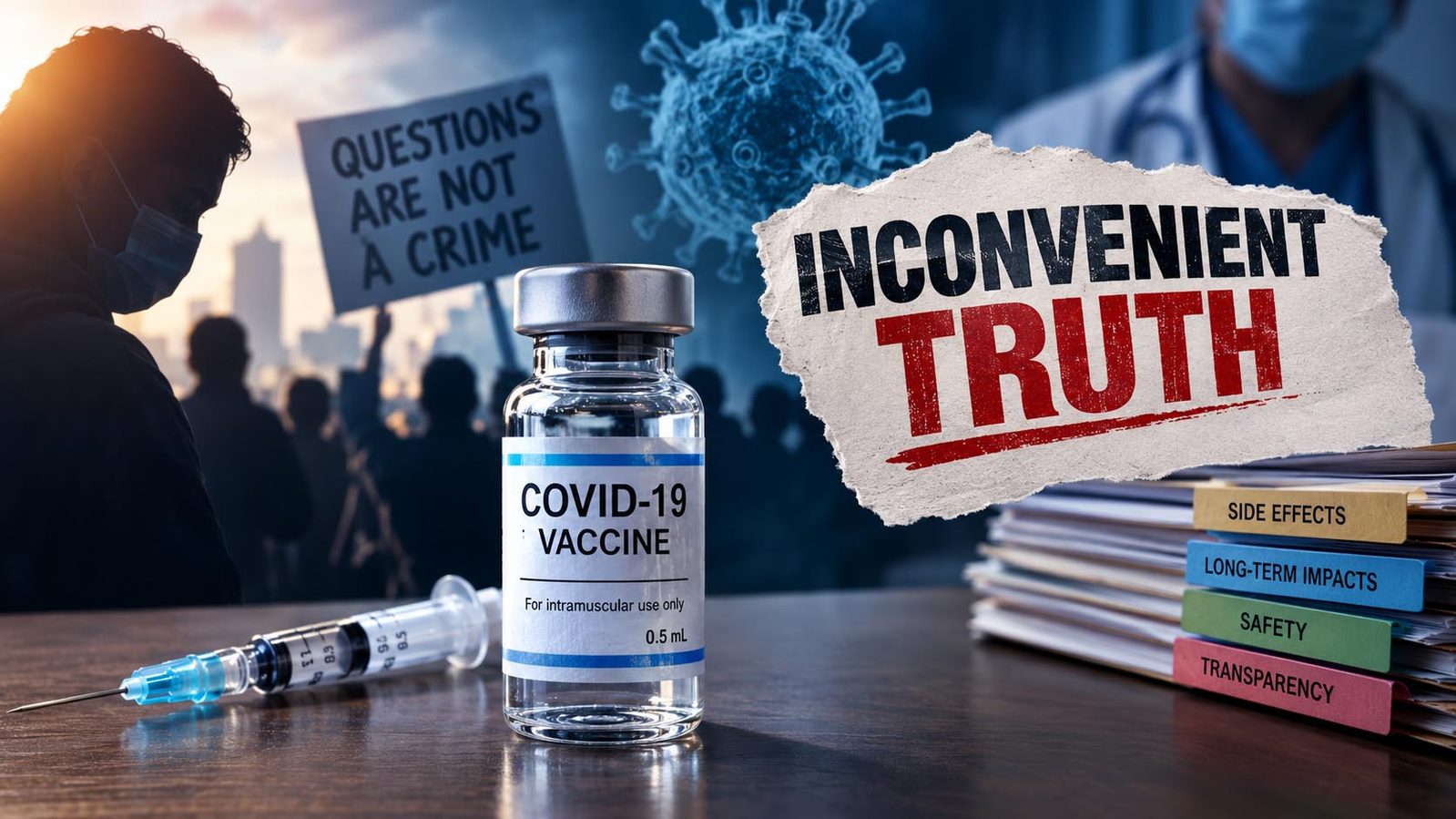
Perhaps the greatest failure of the pandemic was not that authorities made decisions with incomplete information. Extraordinary circumstances often require decisions before every answer is available. The failure would be if society learnt nothing about what happens when questioning becomes socially unacceptable. People should never have had to choose between trusting medicine and asking questions. They should have been allowed to do both. The real test of morality is what happens when the truth is inconvenient.