Madam,
Day after day, the scorching sun continues to tighten its merciless grip on Eswatini, baking the land, exhausting those who labour beneath its fury and reminding us that extreme heat is far more than a seasonal inconvenience.
As temperatures continue to climb to increasingly oppressive levels – turning ordinary afternoons into gruelling tests of human endurance – they represent a mounting public health threat with potentially devastating consequences.
For a majority of emaSwati as they try to contend with these punishing conditions amid a growing concern about the anticipated El Niño phenomenon, an uncomfortable question demands our attention: Are we adequately prepared for the health hazards accompanying this extraordinary heat?
Beneath the blistering afternoons and increasingly stifling nights lies a danger that warrants urgent public awareness, collective vigilance and decisive preventive intervention.
The human body has remarkable mechanisms for regulating its internal temperature, but even these biological safeguards have their limits. Prolonged exposure to excessive heat can precipitate dehydration, heat exhaustion and, in the most severe circumstances, heatstroke, a potentially fatal medical emergency. Dehydration occurs when the body loses more fluids than it replenishes, potentially producing headaches, dizziness, unusual fatigue and profound physical weakness. Heat exhaustion develops when the body’s cooling mechanisms struggle to cope with excessive thermal stress; without timely intervention, the condition can deteriorate into heatstroke, which may cause confusion, seizures, organ damage and death. The disturbing reality is that these complications can develop while people remain engrossed in their daily responsibilities, oblivious to the physiological distress unfolding within their bodies. We must, therefore, discard the dangerous misconception that enduring extreme temperatures is simply an unavoidable hardship. No livelihood, obligation or deadline should come at the expense of human life. Although excessive heat poses a threat to the entire population, its consequences are disproportionately severe for certain groups. Older people, infants, outdoor workers and individuals living with pre-existing medical conditions are particularly susceptible to heat-related complications.
Protection
For many outdoor labourers, avoiding the sun is not a realistic option; their economic survival depends on performing physically demanding work, frequently under conditions that offer inadequate protection from the elements. Farmworkers, construction crews, security guards and roadside traders may consequently endure prolonged exposure without sufficient drinking water, shaded resting areas or opportunities to recuperate. The danger, moreover, does not necessarily recede when daylight disappears.
Persistently elevated nighttime temperatures can disrupt sleep, impede physiological recovery and compound exhaustion, leaving the body increasingly vulnerable to heat-related illness. These circumstances demand more than individual caution; they require institutional accountability and collective responsibility. Employers must implement reasonable safeguards, while families and communities should remain vigilant about the well-being of those whose circumstances place them at heightened risk. The anticipated El Niño phenomenon adds another dimension to the urgency of this conversation. El Niño is a naturally occurring climate pattern characterised by unusually warm sea-surface temperatures in the tropical Pacific Ocean, influencing atmospheric circulation and weather patterns across different parts of the world.
In Southern Africa, El Niño events have frequently been associated with below-average rainfall, drought and heightened agricultural vulnerability, although their effects vary between events and geographical locations. It would be scientifically inaccurate to attribute every episode of extreme heat directly to El Niño; nevertheless, the prospect of adverse climatic conditions reinforces the imperative of preparedness. Prolonged heat and insufficient rainfall can exacerbate water scarcity, undermine agricultural productivity, destabilise household food security and intensify the financial hardships confronting already vulnerable families. These interconnected threats demand a coordinated and forward-looking response from government institutions, healthcare professionals, employers and communities. Public education, responsible water management, accessible health information and effective emergency preparedness must become tangible priorities rather than rhetorical commitments activated only when catastrophe strikes.
Commitment
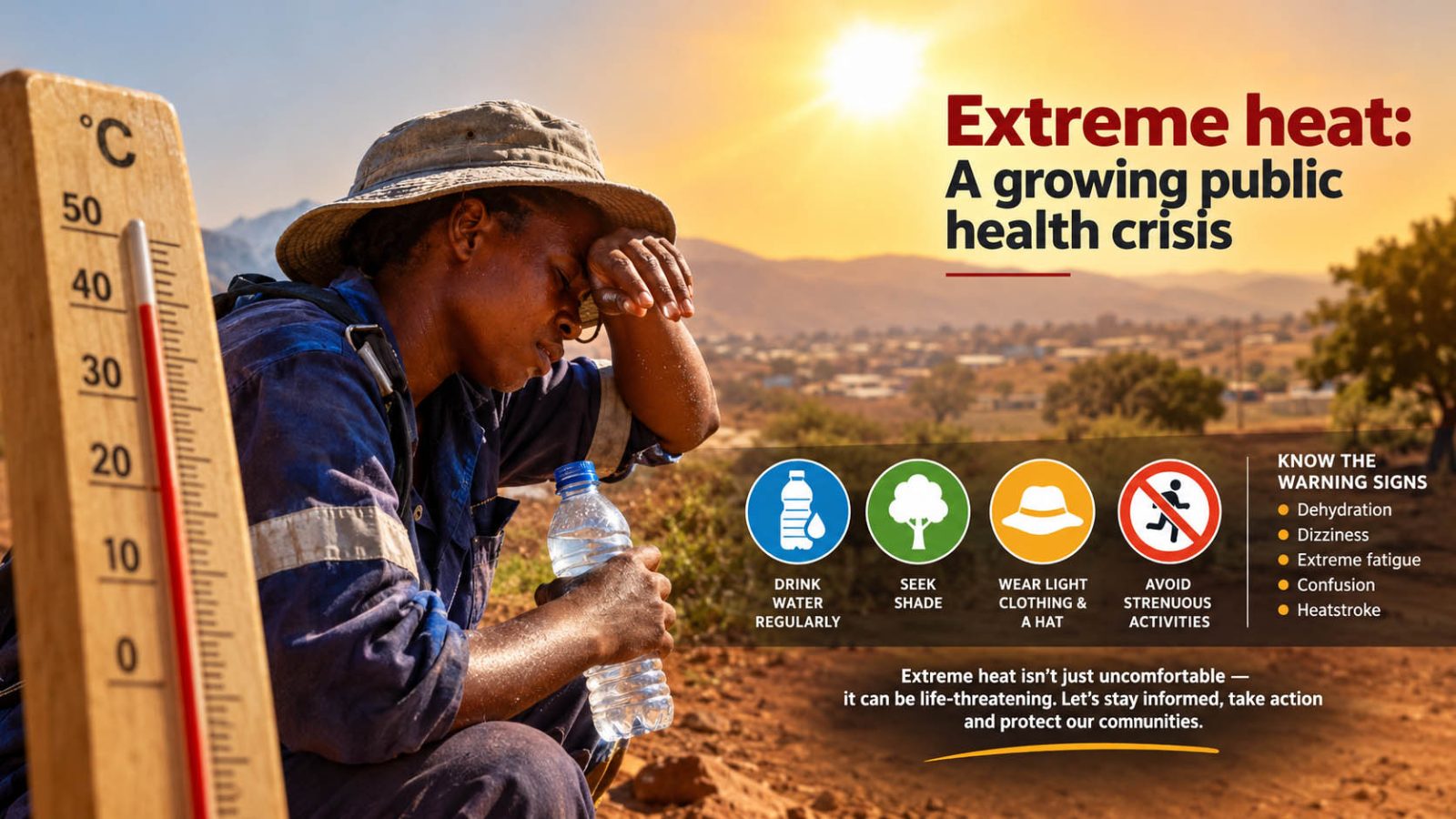
As temperatures continue to soar, safeguarding human life requires informed decisions, practical precautions and an unequivocal commitment to public well-being. People should drink water regularly, seek shade whenever possible, wear lightweight, loose-fitting clothing and avoid strenuous activities during the hottest periods of the day.
Employers must provide outdoor workers with adequate drinking water, reasonable rest breaks and shaded recovery areas. Families should pay particular attention to children, older relatives and individuals with existing medical vulnerabilities. Equally important is the ability to recognise the warning signs of a potentially life-threatening emergency.
In conclusion, extreme heat must not be trivialised as another seasonal inconvenience that emaSwati should simply endure in silence. The preservation of human life demands a well-informed public, responsible institutions and a resolute determination to prevent avoidable suffering. We cannot afford to wait until preventable illness and death force us to confront the consequences of our complacency.
Mbuyiselo S Sikhondze