
MBABANE – Consumers could face another financial squeeze after the Eswatini Electricity Company (EEC) applied for yet another electricity tariff increase, barely seven months after the latest adjustment took effect.
The power utility has approached the Eswatini Energy Regulatory Authority (ESERA), seeking an 18.38 per cent tariff increase for the 2027/28 financial year and a further 14.68 per cent adjustment for 2028/29.
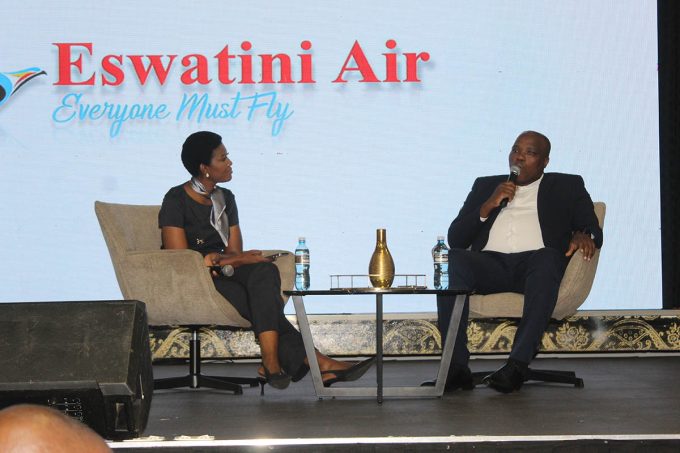
When making the announcement yesterday, ESERA Chief Executive Officer (CEO) Skhumbuzo Tsabedze stated that EEC requests a revenue requirement of E4.683 billion for the financial year 2027/28 and a revenue requirement of E4.939 billion for the financial year 2028/29.
“This translates to an average tariff increase of 18.38 per cent for the financial year 2027/28 and 14.68 per cent for the financial year 2028/29, excluding the 2.5 per cent Electrification Access Fund Levy and 15 per cent value added tax (VAT),” said Tsabedze.
According to EEC, the application is driven primarily by the cost of bulk electricity purchases, which constitute approximately 61 per cent of the total revenue requirement, as well as the recovery of E533.1 million in past under recoveries.

The utility states that the proposed revenues are required to cover prudently incurred costs, maintain network operations and ensure the continued reliability and quality of electricity supply.
If approved, the first increase would take effect from April 1, 2027, meaning households and businesses could once again have to dig deeper into their pockets to keep the lights on.
In practical terms, the proposed 18.38 per cent increase means that consumers who currently receive approximately 35 units of electricity for E100 could receive only about 29 units for the same amount, assuming the increase is applied directly to the unit tariff.
This would effectively mean that consumers would have to spend more money to maintain their current electricity consumption.
What makes the latest application particularly significant is that it comes shortly after previous electricity tariff adjustments.
In April 2025, consumers were subjected to an average electricity tariff increase of eight per cent after government intervened to reduce the impact of the increase approved by ESERA.
The situation was repeated in April 2026, when consumers faced another adjustment. Although ESERA initially approved an average increase of 13.61 per cent, government funding subsequently reduced the effective average adjustment to 11.74 per cent.
This means consumers have experienced electricity tariff adjustments in two consecutive financial years, with another substantial increase now being sought for April 2027.
However, electricity is not the only commodity that has become more expensive.
Households have also had to contend with increases in the price of bread, fuel and other essential goods, placing additional pressure on disposable incomes.
In October 2025, consumers were informed of a seven per cent increase in bread prices, which took effect on November 1 of that year.
Barely 11 months later, another 4.23 per cent increase was approved, taking effect on October 1, 2026.
The latest adjustment pushed the maximum retail price of an 800g white loaf from E17.90 to E18.66, while the brown loaf increased from E15.60 to E16.26.
This means consumers have experienced two regulated bread price increases within less than a year.
Fuel prices have also been a source of pressure during 2026, with several adjustments affecting motorists and households.
In April and May, petrol and diesel prices recorded substantial increases, while another adjustment took effect in September. Petrol increased by E1.30 per litre, from E24.67 to E25.97, while diesel rose by E1.35 from E27.50 to E28.85.
The increases in fuel prices have implications beyond motorists, as higher transportation and distribution costs can also affect the prices of goods and services.

The cost-of-living pressure is also reflected in the country’s inflation figures.
According to the Central Statistical Office’s September 2026 Consumer Price Index report, annual inflation stood at 2.9 per cent, up from 2.8 per cent in August.
Housing and utilities recorded annual inflation of 5.9 per cent, with electricity prices increasing by 15.1 per cent and water supply by four per cent, while liquid fuels experienced a staggering 35.6 per cent annual jump. Water supply also exerted upward pressure, climbing 4.0 per cent.
Transport, accounting for 17.53 per cent of consumer spending, transport inflation climbed from 0.5 per cent in September 2025 to 4.2 per cent in September 2026, contributing 0.7 percentage points to headline inflation. This increase was spearheaded by fuels and lubricants for personal transport (which jumped 25.1 per cent annually) and passenger transport by air, which saw a 15.8 per cent increase.
Meanwhile, education recorded an annual inflation rate of 3.4 per cent and contributing 0.2 percentage points, education costs rose across pre-primary, primary (6.2 per cent), secondary (3.1 per cent) and tertiary levels (4.4 per cent).
Against this background, the proposed electricity tariff increases could add another burden to households and businesses already having to adjust to changing prices.
For families that depend on prepaid electricity, the impact could be particularly noticeable because the same amount of money would purchase fewer units if the proposed increase is approved.
Businesses, particularly those that depend heavily on electricity for their daily operations, could also face increased operating costs, with possible implications for the prices of their products and services.