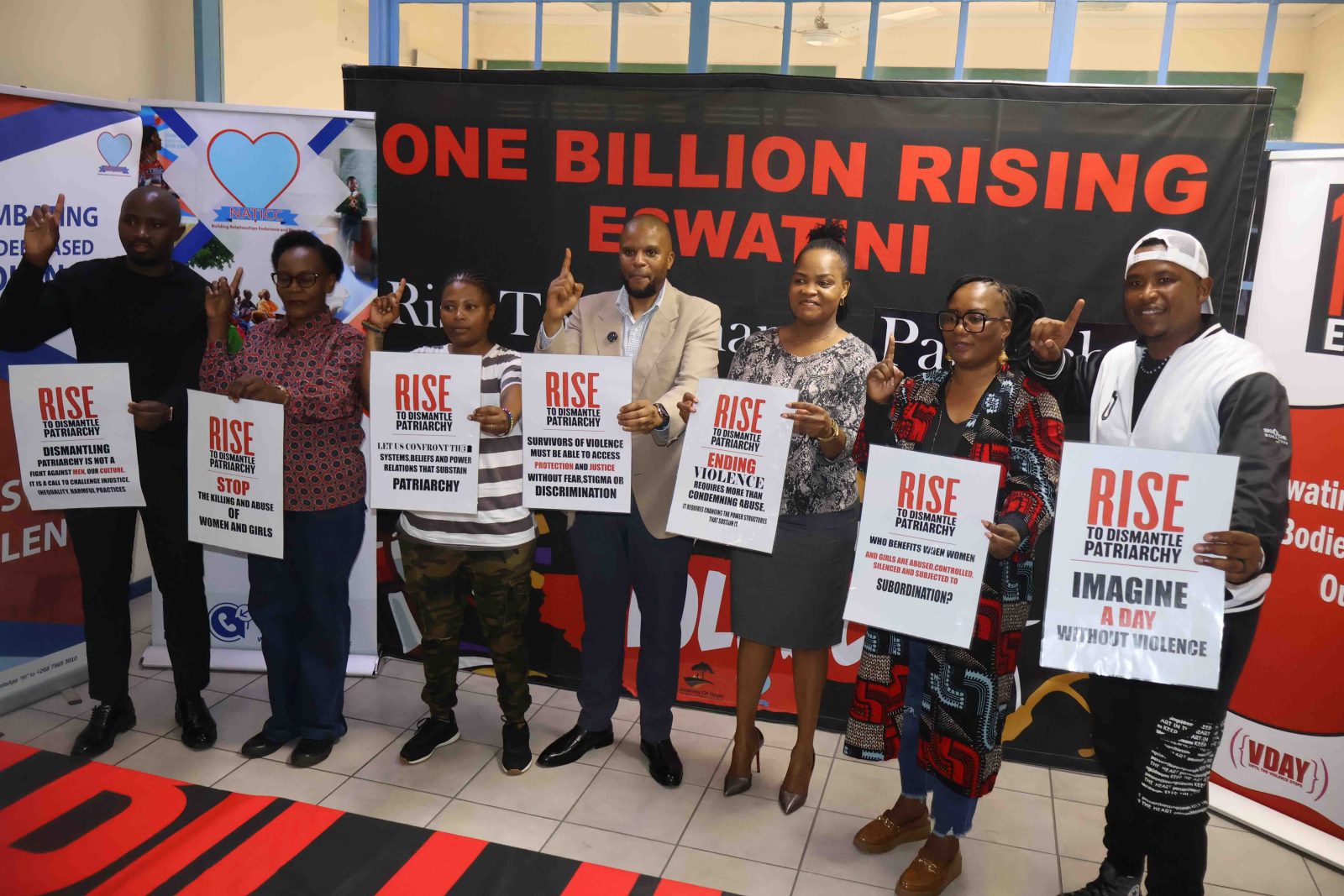
MANZINI – One Billion Rising Eswatini has challenged the country to confront the beliefs, cultural practices and unequal power relations that perpetuate gender-based violence.
The organisation warned that addressing individual cases of abuse without tackling their underlying causes will not bring lasting change.
The organisation has unveiled ‘Rising to Dismantle Patriarchy’ as its 2027 campaign theme, accompanied by the call ‘Imagine a Day Without Violence’, through which it wants Emaswati to examine how unequal power relations continue to affect women and girls in their homes, communities and society.
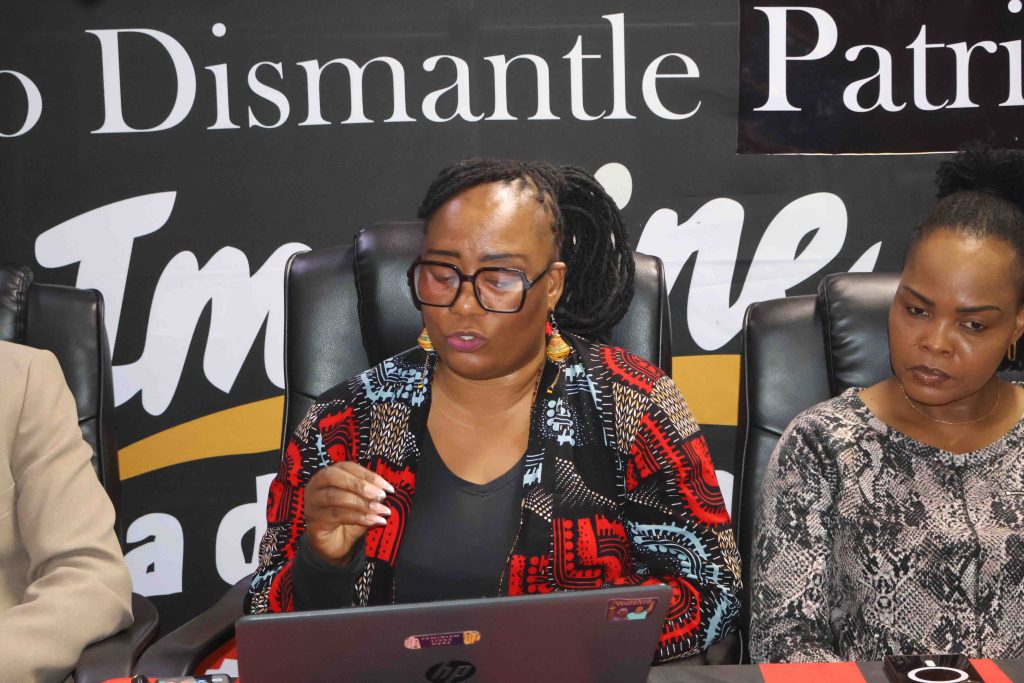
The theme was announced by Colani Hlatjwako, One Billion Rising Africa Regional Coordinator, during a media briefing held at FLAS in Manzini, ahead of the 16 Days of Activism Against Gender-Based Violence, which runs from November 25 to December 10.
Hlatjwako said the campaign was intended to move the national conversation beyond raising awareness about gender-based violence towards confronting the systems, beliefs and attitudes that sustain it.
She questioned why violence against women and girls continued despite years of activism, awareness campaigns, community dialogues, legislation, advocacy and support programmes for survivors.
According to Hlatjwako, the persistence of violence requires society to look beyond the visible acts of abuse and examine the structures that promote gender inequality, silence survivors and normalise women’s subordination.
She explained that patriarchy was a system of power that gave men greater authority and control over women, limiting their rights, opportunities, freedom and participation in decision-making.
The system, she said, was sustained through unequal power relations, harmful social norms, discriminatory practices and attitudes that placed women and girls in subordinate positions.
Giving examples of how patriarchy manifests itself in the everyday lives of Emaswati, Hlatjwako cited widows who were left without houses or denied the right to inherit from their deceased spouses.
She also pointed to girls being married off at the expense of their education, choices and future prospects, as well as teenage pregnancies and older men, including so-called sugar daddies, who exploit the vulnerability of young girls.
Women’s challenges in accessing, owning and controlling land were also highlighted, alongside situations where women’s and young people’s leadership was questioned, undermined or dismissed, contributing to their underrepresentation in decision-making positions.
Hlatjwako further raised concerns about men who abandon their family responsibilities, leaving women and children to struggle alone, a practice she described using the SiSwati expression bayabhunguka babuye sebangalutfo.
She also cited reproductive coercion, where men want children but are unwilling to provide for them and resist family planning, as well as marital rape, which she said was sometimes excused through beliefs that paying lobola meant a woman had surrendered her right to refuse sexual intercourse.
Other manifestations included preventing women from working or earning their own income, rape, abuse and the killing of women and girls.
She said these experiences were interconnected and reflected unequal power relations determining whose voices mattered, who made decisions, who controlled resources and whose rights were respected.
The regional coordinator challenged society to ask who benefited when women and girls were abused, controlled, silenced and subjected to subordination.
She noted that the effects of patriarchy extended beyond women and girls, with young people, poor communities and marginalised groups also experiencing discrimination and exclusion in systems where power was concentrated in the hands of a few.
However, Hlatjwako emphasised that dismantling patriarchy was not a fight against men, Eswatini’s culture or national identity.
Instead, she said it was a call to challenge injustice, inequality and harmful practices wherever they existed, while building a society where women and men, girls and boys could live with dignity, exercise their rights and participate equally in shaping their futures.
She called for difficult national conversations about whether existing laws adequately protected and promoted gender equality and whether their implementation translated into meaningful improvements in the everyday lives of women and girls.
She also questioned whether certain cultural practices and traditions continued to reinforce unequal power relations and challenged society to distinguish between cultural practices that upheld dignity and those that perpetuated harm.
Hlatjwako said the values taught to children about gender, power, respect and equality needed to be examined.
She called for society to unlearn harmful beliefs, challenge toxic practices and strengthen positive cultural values that promoted dignity, compassion, respect and shared responsibility.
She added that boys and girls needed to grow up understanding that equality was not a privilege to be negotiated but a fundamental principle of a just society.
According to Hlatjwako, the responsibility of ending gender-based violence was not simply to condemn abuse after it happened, but to create conditions in which violence was neither tolerated nor normalised.
Meanwhile, 2027 will mark 15 years of the One Billion Rising global movement, which has used resistance, solidarity and collective action to mobilise communities against violence towards women and girls.
Hlatjwako said the milestone presented an opportunity to recognise the victories achieved, appreciate individuals and institutions that had contributed to the movement and reflect on the work that remained.
Over the years, One Billion Rising Eswatini has taken its campaign to grassroots communities and built partnerships with more than 40 civil society organisations, government institutions, the corporate sector, trade unions, traditional leaders, Parliament and the Church.
She said these partnerships had helped the movement reach communities, create spaces for dialogue, amplify voices and strengthen collective efforts towards ending gender-based violence.
One Billion Rising is an artistic movement that uses creativity, music, dance, culture and collective action to mobilise people against violence.
As part of the 15-year celebrations, the Eswatini chapter will take its 2027 message across the country between February and March through community-centred festivals, Community Circles, outreach engagements and artistic activations.
The programme will include the Kasi Stage Festival in Mbikwakhe, Matsapha, while Nhlangano will host a festival that will take the campaign to the region for the first time.
Cultural festivals on ending violence are also planned for Sigwe and Maphalaleni, where music, art and dance will be used to mobilise communities against gender-based violence.
The programme will further include Community Circles aimed at deepening public understanding of patriarchy and challenging harmful practices.
School activations will also be conducted to promote gender equality, respect and violence-free communities.
Hlatjwako said the activities were intended to educate and empower Emaswati to understand patriarchy, recognise its effects and become active participants in transforming the structures that sustain inequality and violence.
She announced that the organisation would formally introduce its partners and sponsors by December 2026, with further updates on the festivals, participating communities and programme developments to be communicated to the public.
Hlatjwako highlighted the continued involvement of NATICC, which has partnered with One Billion Rising for 14 years and will take a leading role in coordinating and supporting campaign activities in the Shiselweni Region.
She also welcomed Women Unlimited, which had joined the 2027 campaign early and committed to supporting some of the planned activities.
The organisation further confirmed that it would continue working with Festival Director Thamsanqa ‘KRTC’ Sibandze, who has provided artistic leadership to the One Billion Rising Eswatini festivals since 2024.
Hlatjwako extended appreciation to members of the media for helping amplify the campaign’s message, educate the public, challenge harmful narratives and keep gender-based violence in the national conversation.
As the 2027 campaign takes shape, she called on men and women, young people, traditional leaders, government, civil society, religious institutions, the private sector, artists and community members to participate.
She said the organisation envisioned a society where women and girls could walk freely without fear, girls could grow up with choices and opportunities, widows were protected, women’s voices respected and men embraced equal responsibility.
She further imagined homes becoming places of safety, love and dignity.
Hlatjwako said achieving such a society required collective responsibility and a willingness to recognise the victories made over the years without losing sight of the changes that were still needed.
She challenged Emaswati to question, unlearn harmful practices, rebuild social values and rise together.
In closing, she said the question was not whether the country could afford to dismantle patriarchy, but whether it could afford to continue living with the consequences of a system that denied people dignity, freedom and humanity.
In 2027, the movement wants the country to move beyond talking about violence and confront what sustains it, under the call: ‘Rise to Dismantle Patriarchy. Imagine a Day Without Violence.’
Churches called to break silence on GBV
MANZINI – Churches in the Shiselweni Region have been challenged to take a more active role in confronting gender-based violence (GBV), with calls for religious institutions to use their influence to promote safe communities and support survivors of abuse.
The call was made by Sisekelo Nzima, Executive Director of NATICC (Nhlangano AIDS Training, Information and Counselling Centre) who emphasised the importance of involving churches in the fight against GBV as part of efforts to strengthen community responses to violence.
The appeal comes following the formalisation of a partnership between the Nhlangano AIDS Training Information and Counselling Centre (NATICC) and the global One Billion Rising Campaign, which seeks to strengthen efforts to prevent and respond to GBV in Eswatini.
As part of the collaboration, NATICC will spearhead the One Billion Rising Festival in the Shiselweni Region, bringing together churches, traditional leaders, schools, youth groups, government departments and civil society organisations.
The involvement of churches is considered important because of their influence in communities and their role in shaping social values, family relationships and attitudes towards violence.
Religious institutions are being encouraged to open their doors and voices to the campaign, helping communities understand that violence has no place in homes, relationships or society.
Churches can also play an important role in ensuring that survivors are not silenced, blamed or pressured to remain in abusive relationships, but are instead encouraged to seek assistance and access appropriate support services.
According to NATICC, the partnership will focus on prevention, response, community mobilisation, advocacy and collaboration.
Through these interventions, the organisation intends to promote positive attitudes that reject violence while strengthening referral pathways to ensure survivors receive assistance with dignity and confidentiality.
The organisation noted that GBV remained one of the country’s pressing human rights, public health and development challenges, affecting the safety, dignity and health of women, girls and men.
The One Billion Rising Campaign is a global movement that mobilises people to rise, dance and speak out against violence against women and girls.
Through the festival, communities in Shiselweni will have an opportunity to speak openly about violence, demonstrate solidarity with survivors and call for justice, accountability and meaningful change.