

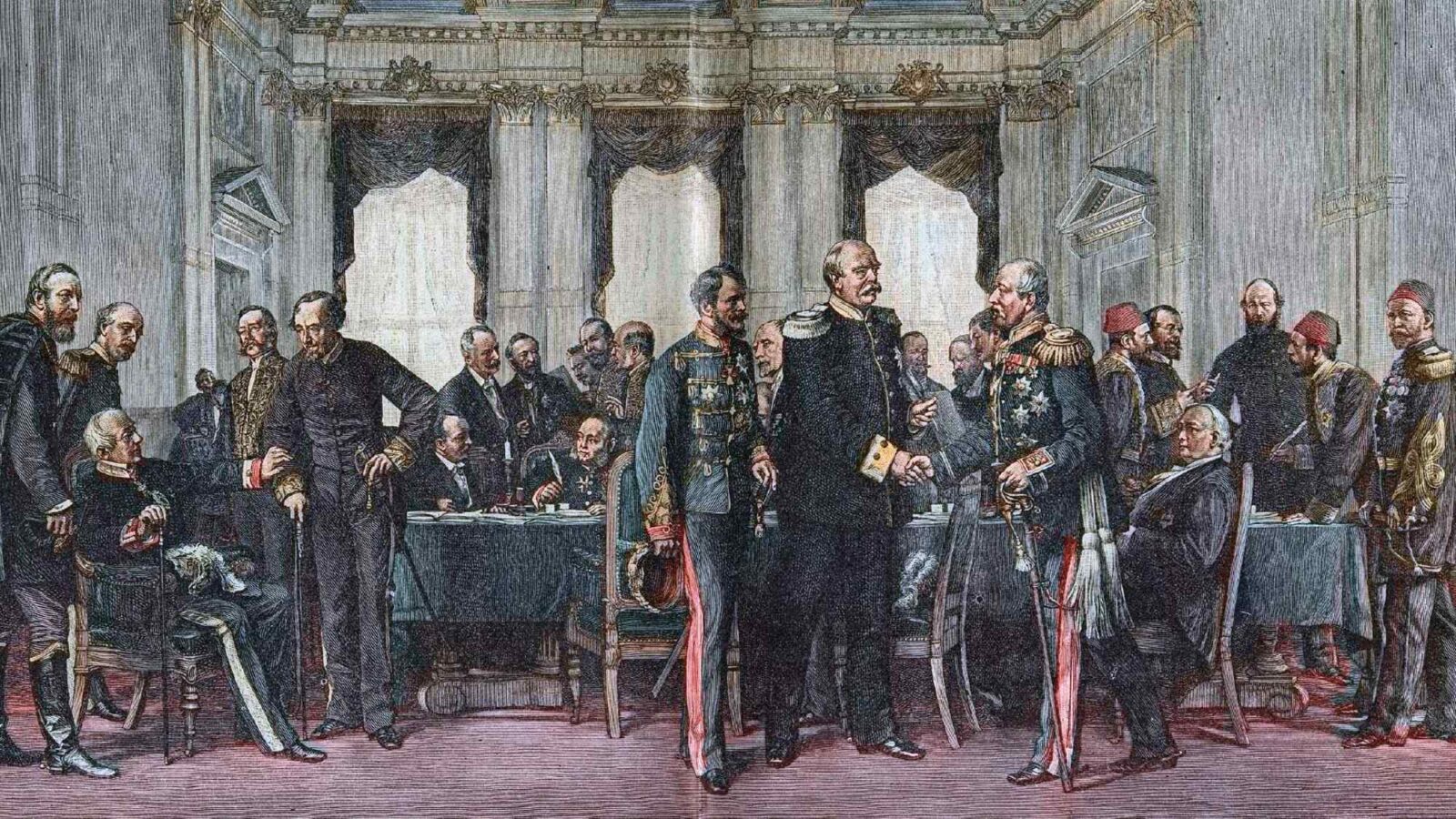
In a bold and historic move, Namibia, Botswana and Zambia have announced the removal of border restrictions; allowing citizens to travel across their frontiers using only national identity cards. This seemingly administrative change carries immense symbolic and practical weight. It represents not only a victory for everyday citizens who will now experience easier travel, cheaper costs and quicker processing times, but also a significant step towards regional integration within the Southern African Development Community (SADC). More importantly, it is a quiet yet powerful act of decolonisation – the deliberate undoing of the damage inflicted by European powers during the Scramble for Africa and its culmination in the infamous Berlin Conference of 1884–1885.
This policy, if expanded, could ignite the long-delayed project of African unity. It demonstrates the possibility of a United Southern African State – a federation that many dreamers, activists and Pan-Africanists have long envisioned.
The long shadow of the Berlin Conference
Between 1884 and 1885, 14 European powers, among them Britain, France, Germany, Portugal, Spain, Belgium and Italy, met in Berlin to divide Africa among themselves. Not a single African leader was invited. The decisions taken in those months were made about Africa, but without Africa. The purpose of the conference was not to develop Africa, but to prevent European wars over colonies, while maximising the exploitation of African land and resources.
Lines were drawn with rulers on European maps, cutting through ancient kingdoms, separating families and creating artificial States with little regard for the people who lived there. Rivers, which had traditionally united communities, were suddenly turned into hard borders. Ethnic groups were split into different countries, while unrelated groups were forced into the same political unit, sowing divisions that still erupt in conflict today.
The injustice went further. Two countries — Northern and Southern Rhodesia, later Zambia and Zimbabwe were named after Cecil Rhodes, a British businessman who enriched himself and Britain by extracting Africa’s gold, copper, diamonds and coal. Statues of Rhodes still stand in Oxford and Cape Town, as grim reminders of this exploitative history. Meanwhile, Africa’s mineral wealth continues to fill foreign vaults, even as Africans remain among the worlds’ poorest.
The Berlin Conference did not only redraw Africa’s geography; it reshaped its destiny. By ensuring Africans were divided into weak, competing States, colonial powers laid the foundation for a continent that would remain economically dependent and politically fragmented.
The poverty and disunity we witness today are not the result of African failure, but of a deliberate colonial design. An already highly diverse Africa tribally was further divided politically.
Breaking the colonial map
Against this background, the new border policy by Namibia, Botswana and Zambia is revolutionary.
It is a direct challenge to the colonial map of Africa. By allowing citizens to move freely with only their identity cards, these nations are symbolically re-stitching the torn fabric of African society. They are restoring the freedom of movement that once characterised life before colonial partition.
For the ordinary person, the benefits are immediate and practical:
- No more expensive passports for short visits.
- Shorter queues at border posts.
- More spontaneous travel for business, family visits and tourism.
For traders, this means lower costs and faster access to markets. For families, it means reconnecting with relatives, long separated by colonial borders. For cultures, it means a revival of shared traditions and exchanges across frontiers.
However, beyond these practicalities, the greatest value of this policy is its symbolism. It shows that SADC can become more than just a bureaucratic organisation. It can become a living experiment in African unity, a foundation stone for the United States of Azania, a federated State that replaces colonial borders with African solidarity.
Names, identity and true independence
The question of identity is deeply tied to the project of decolonisation. When Namibia gained independence, it shed the colonial name ‘South West Africa’ and chose a name tied to the Namib Desert, a symbol of nature and permanence. Botswana rejected ‘Bechuanaland’, a colonial land only construct and instead emphasised its people, the Batswana. Zambia drew its identity from the life-giving Zambezi River. These choices matter. They reflect a desire to reclaim independence not only politically, but also culturally and spiritually.
By contrast, South Africa remains burdened with a colonial name. To many observers, this suggests that it has not yet completed the journey to full independence. The structures of apartheid still linger in its economy, where white-owned corporations maintain disproportionate control. Worse still, the psychological scars of apartheid manifest in xenophobia, with some South Africans turning against fellow Africans instead of recognising their shared history of oppression.
Until South Africa redefines itself, perhaps as Azania, a name rooted in African trading history, it will remain trapped in the contradictions of a colonial past. A new name could symbolise a new beginning, one that signals readiness to embrace unity with its neighbours rather than hostility.
Building a united Southern African State
SADC already brings together sixteen nations in pursuit of economic integration and development. But so far, progress has been uneven, with trade barriers, visa requirements and political hesitations slowing the march toward unity. The Namibia-Botswana-Zambia initiative shows what is possible when political will aligns with the needs of the people.
A truly united Southern African State would be one of the most powerful regions in the world:
Resource rich: From Zambia’s copper and Botswana’s diamonds to Namibia’s uranium and South Africa’s gold, the region is a global treasure house.
Demographically-young: With a majority youthful population, southern Africa holds the human capital needed for innovation and growth.
Geostrategic position: Located between the Atlantic and Indian Oceans, SADC nations control key global trade routes.
Unity would allow southern Africa to negotiate with the world on its own terms, no longer as fragmented States but as a strong federation. It would mean shared infrastructure, common defence and pooled sovereignty, the very tools that made the European Union a formidable global actor.
Conclusion: Towards African unity
The dream of a United States of Azania is no longer a distant fantasy. It is beginning, quietly but unmistakably, in the ID-card corridors of southern Africa. What began as a practical arrangement to ease travel is, in truth, a revolutionary act of healing. It reconnects people separated by colonialism, it rebuilds trust among nations and it lays the foundation for a future where Africans define themselves by shared destiny rather than inherited borders. The Berlin Conference divided Africa without Africans. Today, Africa is choosing to unite, with Africans, by Africans, for Africans.
Comment: septembereswatini@gmail.com
















Leave a comment