

It is, perhaps, time for the University of Eswatini (UNESWA) to spearhead research and dialogue on what democracy means for emaSwati.
Democracy is not just about voting or loud protests nor should it be an excuse for lawlessness or false hope. Instead, it is a living system of government, built on participation, respect and good governance. I am aware that democracy is a word that sparks strong emotions and lively debates in every corner of the world, including here in Eswatini.
It is frequently misunderstood, sometimes reduced to a single template, such as the Western model or the specific system used by the United States of America.
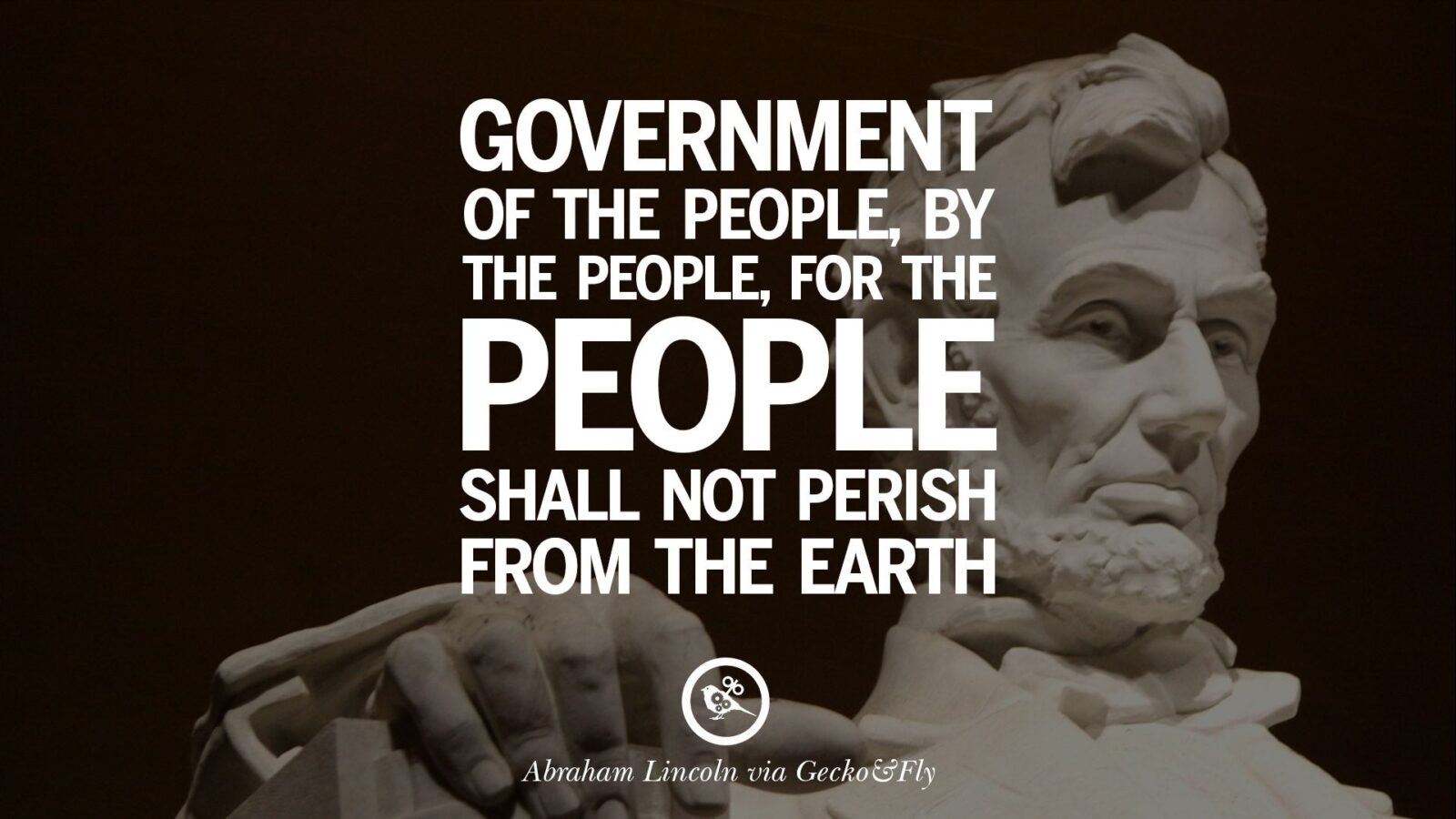
However, democracy is not a one-size-fits-all entity. As long as it is ‘the government of the people, by the people, for the people’ as stated by Abraham Lincoln, it is democracy, whether it looks like Canada, Bhutan or even some monarchies.
To better understand which elements of democracy might suit Eswatini, it is helpful to explore various models that uphold human rights and have resulted in strong and stable societies. Good day everyone!
Abraham Lincoln famously described democracy as ‘government of the people, by the people, for the people.’
This simple statement cuts to the heart of the democratic idea, meaning the people must have both the right and means to shape how they are governed.
This means that leaders are accountable to the citizens, laws are established in the interest of everyone and the voice of the public is not just heard, but respected.
However, democracy is not about disorder, chaos or personal insults. Nor is it about every citizen becoming instantly rich.
Rather, it is about ensuring that each individual can participate in deciding a nation’s important issues, can constructively criticise government without fear of retribution and has basic human rights protected.
For many emaSwati, democracy is sometimes seen only as riots, protests or throwing stones. Freedom of speech is interpreted as the right to insult leaders or spread false stories on social media. There is a growing myth that a new democratic government would simply hand out enormous salaries to every citizen without consideration of the available resources.
Brothers and sisters, the essence of democracy is much deeper than these superficial characteristics. It is not merely about demonstrations or social media rants. It is about processes, institutions and most importantly, the will of the people.
If our Tinkhundla System truly reflects what the majority desire, it holds democratic credentials. On the other hand, if most people oppose it, its legitimacy as a democracy is questionable.
Although democracy is grounded in the will of the people, there are multiple methods by which countries organise their democratic institutions. These methods or models are tailored to the history, culture and needs of particular societies. Let us examine three unique forms of democracy, each committed to human rights and prosperity before considering how they compare, including the special cases of Canada, Nebraska, Bhutan and certain monarchies.
CANADA’S PARLIAMENTARY DEMOCRACY
Canada introduced what has become to be known as ‘First Past the Post (FPTP)’ voting system. It is a winner-takes-all method used in federal and most provincial elections.
The country is divided into ridings (electoral districts) and each riding elects one MP. Voters cast a single vote for their preferred candidate and the candidate with the most votes in each riding wins even if they do not have more than 50 per cent of the votes.
Even though political analysts understand that this system is easy to understand as it allows for quick election results, the FPTP often leads to disproportional outcomes. They argue that the number of seats a party wins in Parliament may not reflect its overall share of the national vote. Parties with concentrated regional support can win many seats, while national minor parties may receive a significant percentage of the vote but few seats.
This system can also encourage strategic voting, where people vote for the candidate most likely to defeat their least favourite, rather than their true preference.
Additionally, FPTP can exaggerate regional divisions and make it hard for smaller parties to gain representation. The people elect members of Parliament (MPs) to represent them. The MPs in turn decide who will be the prime minister (PM). The PM is usually the leader of the party with the most seats in the House of Commons.
USA’S ELECTORAL COLLEGE
Many people criticise the USA’s electoral college system because it does not always reflect the national popular vote.
In this system, each State gets a set number of electors based on its population. Most states use a ‘winner-takes-all’ approach.
This means all of states electoral votes go to the candidate who wins the most votes in that state, even if the margin is very small. Critics argue this system can allow a candidate to become president without winning the most votes nationwide, which has happened in several elections.
It also means that votes in smaller ‘swing states’ have more impact than votes in larger or reliably partisan states, making millions feel that their votes do not count. Others say it discourages voter turnout and does not represent all citizens equally, raising concerns about fairness and democratic accountability.
NEBRASKA’S UNICAMERAL LEGISLATURE
Nebraska is the United States of America. I often make an example of this state’s democracy.
It is the only state with a single-chamber Parliament (unicameral legislature).
It is unique from other American states which have two chambers (Senate and House). Here, all lawmakers are elected ‘without party labels’, which is called a nonpartisan system. This system sometimes allows decisions to be made with less conflict, as cooperation is necessary rather than political fighting. As long as this system is supported by the people, we cannot then say Nebraska is undemocratic.
BHUTAN’S CASE
Bhutan is famous for its unique approach to democracy, one that merges its deep-rooted Buddhist traditions with modern democratic ideas.
Distinctive elements of Bhutan’s democracy include –
Consensus building – Rather than a ‘winner takes all’ contest, major decisions require broad agreement to help avoid polarisation and divisive politics.
GNH (Gross National Happiness) Over GDP: Policies must support the spiritual, emotional and material well-being of citizens, not just economic growth.
In Bhutan, democracy is not about destroying traditions or disregarding old leaders. Instead, it intertwines with the culture, seeking to balance change with stability and happiness.
MONARCHIES IN ASIA
Japan and Thailand are examples where a monarch plays a largely ceremonial role, while real power lies with Parliament and an elected government.
Their systems are designed to ensure stability, while upholding key tenets of human rights and democratic governance, though each has faced its own challenges.
The key lesson for emaSwati is that democracy’s effectiveness depends less on what outsiders recommend and more on how it reflects the will of the people.
If emaSwati genuinely choose the Tinkhundla System and it safeguards human rights and accountable governance, it is as authentically democratic as any system elsewhere. However, if the people no longer support it and demand change, legitimacy is lost until it is fixed or replaced.
Qatar and Dubai (which is part of the United Arab Emirates) are both wealthy States ruled by monarchies.
In Qatar, the Emir holds most political power, and while there is a partially elected advisory council, real decision-making remains with the royal family. Elections are rare and limited, with few political rights for regular citizens, but the country is rich. We never hear them talking about political reforms because they get what they want from this system of government. The system is democratic to them.
Dubai is one of seven emirates in the UAE, where rulers (emirs) of each emirate make up the Federal Supreme Council and the president is chosen from among them.
There are no national elections for the general public and most government power is inherited or appointed within royal families. Political parties and opposition are not allowed in either place and public participation in decision-making is very restricted.
However, it is the wish of many of our people around the world to visit Dubai.
Their enormous wealth comes from oil, gas and trade, helping them provide a high standard of living. In my personal view, among the world’s working democracies, the most effective system, distinct from the United States’ presidential system, is arguably the parliamentary democracy seen in Canada or the constitutional monarchy of Sweden, the Netherlands or Bhutan.
I say this because parliamentary systems (e.g. Canada) ensure the executive is always accountable to the legislature.
Governments can be changed peacefully and efficiently through a parliamentary vote if they become unpopular or lose public trust. Constitutional monarchies combine stability with people power. Leaders deliver real services and answer to Parliament.
Democracy is not just about leaders being elected every few years. It is about day-to-day rights, the rule of law and respect for the will of the people.
Democracies come in many forms, shaped by their peoples’ histories, values and aspirations. Even among prosperous, rights-respecting nations, each has found a solution tailored to its own context.
For Eswatini, the goal should be to shape a democratic system, whether based on Tinkhundla’s parliamentary democracy laced with constitutional monarchy principles, or a hybrid that will respect both tradition and essential freedoms.















Leave a comment