

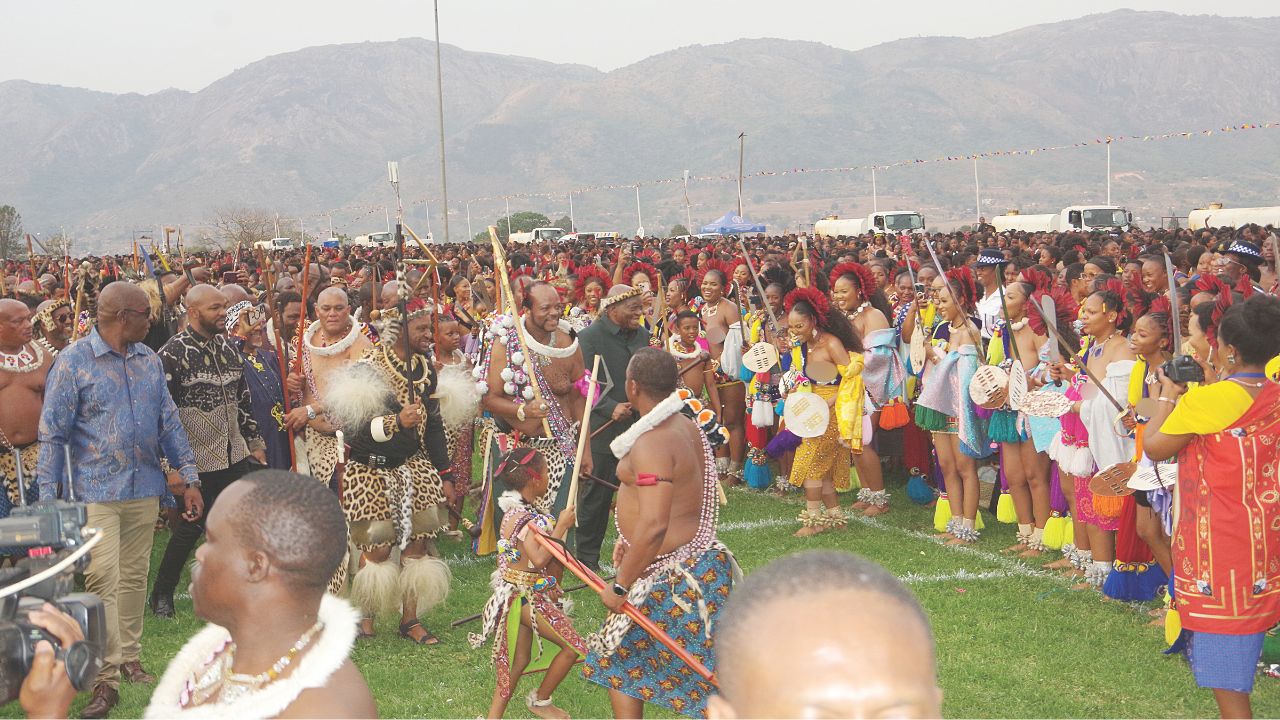
On a bright sunshine-filled Spring Monday, thousands of people cascaded towards Lobamba and Ludzidzini as Eswatini hosted a spectacular edition of the Umhlanga (Reed Dance).
While it was the bright coloured spectacle that got all the headlines, the heart-warming social cohesion was also a sight to behold. To see so many people gathered peacefully to celebrate their tradition is quite a great experience.
A German tourist said to me: “I am surprised there is no entry fee for such a wonderful festival.” Indeed, looking into the professional organisation of the event, you would expect it to cost one to witness. But we are fortunate to experience it for free.
Having missed a couple editions, I was also pleasantly impressed by the evolution of the event, especially with its coordination being of the highest standards.
This ceremony once again cemented Eswatini’s position as a nation where tradition, tourism and modern development converge to create lasting social and economic value.
Far more than a cultural showcase, this year’s ceremony proved to be a national event that also stimulated business and enhanced the country’s image as a safe and well-organised destination for cultural tourism. Watching people shuffle within the stores at Lobamba and also various stalls punctuating the path the maidens walk, was befitting of an event that brings economic solutions to the communities. From the traditional attires to the catering and transport, this is a time of the year when local businesses boom.
The Reed Dance or Umhlanga Ceremony, is one of Africa’s most recognised cultural festivals. It has to be among the Top 5 events to experience in Africa if not the world. Its beauty lies in how it has maintained its authenticity while continuing to attract new audiences from around the world.
Young women from across Eswatini and beyond gather to honour and celebrate their heritage and strengthen values of dignity, respect and unity.
At the same time, the Reed Dance has continued to grow into a powerful symbol of national identity. It is not only a celebration for participants and local communities, it has become a magnet for international visitors, dignitaries and global media. The headlines we see during this time are positive and make us proud to be emaSwati. This dual role, cultural preservation and global showcase, is part of what makes the Reed Dance so significant.
The ceremony is also a big drawcard for tourism. This sector remains one of Eswatini’s fastest-growing sectors and cultural tourism plays a central role in this trajectory. Events such as the Reed Dance offer a unique proposition: They are authentic, deeply rooted in tradition and unlike anything offered elsewhere in the region.
Accommodation also wins. Many hotels and lodges across the country report full bookings during this period. Transport providers, from bus companies to local taxis, see increased business. Informal traders and vendors around the event benefit from the influx of visitors, selling food, crafts and souvenirs. Even creatives, from photographers to fashion designers, find opportunities to showcase and sell their work. I watched with glee as some of the maidens walked around with professional photographers capturing vlogs for them and their journey from the sidewalks to the arena. The Reed Dance sustains livelihoods, encourages entrepreneurship and strengthens Eswatini’s profile as a destination of choice for both cultural and leisure tourism.
Equally important this year was what I highlighted earlier as the flawless organisation and commitment to safety. Large-scale cultural events are often judged not only on the richness of the tradition but also on how smoothly they run. The coordination seen at this year’s Reed Dance deserves recognition.
Security was tight yet unobtrusive, ensuring both participants and guests felt safe throughout. The people manning these were professional and friendly. Health services were well prepared, with medical teams on standby. Road management and transport logistics made it possible for thousands of people to move efficiently to and from the venue. “Imbali to the pavement please,” shouted one police officer as the maidens responded, making their way to the pavement in a neat file. These measures reflect positively on Eswatini’s capability to host major gatherings, a critical factor for the country’s ambitions to grow its events-based tourism portfolio.
This is particularly important at a time when global travellers are increasingly concerned about safety. By demonstrating that Eswatini can host large-scale events with excellence, the Reed Dance strengthens trust among international tour operators and foreign visitors.
Beyond economics and tourism, the Reed Dance continues to play an essential role in building social cohesion.
The sight of thousands of young maidens united in song and dance is a powerful reminder of shared identity. Families, communities and international guests all come together to celebrate the richness of Eswatini’s culture.
In a world often marked by division, the Reed Dance provides a sense of continuity and unity. It bridges generations, elders pass down values to the youth and the youth, in turn, embrace the responsibility of carrying traditions forward.
It also fosters national pride, reinforcing the message that cultural heritage is not something to be archived in history books but to be lived, experienced and celebrated.
As we reflect on this year’s successful Reed Dance, it is clear that the event is more than a cultural ritual, it is a national asset. It demonstrates that Eswatini can harness its traditions to generate economic impact, enhance its global profile and foster social harmony. The successful hosting of this year’s Reed Dance Ceremony is a triumph for Eswatini and for us all.
It was safe, well-organised and impactful on multiple fronts: Cultural preservation, economic growth, social cohesion and national branding.


















Leave a comment