

To fully understand the deliberate collapse of South Africa’s economy, we must go back further than 1994. The role of white monopoly capital (WMC) did not begin with Nelson Mandela’s release, nor with Jacob Zuma’s fall. Its foundations lie deep in the colonial and apartheid economic structures; where a handful of white-owned conglomerates controlled land, mines, banks and the media. Post-apartheid democracy, far from dismantling these monopolies, effectively protected them.
Colonial and apartheid foundations of monopoly capital
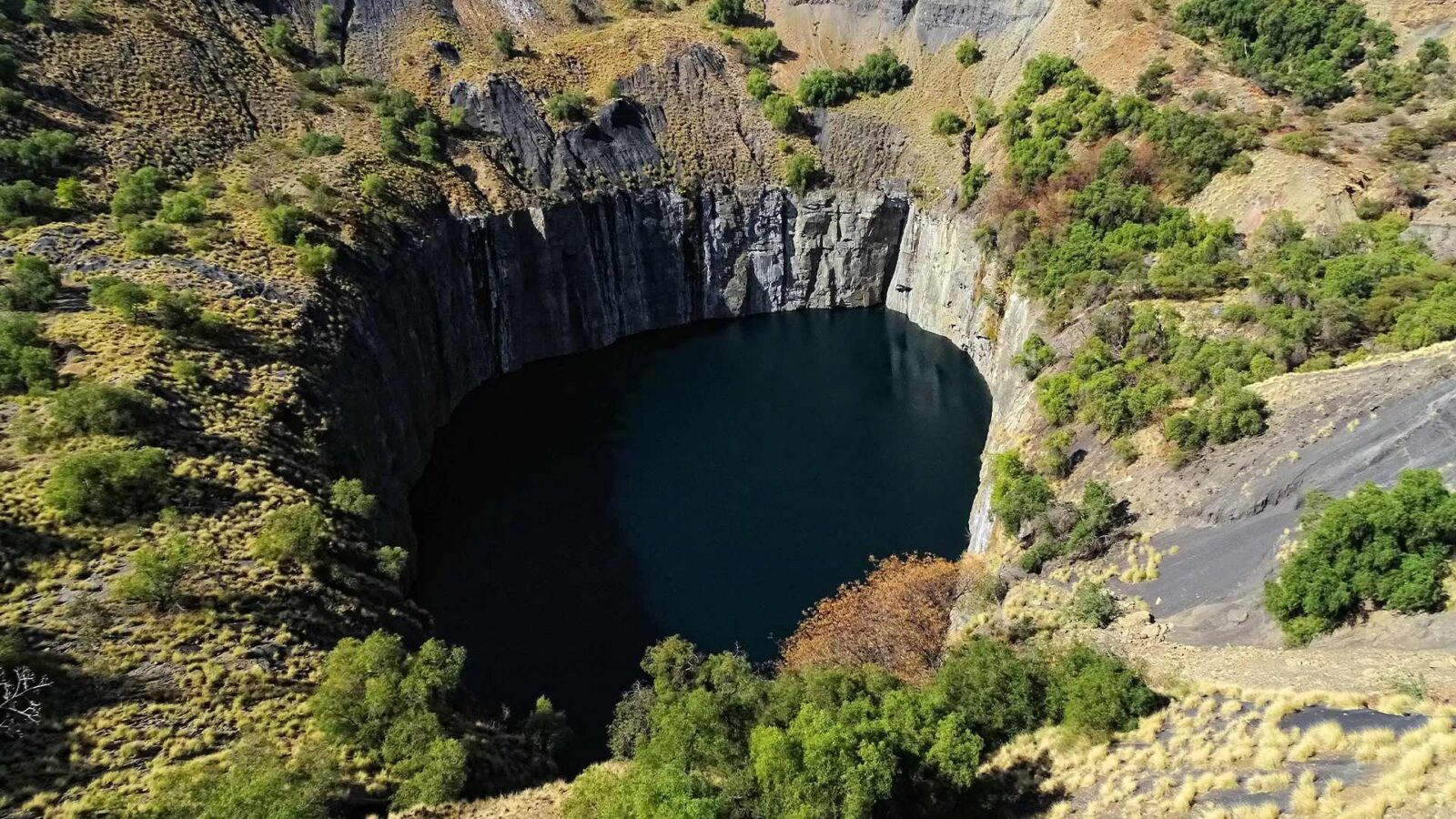
The South African economy was built on extraction: Diamonds in Kimberley, gold in the Witwatersrand, coal in Mpumalanga and platinum in Rustenburg. Each of these sectors became dominated by monopolies that were white-owned, often with British or European parent companies. By the mid-20th century, companies like Anglo American, De Beers, Lonmin and Gencor (later BHP Billiton) had near-total control over mining. Banking followed the same pattern.
The ‘big four’, Standard Bank, Nedbank, FirstRand and Absa, emerged as colonial financial giants, controlling access to credit, mortgages and capital. Land ownership was skewed by the 1913 Land Act and reinforced by apartheid policy, leaving 87 per cent of the land in white hands.
When apartheid formally ended, these monopolies were not dismantled. Instead, they were entrenched through negotiations at CODESA. Mandela and the ANC, under enormous global and local pressure, were forced into a settlement where political power shifted to the majority, but economic power remained in white corporate hands. The Reserve Bank remained independent, the property clause was inserted into the constitution and land restitution was deliberately watered down.
CODESA: A compromise that cemented economic apartheid
Many South Africans saw 1994 as liberation, but for WMC, it was insurance. By giving the vote to the majority, they created legitimacy for the new South Africa. By locking in property rights, free market guarantees and the independence of financial institutions, they made sure real ownership did not change.
Thabo Mbeki, with his neoliberal GEAR policy in 1996, doubled down on this model. Structural adjustment – privatisation, austerity, and liberalisation – was sold as modernisation, but in truth served to protect monopoly capital.
Mbeki’s famous statement that South Africa needed to ‘get its house in order’, to attract investment was effectively code for keeping WMC safe from radical transformation.
This explains why, despite three decades of democracy, inequality remains the highest in the world. The Gini coefficient hovers above 0.63, unemployment sits at 33 per cent and land reform has barely scratched the surface. WMC did not lose; it adapted.
White-owned media
Perhaps, most insidious is media control. The framing of corruption scandals, the demonisation of leaders like Zuma or Julius Malema and the sanitisation of corporate scandals reveal who sets the narrative. One Billion Rand State Capture was turned into one man’s Black corruption crusade; while the structural state capture by WMC, stretching back a century, was conveniently erased. The infamous Gupta family only controlled four per cent of the coal industry, while WMC controlled more than 70 per cent, but that fact was conveniently ignored by the media.
The ANC’s complicity
It is easy to paint the ANC as a victim of manipulation, but this would be dishonest. Many within its leadership became willing participants. Black Economic Empowerment (BEE), hailed as a tool of transformation, became an instrument for co-option. A handful of politically-connected elites were offered stakes in white-owned companies; ensuring their loyalty, while leaving structural ownership unchanged.
Figures like President Cyril Ramaphosa are emblematic of this strategy. Once a trade union firebrand, Ramaphosa became a billionaire through mining deals, facilitated by Anglo American. His presidency represents the ultimate success of WMC: A Black face that protects white capital.
Meanwhile, ordinary South Africans, especially the unemployed youth, see no benefit. The ANC is complicit not only because it was manipulated, but because it chose the path of elite enrichment over collective liberation.
The DA as the political face of WMC
The Democratic Alliance has long been the political expression of white capital. While it wraps itself in liberal rhetoric about ‘non-racialism’ and ‘good governance’, its base remains largely white and its policies align seamlessly with corporate interests.
The ANC-DA coalition of 2024 was not an accident of numbers; it was the consummation of a three-decade strategy. WMC, having weakened the ANC through fragmentation and corruption scandals, now has its preferred party in government, backed by ANC legitimacy. This is the endgame of the transition: Political power realigned to protect economic power.
Can South Africa break free?
The blunt truth is that South Africa is trapped in an economic chokehold. WMC controls the banks, mines, land and media. The ANC is compromised, the DA is the direct instrument of capital and breakaway parties are too divided to present a united front.
The only serious challenge has come from formations like the EFF and Zuma’s MK Party, which openly call for expropriation without compensation, nationalisation and alternative energy partnerships with the East. However, these are systematically discredited, labelled as ‘populist’ or ‘corrupt’ and their leaders are attacked relentlessly in the media.
Breaking free would require not only political unity among Black parties, but also radical economic restructuring:
- Expropriation of strategic land and industries.
- Nationalisation of mines and banks.
- Expansion of State-led industrialisation, especially in energy.
- Alignment with BRICS to escape Western financial dominance.
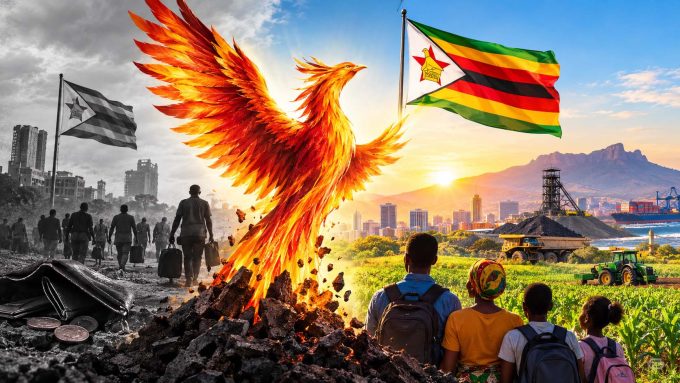
The question is whether there is political will and whether ordinary South Africans are prepared for the instability that such a shift would inevitably bring. It would not be easy, just like in Zimbabwe, sanctions, isolation and currency manipulation would come, but the result would be Economic freedom.
Conclusion
The collapse of the South African economy is not a natural disaster; it is the continuation of economic apartheid by other means. WMC has mastered the art of ruling from behind the scenes: fragmenting the black vote, capturing the ANC elite, manipulating energy and shaping global narratives.
The tragedy is that millions of South Africans live in poverty, unemployment and despair, while the same corporations that profited under apartheid continue to dominate.
Unless the country confronts WMC head-on, the promise of 1994 will remain a mirage. South Africa stands at a crossroads: Either it accepts permanent subordination under white monopoly capital dressed up as liberal democracy, or it reclaims the radical economic transformation that was always at the heart of the liberation struggle. The stakes could not be higher.
Comment septembereswatini@gmail.com
















Leave a comment