

Growing up, there was a grammar-related joke about a local official’s TV interview he made on his return from a conference within SADC.
The official, excited about what was achieved, reportedly said; “Lesotho did it, Botswana did it, so why can’t we emaSwati did it?”
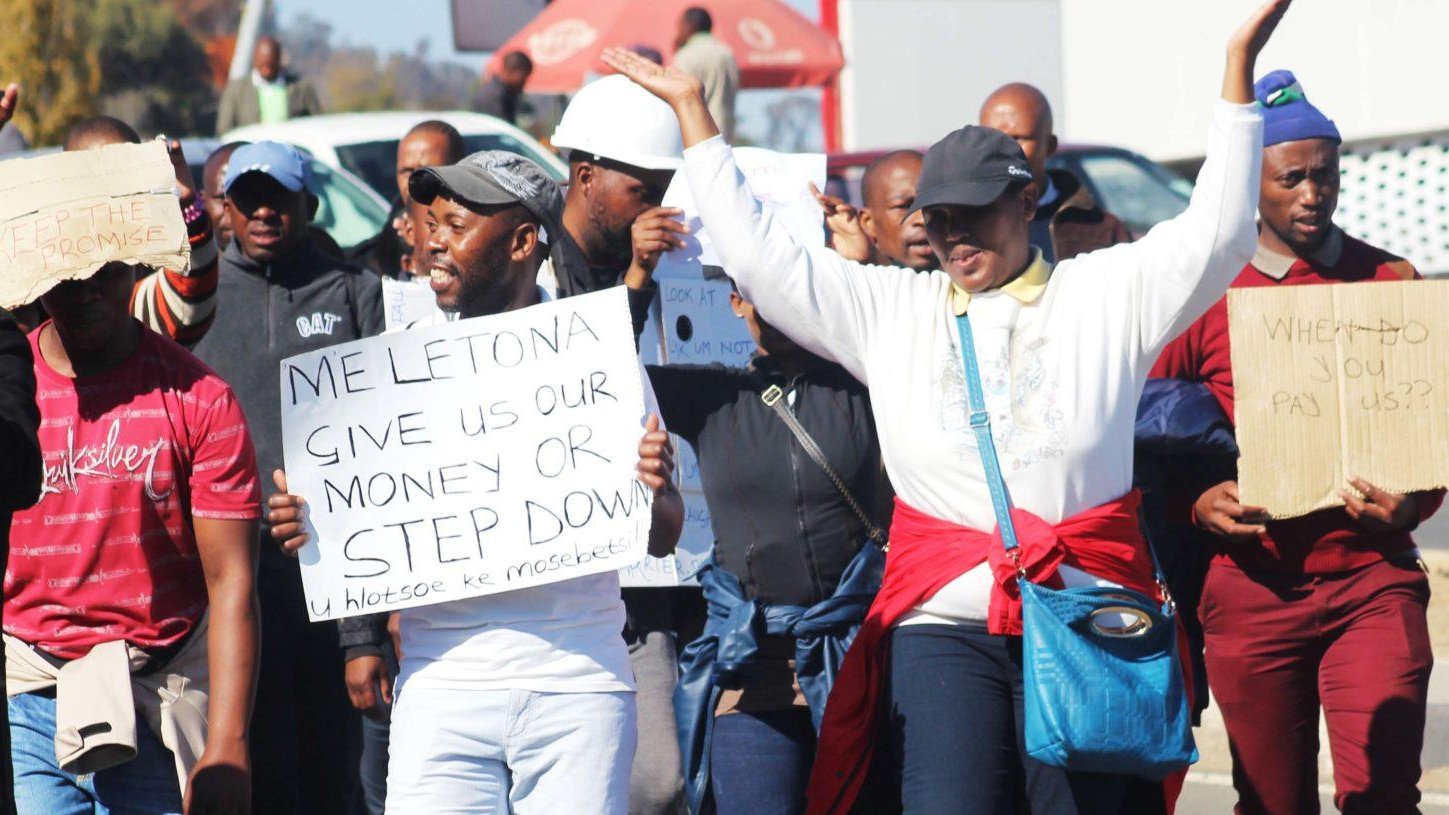
This comes to mind after pondering on Lesotho’s recent, bold package to tackle youth unemployment, announced a few weeks ago. I have meant to write on it, but have really been chewing a cud on its realities and how it can apply to other contexts. Lesotho is reported to have removed business registration and licensing fees and additionally, reserving a share of public procurement for youth and women as a response to the growing unemployment rate in the country. This includes considerations of the youth population in employment.
The BBC reported that unemployment in Lesotho stands at 30 per cent but for young people the rate is almost 50 per cent.
This, from a glance, is indeed the kind of decisive policy signal African governments may need right now. By declaring youth unemployment a national crisis and pairing that declaration with practical, fast-acting measures, Maseru has moved beyond rhetoric to reshape the incentives that keep young entrepreneurs on the margins.
However, the simple act of waiving bureaucratic fees lowers an immediate and tangible barrier to starting and formalising a micro or small enterprise. Too many young people are discouraged from registering businesses because up-front costs, complex forms and opaque processes push them into informal survival strategies. Lesotho’s directive removes that gatekeeper: Early reports show rapid uptake and hundreds of new registrations per day as the policy rolls out, a promising sign that when governments remove friction, citizens respond.
At the same time, reserving a clear portion of public contracts for youth and women creates demand for those newly formalised enterprises; supply without demand is only a partial victory.
The successes of one country in a certain area cannot neccessarily be adopted as a cut-and-paste for others. Some successes are due to various factors, hence there has always been a call for home solutions for home problems. Having read countless self-help books in my lifetime, I realised that an American written book with perspectives from Manhattan cannot be plug and play for me at Sidwashini.
It can give pointers but not really be a turnkey solution.
I have several self-help books unread now because I decided to self-help myself.
It is like buying a Time Management book and never having the time to read it. Some things need you to just do it.
A growing body of research shows that reforms to the business environment and deliberate procurement policies can expand opportunities for youth employment if they are accompanied by complementary measures, skills development, access to finance and private-sector partnerships. The ILO’s reviews of youth employment interventions underline that improving the business environment and linking training with market needs are essential components of successful programmes. This is not a one-policy fix; it is a suite of connected actions.
In Eswatini, we have seen the set up of formal youth structures to inform youth actions from the European Union’s Youth Advisory Board, to the Business Eswatini’s Youth Chamber of Commerce, this all signal intent.
So what Eswatini can learn and adapt. Eswatini faces its own youth employment challenge; the policy toolkit Lesotho is using offers adaptable options rather than a blueprint to copy wholesale.
As aforementioned, self-help books are just that. The real self-help is ourselves.
Practical steps Eswatini could consider to also waive or subsidise start-up registration and licensing fees for young entrepreneurs for a fixed period, paired with simplified online forms and targeted help desks in urban and rural centres.
In one youth seminar as a programme director, I challenged the government officials present to consider free registrations for youth businesses. I was speaking after a group of youth had presented a functional website they had developed and I said it is a pity that they may never have the funds to register their business and seek clients. I was assured, three years ago, at that function that businesses for youth would be registered for free soon. Soon being an open timed word. But with Lesotho showing it is practical perhaps this will be relooked.
These actions should be piloted, monitored and scaled. Crucially, procurement quotas or reserved funds must be implemented transparently to avoid tokenism; capacity building for procurement officials and clear evaluation metrics will protect the integrity of any quota system.
While all is said about Lesotho ‘did it’. I want to commend our Ministry of Sports, Culture and Youth Affairs and the Eswatini National Youth Council for the programmes they are running to support youth employment and entrepreneurship.
Local initiatives that combine mentorship, internships, small grants, sport-for-development and cultural industry support are vital, they cultivate the talent pipeline and social capital young people need, while national policy reforms tackle structural barriers. This work is the on-the-ground engine that would make any policy more effective.
Lesotho’s package is important, not because it is perfect, but because it demonstrates intent: Declare the crisis, remove immediate regulatory obstacles, put money and demand behind youth entrepreneurs and set targets for inclusion. For Eswatini, the lesson is clear, we can pair ambition with discipline. If we combine fee waivers or subsidies, targeted procurement, youth funds and private-sector partnerships, while monitoring impact closely, we can start converting the abundant energy and creativity of our young people into dignified work and sustainable businesses.
The road from policy to jobs is not instantaneous, but when governments act to remove structural barriers and create predictable demand, the private energy of our youth can be unleashed. Lesotho has opened a useful experiment. If it succeeds perhaps we can one day return to this feature and say: “Lesotho did it, why can’t Eswatini did it?”


















Leave a comment