

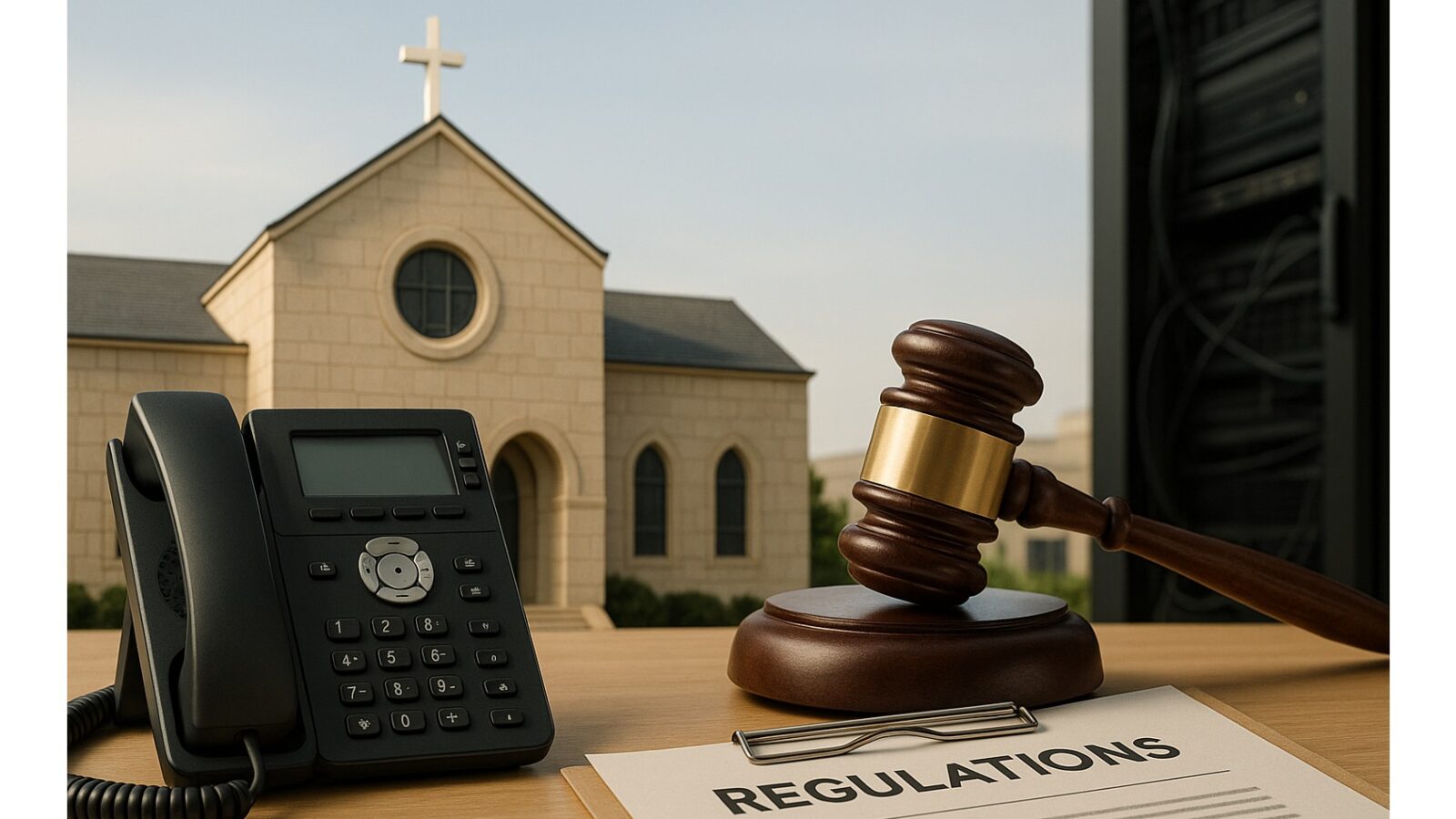
The Eswatini Government’s Ministry of Home Affairs recently extended an invitation to the nation’s religious institutions. The purpose was a ‘national stakeholders’ meeting, framed as a discussion on creating a policy to regulate their operations. On the surface, this appears to be a standard administrative step, perhaps even a positive one.
The gathering was set for Tuesday, October 14th, 2025, at the Commerce Auditorium, beginning at 9:30am. In a country where the pulpit holds significant sway over public morals and prayer is a part of everyday life any attempt to formally ‘regulate,’ ‘administer,’ or ‘govern’ religious practice warrants a closer look.
This is why I feel compelled to explore this topic of significant public concern. I hope you will forgive a degree of scepticism, but from my perspective, there are clear reasons for caution regarding what the government presents as a harmless initiative.
In Eswatini, meetings concerning power are rarely just meetings. If you read between the lines, this could be interpreted as the state turning its gaze towards the pulpit, ready to take notes.
Globally, we have seen that in authoritarian systems, what often starts as a ‘consultation’ can easily transform into a mechanism of control. When a government begins to define faith, the conversation is seldom about divinity.
This issue extends beyond individual churches.
It touches on the timeless tension between spiritual belief and secular authority, raising the question of whether Eswatini is embarking on a path where the state overreaches into the personal beliefs of its citizens.
To be fair, the government’s proposal seems noble in its written form, apparently free of any hidden motives to interfere with church affairs.
On the face of it, the government is communicating several points: It wishes to consult with religious bodies before finalising a national policy for churches. It frames this as an inclusive and cooperative effort – creating policy with the churches, not for them.
The stated goal is to ‘govern their operations,’ which might encompass: Registration and financial accountability. Standards for safety and conduct. Preventing fraudulent or harmful activities. Unofficially, conversations suggest the aim is not control, but to ‘bring order’ to a sector perceived as increasingly chaotic. Points of concern include the rapid proliferation of new churches, the rise of ‘fake prophets,’ and unorthodox practices.
It is an undeniable fact that such spiritual malpractice has tarnished the reputation of Eswatini’s once-respected religious community. We must be honest: this concern is valid. Over the past 10 years, Eswatini has seen an explosion of new churches, many operating from backyards or rented spaces, led by self-appointed pastors.
The messages from some of these pulpits often lean more towards entrepreneurial ‘prosperity’ teachings than the core tenets of the Gospel. There have been serious scandals: leaders promising miracle cures, allegations of assault, exploiting vulnerable congregants for money, and turning worship into a theatrical spectacle. Some have been accused of sowing division and preying on desperation. From the viewpoint of concerned officials, these excesses make a case for intervention. The stated goal is to protect congregants from exploitation, not to silence preachers. This seems like a fair intention on the surface.
However, history teaches us that the path to control is frequently paved with the language of protection. We should be clear-eyed about this; with undemocratic governments, consultations often end in control, and when the state starts defining faith, the focus is rarely on God. Eswatini’s Constitution, in Section 23, firmly guarantees the right to freedom of thought, conscience, and religion—including the freedom to worship, teach and practice one’s faith.
This is a right cherished since independence. Yet, the Constitution also contains a caveat; these freedoms can be limited “in the interests of public safety, order, morality, or health.” This phrase concerning public order and morality is a flexible tool. It has been used to justify curfews, restrict protests and deny registration to groups that challenge prevailing norms.
When officials invite churches to ‘discuss a policy,’ we should look past the polite language.
They may, in effect, be laying a constitutional foundation for the state to define morality, prescribe order and ultimately, shape the very meaning of faith. I acknowledge this is my interpretation and I am open to being corrected.
Yet, as a citizen whose rights are protected by this same constitution, I reserve the right to question power, regardless of how it presents itself.
The term ‘national stakeholders’ meeting’ sounds democratic. It implies a table where bishops, pastors, imams and prophets sit as equals with the state to shape a shared future. However, political language can be deceptive.
In Eswatini’s political culture, consultation does not always mean a desire for consent. Sometimes, meetings are held not to gather opinions, but to announce decisions already made. Invitations can be extended not to listen, but to legitimise.
The term ‘stakeholders’ itself is ambiguous – who is included? The established church councils? The fast-growing Pentecostal movements? The independent prophets who answer to no earthly authority?
Without clear parameters, such a meeting risks becoming a performance of democracy rather than its genuine practice. Religion in Eswatini has never been solely a matter of the soul.
It is deeply political, woven into the fabric of national identity. Churches, especially older denominations, have traditionally navigated a delicate balance, offering moral guidance while often avoiding direct political criticism. Yet the pulpit holds inherent power.
During national crises, such as the civil unrest of 2021, some religious voices courageously spoke truth to power.
Others remained silent, perhaps to protect their standing.
It is possible the state has taken note of which churches took which positions.
Viewed through this lens, a national church policy might not be solely about curbing rogue pastors. In nations with fragile democracies, similar regulations have served a dual purpose: giving the state a window into the spiritual lives of citizens.
They reveal which churches exist, who leads them and what is preached from their pulpits. In an environment where dissent can be seen as defiance, that kind of knowledge becomes a powerful instrument of control, disguised as reform.
Let’s be direct: the moral decay within some churches is real and undeniable. The exploitation of faith for financial gain, the staging of fake miracles and the emotional manipulation of believers are serious issues that even sincere pastors acknowledge need addressing.
But the crucial question remains; by whom should this be done?
Should the state legislate morality, or should the church community restore it itself? The government’s argument about ‘protecting congregants’ is persuasive until we recall that laws against fraud, assault and abuse already exist.
The failure has not been a lack of legal framework, but a lack of enforcement.
When a pastor swindles his followers, it is not because the law is absent, but because it is not applied. This leads to a critical question: why is a specific policy for governing churches necessary? Why place the pulpit under new bureaucratic oversight when the criminal code already provides tools to address wrongdoing? To me, this begins to look less like protection and more like something far more concerning.
Across Africa, the relationship between the state and church has often been fraught.
In Zimbabwe, during periods of repression, independent pastors who criticised the government faced harassment.
In Rwanda, church registration laws were used to shutter hundreds of Pentecostal churches under the banner of ‘public safety.’
The pattern is consistent: a legitimate social concern becomes the entry point for political control over the sanctuary.
Eswatini’s situation feels disconcertingly similar. The state articulates its motives in the language of morality. It invites churches to ‘participate’ in policy formation. Yet beneath this soft diplomacy may lie the hard structure of control – through registration, licensing, compliance certificates and potentially the power to shut down operations.
Today, the goal is ‘knowing who is who.’
Tomorrow, it could be about deciding ‘who may preach.’ We should not be naive.
The boundary between consultation and control is exceptionally fine. When power cloaks itself in the language of dialogue, its true shape becomes harder to discern.
The Eswatini government’s invitation to the churches could indeed be a sincere effort to restore order. Alternatively, it could be the initial move in a longer game to consolidate moral authority under the state.
The difference will not be found in what is said at the meeting, but in who is truly heard and what actions follow…
In conclusion, let’s be clear about what we must do.
As citizens, we can’t just hope for transparency; we have to insist on it. This isn’t a privilege they grant us. Iit’s our right. A country can’t truly thrive when it operates in the dark, where keeping secrets is the norm and asking questions is treated as a betrayal.
Democracy needs to breathe the fresh air of openness; it withers away behind closed doors.
And as people of faith, we have to protect our conscience. Why? Because that’s the quiet, holy space inside each of us where we hear the voice of God.
If we let that be silenced, then our faith becomes just an empty show – a performance. It becomes a tool for those in power to control, rather than a call to live with courage.
The Gospel doesn’t ask for our blind obedience; it asks for our brave, moral conviction – the kind that stands firm, even when it’s hard.
As a nation, we must never forget: our faith answers to a higher authority. The church was never meant to be a mouthpiece for any political party or a quiet refuge when we should be speaking out.
Its calling is to be a voice – a voice that speaks up for truth, for compassion, for justice, even when that message makes the powerful uncomfortable.
You see, when the government starts to dictate what can be said from the pulpit, that sacred space loses its holiness.
It becomes just another branch of the state – a place with plenty of preaching, but no real prophecy. A building with rituals, but no truth.
And if we let that happen? Our faith and our freedom won’t vanish in some dramatic explosion.
They’ll fade away quietly, with the slow and sorrowful surrender of our very souls.
My question to each believer…to church leaders…to the ordinary man on the street is: Should the state legislate morality, or should the church community restore it itself?
My take? I go for the latter…God is good…perfect…His ears are always open to the cries of His own people. He is capable of restoring order in the midst of chaos..
Wishing you a lovely weekend and week ahead. Peace! Shalom!

















Leave a comment