

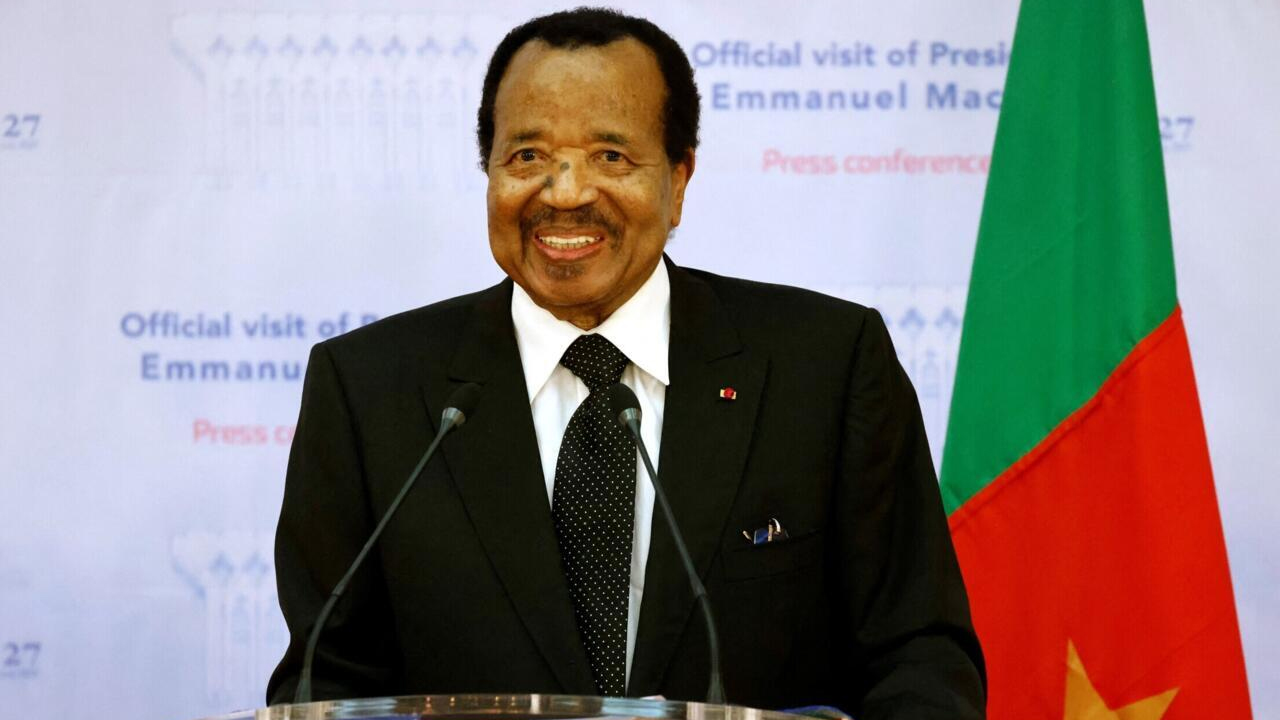
Cameroon’s recent election has once again drawn attention across Africa after President Paul Biya secured another term in office. Having been in power for more than four decades, his continued leadership has been met with divided opinion both within Cameroon and across the continent.
The African Union, of which Eswatini is a member, promptly sent a congratulatory note to Biya, acknowledging his victory and extending best wishes for stability in the country. Yet, the outcome has revived an old debate about the true nature of democracy in Africa and whether citizens genuinely exercise free choice when long-term incumbents remain in office.
For many observers, the election stands as an example of democracy’s resilience, as citizens, regardless of the circumstances surrounding campaigns and governance, went to the polls to make their voices heard. Others, however, have questioned whether the process was conducted under conditions that truly allowed voters to choose freely. Opposition groups claimed irregularities in the voting process, alleging that electoral bodies lacked neutrality. Reports from civil society suggested limited access to certain polling stations in conflict-affected regions, creating doubts over how representative the results might be.
Cameroon’s long political continuity has brought a sense of predictability, but, it has also deepened concerns about how power transitions occur within democracies on the continent. Democracy, by its very definition, allows citizens to decide who governs them. It is, therefore, not necessarily the length of time one serves that draws scrutiny, but whether elections take place under fair and open conditions. Critics argue that when leaders remain in office for decades, the mechanisms of State can become too closely linked to individual leadership rather than institutional strength.
Nonetheless, some Cameroonians and African commentators defended Biya’s re-election, saying that age should not be the basis for questioning a leader’s right to govern. In their view, democracy gives every citizen the same right to vote and the outcome of that process -whether it returns an older leader or a younger one – must be respected. They argue that imposing an age-based limitation would contradict the democratic spirit itself, where the people’s decision is final, even if others might disagree with it.
Such perspectives bring attention to a key point: Democracy often produces results that not everyone welcomes, but, it remains the best-known method of determining leadership legitimacy. If Biya’s re-election represents the genuine will of the people, then questioning his right to govern on the grounds of age could appear undemocratic. The African Union’s decision to congratulate him may, therefore, be seen as a gesture of respect for sovereignty, even though some expected a firmer stance on electoral fairness.
The issue becomes more complex when considering that some African States have experienced disputed elections that led to instability and conflict. In this light, the AU may have chosen diplomacy over confrontation, preferring to maintain regional harmony rather than risk alienating a long-standing member.
Yet, this approach also leaves the continental body open to criticism for appearing to condone electoral systems that do not meet the highest democratic standards. The question then arises: How should the AU balance respect for member States’ sovereignty with its responsibility to promote democracy and credible elections?
In Africa and elsewhere, debates about governance often revolve around this same question -how democracy should operate in societies with deeply rooted political traditions? The Cameroonian election, therefore, shows that democracy is not only about the process of voting, but, about the environment in which that voting occurs. When opposition parties feel constrained or citizens doubt the fairness of institutions, the spirit of democracy weakens even if the form of it remains.
till, it would be simplistic to view Biya’s re-election only through a lens of scepticism. Supporters credit him with maintaining unity in a country that has faced separatist conflicts and economic challenges. They argue that continuity in leadership offers stability, especially in regions where political transitions have often triggered unrest. Those who celebrate his victory say it is evidence that democracy, despite imperfections, continues to give power to the electorate rather than to external influence.
However, it is impossible to ignore that prolonged leadership can also create governance fatigue among populations who desire change. Across Africa, younger generations increasingly call for renewal and inclusiveness and, they often measure democracy not by how long leaders serve, but by how governments respond to their social and economic aspirations. In this context, Biya’s continued rule may seem out of step with a continent whose youth increasingly demand participation and progress.
Cameroon’s election and the AU’s reaction to it, ultimately show that democracy remains a contested yet enduring principle across Africa. It is not a perfect system and it often coexists with historical loyalties, security fears and institutional limitations.
It shows the fragility of democracy in Africa. Yet, its defining strength lies in allowing people to decide – even when that decision appears contrary to what outsiders expect. The Cameroonian experience validates that democracy, despite its challenges, continues to function as a mechanism through which citizens exercise choice; however complex the circumstances surrounding that choice may be. Comments: bongwebagcinile@gmail.com














Leave a comment