

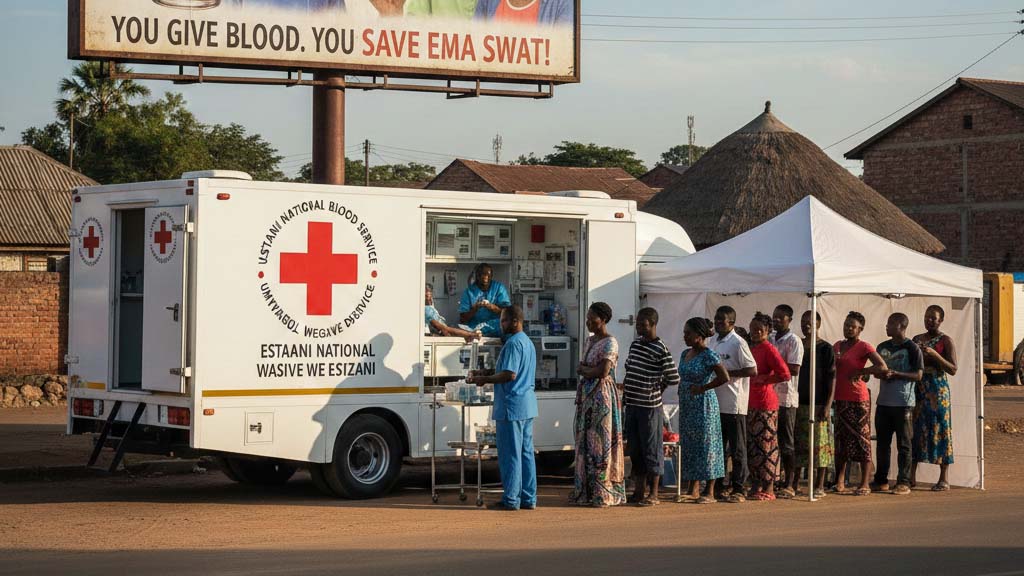
Many years ago, when I bumped into an uncle of mine in a bar in England, he called out, ‘fancy a pint?’. He was of course referring to beer (naturally, I said yes). However, in another setting, such as the ward of a local hospital, that generous gesture might be a lifesaver, if the offer was referring to blood donation, enabling a human being to function properly. Today, in the parts of the world that operate metrically, the invitation, ‘fancy 450ml?’ might sound less glamorous, but the donation is exactly the same.
When encountering the question – what is blood for? – the average non-medical individual might be hard-pressed to answer the question accurately. All that most of us could manage is: ‘Well, you’d be in a bit of trouble if you lost it.’ In fact, blood is a rather useful liquid to have inside you. It removes waste products from the system and carries oxygen to the muscles, as well as taking hormones and nutrients to their destination. That’s your red cells.
The white cells are basically the protectors. Also, blood regulates the temperature of the body. So, in short, you need blood to survive, and if, because of your medical condition, you are unable to retain the blood already in you, a transfusion will be vital. A fresh supply of blood for a patient in an emergency situation can easily make the difference between life and death, especially in situations of high trauma or complications during childbirth. A shortage of blood can delay medical procedures and fail to supply those with chronic conditions, such as cancer, where regular transfusions may be necessary.
The history of blood transfusion is interesting. What seemed surprising is that it took until 1628 to be used, when British physician William Harvey discovered that blood circulated in the body. It hadn’t been noticed that a human being under huge physical stress would run up a very high heartbeat and have arteries round the body reflecting the same reactions. That was blood moving; and fast.
Within 37 years of that rather basic revelation, Richard Lower (going higher) managed a successful blood transfusion between two dogs. With their permission, we trust. There followed many efforts in animal-to-human transfusions, occasionally successful but highly risky. And then the process was effectively outlawed. Almost two centuries passed before a successful inter-human transfusion was done, in 1818 by obstetrician Richard Blundell. Thereafter, an impressive stream of refinements in all the procedures to the present day, where you can safely give blood every three months, it being matched carefully to the recipients or stored correctly.
In most countries, you, therefore, have a blood bank(s) where blood is stored in accordance with the blood type to which it fits. Golden rule number one is ensuring that there is an adequate supply of donated blood to fit each need. That is of critical importance within a country’s health services. It’s vital that there is the stock in place and that it is available 24/7 for emergency operations, cancer treatment and the management of other conditions. Situation in Eswatini? Blood bank in capital city Mbabane had only the tiniest drop of Type O blood – a very common type – to meet the emergency need of a cancer patient on Friday, November 21, 2025 and is closed, as always, for the weekend. What’s missing here?
Well, there isn’t enough blood to justify the weekend opening. The national Blood Bank can only stock what the donors give. Right, so government must initiate, or ramp up a massive promotion drive to create a donated blood stock that justifies a 24/7 service at the blood banks. Government has the blood trucks for collecting and delivering. Donating blood is one of the best examples of caring for and helping others far less fortunate than yourself; and in Eswatini, both easy and perfectly safe. There’s an age limit – a person I know well bounced in, looking healthy, but being 80 years of age, was politely rejected because government and World Health Organisation have an agreed age limit of 65 years. Not that the blood in older bodies is of inferior quality. No, no, it’s simply that the donor is, in old age, more generally vulnerable.
You get tea and biscuits after a donation, though this distracts a little from the good, strong vibe received from the act of giving. The tea rehydrates the body and the sugar and salt stop any feeling of dizziness.
You are, after all, giving around one tenth of your blood supply in a donation. I’ve donated nine times now – that’s 90 per cent and it’s great. Every time I cut myself, I hardly bleed. That, my friends, is my own joke, so awful that I hope it will attract, through ridicule, some serious attention from prospective donors nationwide; because the donor’s blood replenishes itself fully.
There should be a vigorous drive to encourage emaSwati and indeed all residents in Eswatini to bury any social or medical concerns about the blood testing. It is entirely confidential. Additionally, the act of donation is completely safe. The clinical standards are so high. The collection facilities are there to respond. It is strongly recommended that those who engage large audiences – government, politicians and church representatives – should start or vigorously strengthen the promotion of voluntary blood donation. Also, all existing donors should play a lively part, promoting and reassuring at every opportunity. You give blood, you save a life. Simple. Let’s go!

















Leave a comment