

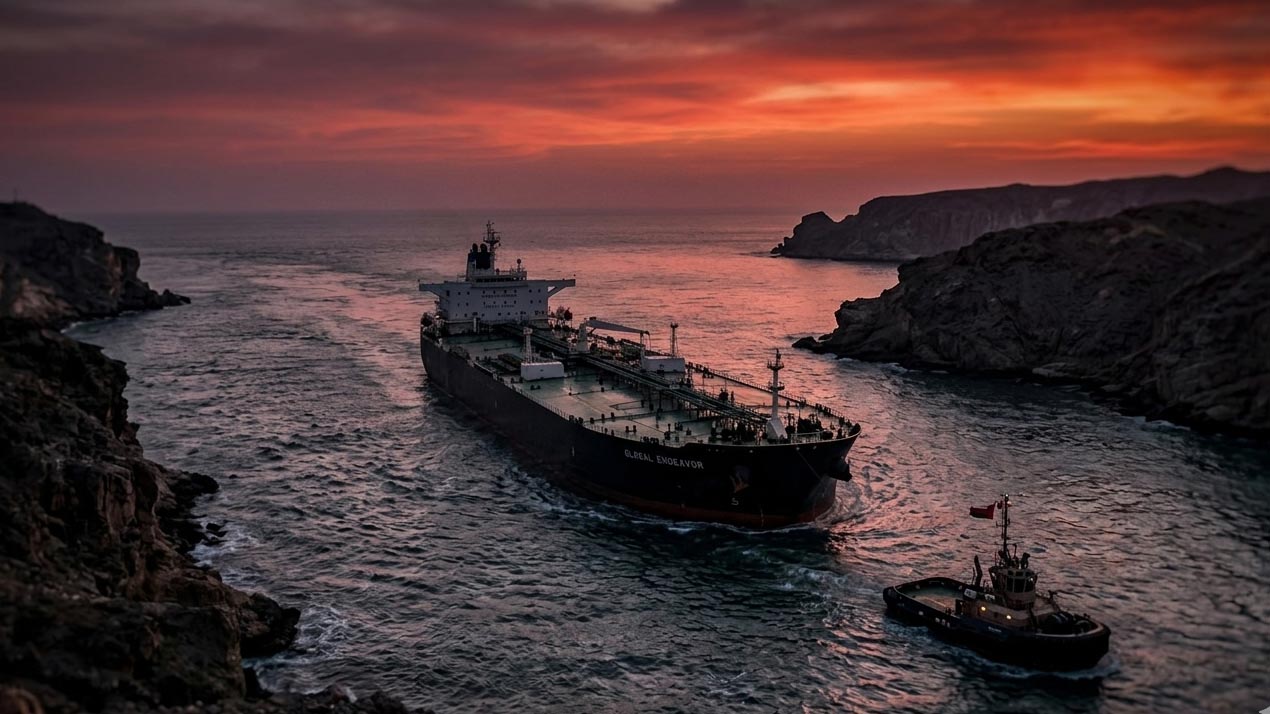
As the United States, Israel – Iran war surges on, we must brace for yet another supply shock to the economy and potentially a supply chain disruption. On Monday, following the installation of a new supreme leader in Iran, which was swiftly followed by bombardments on energy infrastructure in Bahrain among others, the price of Brent Crude oil crossed the US$100 per barrel mark for the first time since 2022.
This compares with modest movements in the early days of the war, where markets were pricing a transient shock. The question that begs an answer is what has changed in the situation in the Middle East, resulting in these rapid changes in energy prices? That is what we need to unpack today and chart a trajectory of the impact on markets and what we can all do to stay safe amid these challenges. Note that this occurs just as the global economy is still recovering from the COVID-19 pandemic and the resultant supply-side disruptions.
Mojtaba Khamenei’s installation as Iran’s Supreme Leader hardened Tehran’s posture, consolidating power under the Revolutionary Guard and escalating direct conflict with the US and Israel. Washington’s goals in the region, containing Iran’s influence, securing energy flows and preventing nuclear advancement and or even regime change, became far more difficult to achieve, as his uncompromising stance reduced prospects for negotiation and entrenched Iran’s alliances with regional militias. This leadership shift disrupted oil infrastructure and raised fears of supply cuts through the Strait of Hormuz, driving prices above US$100 per barrel, while simultaneously making a US exit from the conflict harder, since withdrawal would risk ceding strategic ground to Iran and undermining American credibility among allies.
The Strait of Hormuz is a narrow passage of water between Iran and Oman, but its importance far exceeds its geography. Every day, massive oil tankers and liquefied natural gas carriers stream through it, transporting nearly a fifth of the world’s crude and a quarter of its LNG. This makes it a lifeline for economies from Asia to Europe, where energy security depends on uninterrupted flows from the Gulf. Yet, its strategic location also makes it a flashpoint: Whenever tensions rise in the Middle East, threats to close or disrupt the strait send shockwaves through global markets. A single blockade or attack can push oil prices into triple digits, trigger inflation and unsettle financial systems worldwide. In this way, the Strait of Hormuz embodies both the promise and peril of globalisation, serving as an artery of commerce whose vulnerability underscores how tightly the world’s prosperity is tied to its stability.
Countries that rely heavily on imported staples, such as wheat, rice and maize, face sharp inflation when oil prices spike, while fertiliser costs surge since natural gas is a key input in its production. This means instability in Hormuz doesn’t just threaten energy markets; it ripples into food security, raising the price of bread in Africa, rice in Asia and meat in Europe. In essence, the strait functions as a fragile artery of globalisation, where a blockade or conflict can simultaneously choke off fuel, food and fertiliser, amplifying inflationary pressures across the global economy.
Global markets have been shaken by the surge in oil prices and the instability surrounding the Strait of Hormuz, with Asia emerging as the epicentre of financial turbulence. South Korea was hit hardest, as panic selling drove the KOSPI and KOSDAQ into double-digit losses, forcing regulators to halt trading and close markets temporarily. An extraordinary measure that underscored the severity of the shock. Japan’s Nikkei also tumbled, while China and Hong Kong saw sharp declines as investors braced for rising energy and food costs. Asia’s heavy dependence on Middle Eastern oil and fertiliser imports magnified the impact, feeding inflationary pressures across households and industries. The closure of South Korea’s markets symbolised the fragility of global finance under external shocks, highlighting how quickly regional volatility can ripple outward to unsettle economies worldwide.
The escalation of the war in Iran has indirect but notable consequences for Eswatini, primarily through economic and geopolitical channels. Rising global oil prices, driven by instability in the Gulf, increase Eswatini’s import costs and fuel inflation, straining household budgets and government finances. As a net importer of energy, the country faces higher transportation and production costs, which ripple across sectors and weaken investor confidence. Trade disruptions in the Red Sea and Horn of Africa further complicate supply chains, raising costs for goods that reach Eswatini through South African ports. Diplomatically, the conflict intensifies Africa’s balancing act between Middle Eastern powers and Western allies, requiring Eswatini to safeguard its interests while maintaining neutrality. Socially, the burden of rising fuel and food prices deepens inequality and risks fuelling domestic discontent. In essence, the Iran war escalation magnifies Eswatini’s vulnerability to global shocks, highlighting the need for resilience through diversification and regional cooperation. The return of inflation fears and the weakening exchange rate diminish the potential for an interest rate cut and thus, we might see a return to a restrictive monetary policy environment.
Iran war escalation fuels inflation, weakens Eswatini’s economy and strains households.



















Leave a comment