

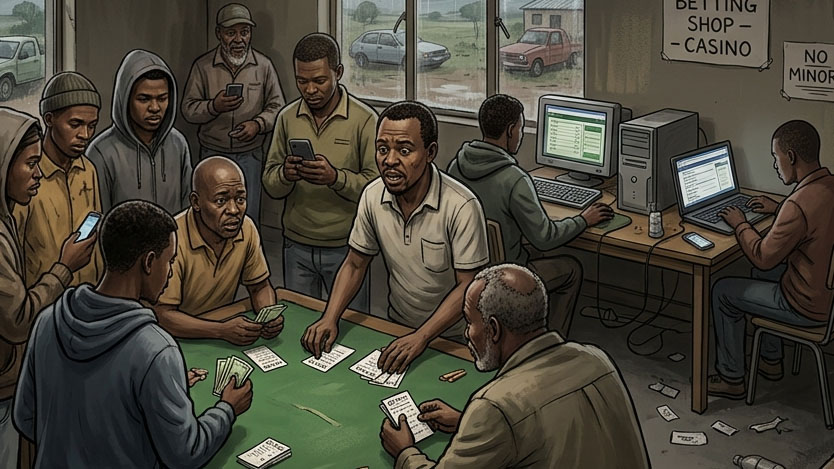
Illegal gambling rings have become increasingly visible across the country, operating in both urban centres and rural communities. Despite the existence of the Gaming Control Act of 2022, underground casinos, unlicensed betting shops and online platforms, continue to thrive. These networks exploit gaps in enforcement and target vulnerable groups, particularly unemployed youth and low-income households. The promise of quick financial gain has made gambling appear attractive, but the reality is that it often worsens poverty and destabilises families.
Economic causes behind the surge: The rapid growth of illegal gambling is rooted in Eswatini’s economic challenges. High unemployment, especially among young people, has left many searching for alternative sources of income. Gambling presents itself as a shortcut to financial relief, even though it rarely delivers lasting benefits. Weak enforcement capacity has also played a role, as regulators struggle to monitor underground operations and online platforms. The spread of mobile money and internet access has further enabled gambling rings to flourish, allowing transactions to be disguised and making it difficult for authorities to intervene.
Small hotel establishments: Small hotels and resorts in Eswatini have become prime targets for illegal gambling rings because they provide discreet venues, relatively low operating costs and limited regulatory oversight. Unlike larger chains that often have stronger compliance systems, smaller establishments are easier to infiltrate and offer the privacy that underground operators seek. Many of these resorts are located outside major urban centres, which makes them less visible to regulators and law enforcement, while still accessible to local patrons. For hotel owners struggling with declining occupancy rates and reduced revenues, the temptation to allow or overlook gambling activities can be strong, as it offers a quick source of income. This discreet environment, combined with financial vulnerability, has made small resorts an attractive base for illegal gambling networks seeking to expand their reach.
At the same time, the accommodation sector in the country has been under significant financial pressure. Inflation reports show that restaurant and hotel costs continued to dis-inflate and deflated in December, January and February.
This decline reflects weak demand and competitive pricing pressures, leaving hotels struggling to maintain profitability. Reduced occupancy rates, falling room prices and rising operational costs have created financial stress across the sector, particularly for small, family-owned establishments. Faced with shrinking margins, some resort owners may be tempted to tolerate or even facilitate gambling activities as a way to generate quick income. In this way, the economic vulnerability of the hospitality sector, as evidenced by declining prices in inflation data, is directly linked to the spread of underground gambling rings, which exploit struggling businesses to expand their operations.
Economic, social impacts: The consequences of illegal gambling are felt at multiple levels. At the household level, families lose disposable income to unregulated betting, leaving less for essentials such as food, education and healthcare. Addiction leads to debt accumulation and, in some cases, family breakdown. At the national level, illegal gambling deprives government of tax revenue that could support development initiatives. Productivity also suffers, as individuals caught in gambling cycles neglect work responsibilities or drop out of the labour force. Moreover, gambling rings often intersect with organised crime and money laundering, eroding institutional integrity and public trust.
Mitigation: To address this growing crisis, we must adopt a multi-pronged strategy. Strengthening regulation and enforcement is critical. The Gaming Control Board needs expanded resources and digital monitoring systems to track suspicious financial flows. Partnerships with telecom companies and banks could help block unlicensed gambling transactions, while regional cooperation would enhance intelligence-sharing on cross-border syndicates.
Economic diversification is equally important. By investing in agriculture, manufacturing and digital entrepreneurship, government can create alternative income opportunities that reduce the lure of gambling. Youth employment programmes would provide pathways out of poverty and diminish the appeal of quick-money schemes.
Public awareness campaigns should highlight the risks of illegal gambling and promote financial literacy. Integrating gambling awareness into school curricula would protect young people from early exposure. Social protection measures, such as operationalising the Gaming Addiction Fund, would provide counselling and rehabilitation services for those already affected. Community-based support systems could help households recover from gambling-related debt.
Conclusion: Illegal gambling in the country is more than a domestic economic and social crisis, but it is also a reputational challenge that undermines the country’s image and international standing. The unchecked spread of underground gambling rings signals weak regulatory enforcement and institutional vulnerability, which can erode investor confidence and discourage tourism.
For a nation that relies heavily on its reputation as a safe and orderly destination, the association of small hotels and resorts with illicit gambling activities tarnishes the hospitality sector and raises concerns about governance. International observers often view illegal gambling as a marker of broader systemic weaknesses, linking it to corruption, money laundering and organised crime. This perception not only threatens Eswatini’s credibility in regional policy spaces, but also risks diminishing its attractiveness to foreign partners, donors and investors who prioritise transparency and stability.
It is a national imperative to improve security at the borders and enforcement of immigration, together with regulatory compliance of businesses.



















Leave a comment