


As Eswatini celebrates 40 years of independence alongside four decades under the leadership of His Majesty King Mswati III, reflection often turns inward to culture, tradition and national identity. However, there is another important story to tell, one that stretches beyond the country’s borders:The kingdom’s steady and often understated role on the continental and global stage.Over the past four decades, Eswatini has embedded itself within key international and regional institutions. Its membership in bodies such as the United Nations, the African Union (AU) and the Southern African Development Community (SADC) has allowed the country to engage in diplomacy, contribute to regional cooperation and take part in shaping discussions that affect millions across Africa and beyond.
For a small, landlocked nation, influence is not defined by size, but by consistency and strategic presence. Eswatini has, over time, built a reputation as a stable and reliable partner in a region that has at times experienced political and economic uncertainty. Within SADC, the kingdom has participated in regional economic integration efforts, infrastructure collaboration and peace and security processes that are essential for shared growth.Its role within the African Union has also grown in visibility.
In recent years, Eswatini has taken on responsibilities within AU structures, contributing to policy direction and continental dialogue. Notably, the country has been entrusted with leadership responsibilities within regional security frameworks linked to the AU and SADC, including chairing the SADC Organ on Politics, Defence and Security Cooperation. This position carries weight, as it involves guiding discussions on conflict prevention, governance and regional stability.
Such responsibilities point to the level of trust placed in Eswatini by its peers. On the global stage, Eswatini’s continued engagement with the United Nations has anchored it firmly within the international system. Through its participation in UN programmes and agencies, the country has aligned itself with global priorities such as sustainable development, public health and education. These partnerships have supported national development, while also allowing Eswatini to contribute to global efforts.
The kingdom’s involvement in the Commonwealth has further broadened its diplomatic reach.
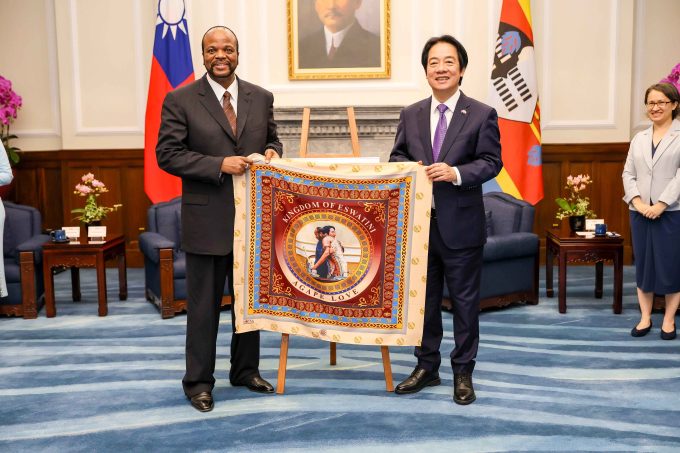
Beyond formal structures, Eswatini’s leadership has, at times, been called upon in moments requiring dialogue and mediation. King Mswati III has participated in regional efforts centred on easing tensions and encouraging peaceful resolution in parts of Southern Africa. Through SADC processes, he has been involved in engagements focused on stability in countries such as Lesotho and, more broadly, in supporting regional consensus during periods of uncertainty. These interventions are often conducted quietly, but they form part of a wider effort to maintain peace within the region.The longevity of both the nation’s independence and the King’s reign adds another dimension to this narrative. Stability over 40 years provides continuity in governance and diplomacy.
It allows relationships with international partners to deepen over time and ensures that policies are implemented with a long-term perspective. Longevity also builds institutional memory. The country has developed experience in handling regional and global engagements, learning from past challenges while refining its approach to diplomacy. This continuity strengthens its ability to respond to shifting global dynamics while maintaining its core principles.Of course, the journey has not been without its challenges. Like many nations, Eswatini has had to balance domestic priorities with international expectations, respond to economic pressures and adapt to global shifts. Its continued presence and active participation in key organisations, however, demonstrate a willingness to remain engaged and to contribute where it can.
A fitting reflection comes from former UN Secretary-General Kofi Annan, who once remarked: “Even the smallest nations have a vital role to play in the global community and their commitment to cooperation strengthens us all.” This observation captures the essence of Eswatini’s approach — that meaningful participation matters, regardless of scale.
Economically, Eswatini’s involvement in regional frameworks such as the Southern African Customs Union (SACU) has placed it within one of the world’s oldest customs arrangements. Through SACU, the country participates in trade coordination and revenue-sharing mechanisms that support economic stability. Its engagement in the African Continental Free Trade Area (AfCFTA) further points to a forward-looking outlook, recognising the importance of intra-African trade in driving future growth.
As the kingdom reflects on this dual anniversary, it becomes clear that its story is not only about internal progress but also about its place in a wider world. Eswatini has maintained a steady presence in international affairs, contributing to dialogue, cooperation and regional cohesion.
Looking ahead, the task will be to deepen this engagement while addressing emerging global issues such as digital transformation and economic resilience. The foundation built over the past four decades provides a strong platform for this next chapter.
As celebrations unfold across the country, there is space to honour both the nation and its leadership for their role over the years.
The journey has been one of endurance, participation and steady contribution.
On this special occasion, one can only wish the Kingdom of Eswatini and His Majesty King Mswati III a joyful and meaningful celebration, as the nation marks this historic moment and looks ahead with confidence and purpose. May the Lord, Jesus Christ, continue walking with and guiding both the kingdom and its King.

















Leave a comment