

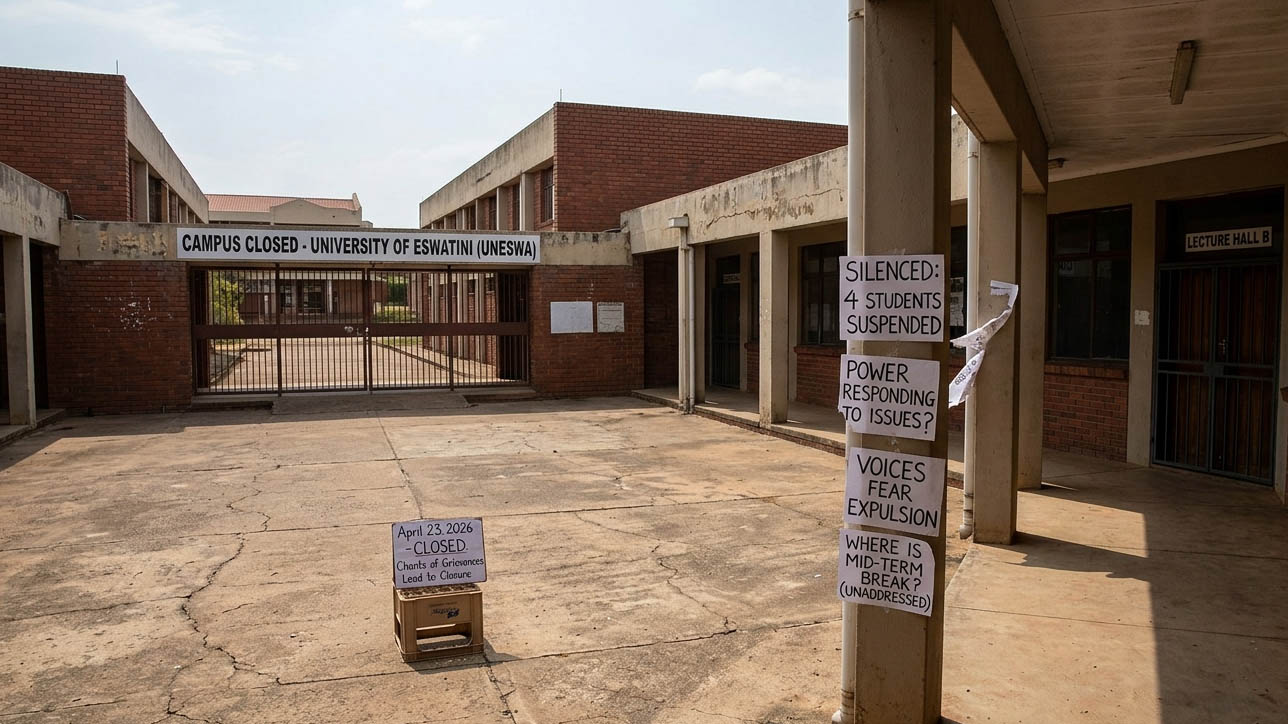
In the past few weeks, lecture halls were filled with chants of frustration and emotional grievances, which led to the hasty closure of the University of Eswatini, Kwaluseni Campus on April 23, 2026. The silence that now hangs over the corridors of the University of Eswatini feels different and more quieter following the suspension of the four (4) students at the campus. The students were grieving on exhausting timetable clashes, which was soon sorted by the university and the denial of a mid-term break remained unaddressed. The recent suspensions were not just disciplinary measures; they were a message to students. For that matter, students are now afraid to voice out their grievances, considering that they could also be suspended.
“I believe that the university’s action aimed to set an example more than preventing harm to students. How are we supposed to voice our issues when the university responds with power? As students, we are now hesitant to speak out because we are now scared to be expelled or suspended,” said a student doing a Bachelor of Education in Secondary Science.
On one hand, the university maintains that the suspensions were necessary given that the protests disrupted teaching and learning. The University of Eswatini registrar said the students violated provisions of the University statutes and Student Disciplinary Regulations after participating in demonstrations that resulted in class boycotts and interference with academic activities.“In terms of Section 4(6) of the Statutes, the vice chancellor, as chief disciplinary officer, is empowered to suspend a student from attending classes, and exclude a student from university premises before a hearing and during the course of investigations”, the registrar shared with the newspaper. This opens a larger conversation about power, student voice and the cost of speaking out.
In a statement released on April 29, the Swaziland National Union of Students (SNUS) condemned the suspensions, describing them as ‘an intensification of repression against organised students’. The organisation argued that disciplinary action against student leaders reflects a broader attempt to silence activism on campuses. The students who were suspended include one leader of SNUS at the national level, three leaders of the union at the branch level, one student representative council and one student.
“We remind students and progressive forces that repression in educational institutions is inseparable from broader social contradictions. The crisis facing students’ exclusion, rising hardship, precarious futures and authoritarian management is detached from the class question. It is rooted in a system that commodifies education while punishing those who resist. It is part of a broader struggle against structures of domination,” read the statement. The organisation further urged workers, teachers, progressive unions, youth formations and all democratic forces to recognise this assault for what it is and stand in solidarity with the student movement. The struggles of students are closely linked to those of workers and other oppressed groups. The same systems that suppress active student voices also exploit workers and seek to silence anyone who challenges justice.
While the university insists the suspensions are only precautionary measures pending investigations, the debate continues to expose growing tensions between institutional authority and student activism at institutions of higher learning.
The question remains: “Should student protests be viewed as a threat to order or as a sign that students feel unheard? Early this week, suspended students have been allowed to return to classes after fellow students boycotted lectures demanding their reinstatement, reigniting debate over student activism. This is according to the student representative council secretary general, as he was addressing the students’ concerning updates on the suspended students.
The boycott has taken on a deeper meaning on campus; it has become the only language students feel is understood when grievances are ignored through formal channels. As a student myself, skipping lectures was not simply a disruption, but a collection message meant to force attention on their suspended peers and broader concerns. This raises uncomfortable questions; if dialogue structures are in place, why do students feel unheard? When protests become the language of last resort, what does that say about the effectiveness of engagement between students and the university?
The university expects students to follow the procedure by engaging the student representative council before escalating their grievances, stressing that established procedures exist precisely to ensure order, dialogue and accountability within the university system.


















Leave a comment