

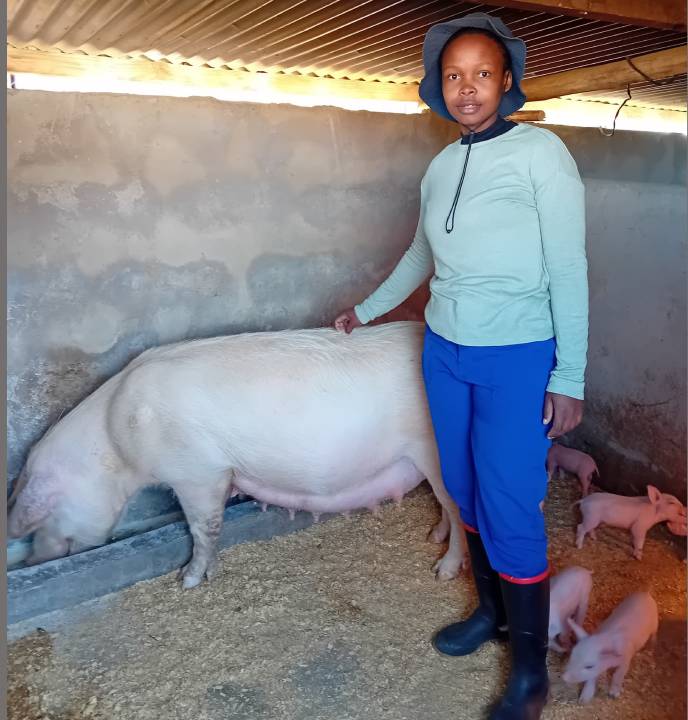
On March23, 2024, young farmer Neliswa Fakudze officially took the leap into commercial pig farming with just nine piglets, purchased from a local farmer at E650 each; an initial investment of E5 850. She later slaughtered and sold them, using the proceeds to invest in gilts from Mpisi Breeding Station at E3 500 each. The decision paid off, with each sow producing litters of up to 14 piglets.
Fakudze was fortunate to inherit a pig shelter from her grandparents, who had previously run a piggery business. However, she had to renovate and upgrade the facility to modern standards, an effort that cost about E15 000. Overall, her start-up expenses, excluding feeding and transport, reached E30 000, funded through proceeds from her side poultry business, support from family and friends and a loan from Simama.
“I grew up surrounded by boys and that’s where I developed my love for livestock,” Fakudze explains. “I saw the potential in agriculture and the piggery project became my first stop shop because my grandparents once ran the same business. I wanted to revive it, this time, sustainably.
Challenges in the journey
Like any new venture, Fakudze’s business faced hurdles. Market access remains a challenge, as she often sells whole carcasses to butcheries or individuals, with some customers paying late. Transport is another constraint, as she has to hire vehicles to ferry feed and deliver meat, an expensive necessity for a farmer based far from feed suppliers in Matsapha. To cut costs, she buys feed in bulk to benefit from economies of scale, sourcing Pinnacle Grower from Feed Master, a choice she swears by for producing quality meat. She also relies heavily on word-of-mouth marketing, with satisfied customers bringing in new clients.
Her formula for quality production
Fakudze emphasises that good feed alone is not enough. She maintains strict biosecurity to protect her pigs from disease by deworming monthly and ensuring water sanitation. During winter, she minimises water splashing to prevent colds, covers shelters with sewn sacks for warmth and lights fires for new born piglets. She also maintains high hygiene standards by regularly removing waste from pens.
Advice for aspiring farmers
She strongly encourages small-scale farmers to take advantage of free workshops provided by the Ministry of Agriculture. “You don’t need huge capital to start,” she advises. “Start small, surround yourself with like-minded people and dedicate time to continuously improve your business.”
Fakudze’s story is a powerful reminder that with passion, determination and smart reinvestment, even a modest start can grow into a sustainable farming enterprise.















Leave a comment