

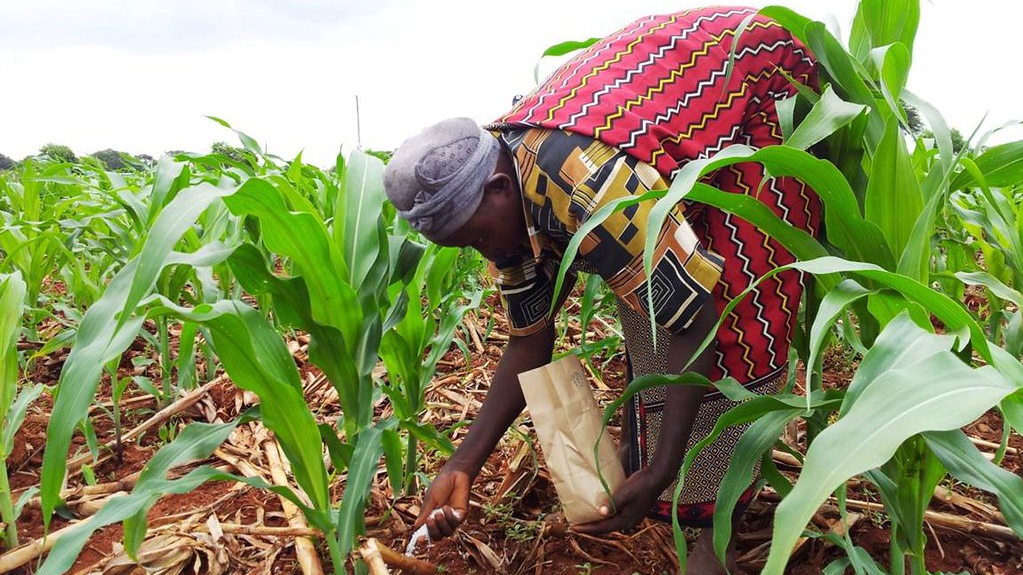
Achieving high and sustainable maize yields requires proper land preparation, use of healthy seed, timely planting, balanced fertiliser application (both organic and inorganic) and an effective weed management programme.
Soil Science and Plant Nutrition Research Officer in the Department of Agricultural Research and Specialist Services in the Ministry of Agriculture, Bongani Mvubu says these practices ensure optimal germination, strong seedling emergence and vigorous growth, resulting in higher yields under Eswatini’s diverse agro-climatic conditions.
1. Achieving good soil tilth
He mentions that good soil tilth is key to uniform germination and strong plant establishment. “It refers to the soil’s physical condition, how easily it can be worked, how well it supports root growth and its suitability for planting.” A well-tilled soil should have:
- A crumbly structure for easy root penetration.
- Good aeration and drainage to prevent waterlogging.
- Adequate moisture retention for germination.
- Minimal compaction for good oxygen supply.
How to achieve ideal soil tilth:
Subsoiling and deep ploughing (30–60 cm) when soil moisture is at 50–60 per cent of field capacity (after the first spring rains). This break, compacted layers and improves water infiltration.
Harrow or lightly disc the soil to break clods and create a fine seedbed.
Under minimum tillage, retain crop residues as mulch to conserve moisture and build soil organic matter.
2. Conditions for proper seedling emergence
He shares that healthy and uniform maize emergence depends on:
- Soil moisture: Maintain 50–60 per cent field capacity. Avoid planting in very dry soil to prevent delayed germination.
- Temperature: Ideal range is 18 degrees to 30 degrees Celcius. Below 10 degrees, germination slows and seedlings become disease-prone; above 35 degrees, seedlings risk desiccation.
- Oxygen supply: Ensure soil is well-aerated.
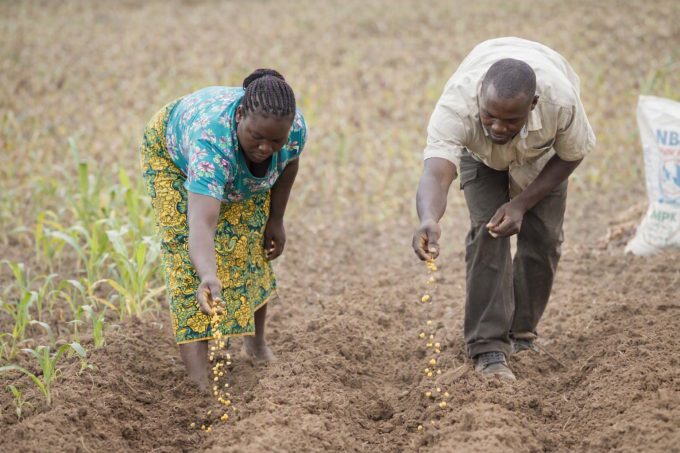
- Planting depth: Avoid planting too deep or too shallow.
- Seed quality: Use treated, certified seed to prevent fungal and insect damage.
- Seed-to-soil contact: Ensure good coverage for moisture absorption.
- Weed control: Apply pre-emergence herbicides immediately after planting to reduce early competition.
- Crust management: If a crust forms, use light harrowing to improve emergence.
3. Soil fertility management
He says that before planting, farmers should test their soil to determine nutrient levels and pH. Maize performs best in:
- pH: 5.8–7.0
- Organic matter: Above 2 per cent
- Texture: Medium soils (sandy loam to clay loam) with good drainage.
4. Fertiliser application methods
(a) Basal application (at planting)
Basal fertiliser promotes strong root and early vegetative growth.
- Band placement: Place fertiliser 5cm beside and 5cm below the seed. Mix lightly with soil to prevent seed burn.
- Mechanised planting: Use a tractor- or animal-drawn planter for uniform placement of both seed and fertiliser.
Mechanised planting procedure:
- Planter set-up: Most planters have two hoppers: One for seed and one for fertiliser.
- Calibration: Adjust the planter to apply about 300–400 kg per hectare of Compound 2:3:2. (37).
- Operation: As the planter moves, the fertiliser coulter opens a furrow, deposits fertiliser 5cm below and beside the seed, then covers it with soil.
- Moisture check: Plant when the soil is moist enough to dissolve fertiliser granules and support germination.
Note: When buying maize seed from agro dealers, always inform the shop keeper whether you will be planting by hand or using a mechanised planter so that they supply you with the appropriate seed.
(b) Top/side-dressing application
Top-dressing provides nitrogen for vigorous vegetative growth.
- First split (half rate): 3–5 weeks after emergence, when maize has 6–8 leaves (V6–V8 stage).
- Second split (half rate): Just before tasselling (V10–V12 stage).
Apply when the soil is moist and cover fertiliser immediately to reduce volatilisation losses.
Planting too shallow exposes seeds to drying, while too deep delays emergence and weakens seedlings.
Recommended spacing:
- Inter-row spacing: Explore 75–90cm
- Intra-row spacing: 25cm between plants
Adjust spacing according to maize variety, local moisture conditions and fertiliser application rate for optimal plant population and yield.
Note: If you increase the plant population, also increase the rate of fertiliser
Key takeaway: “Successful maize production in Eswatini hinges on timely land preparation, proper soil fertility management, correct planting techniques and good moisture conservation practices.
Integrating organic and synthetic fertilisers, combined with appropriate spacing and weed control, ensures healthy plant establishment and sustainable yields,” shared Mvubu.


















Leave a comment