

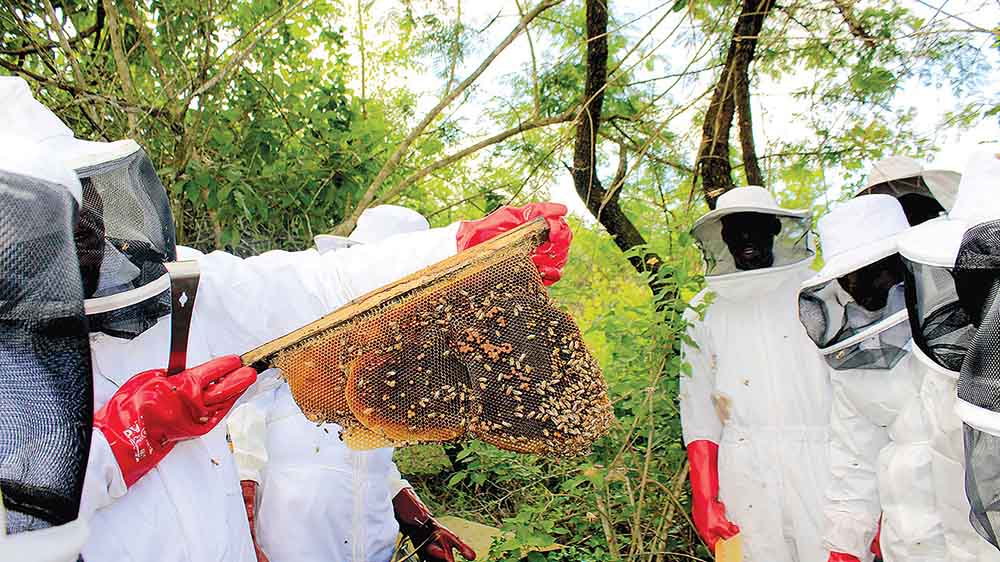
Beekeeping is more than harvesting honey, it is a partnership with nature.
From the gentle hum of a thriving hive to the rich reward of golden honey, beekeeping offers both economic opportunity and environmental value. For those looking to start, success begins with the right knowledge, preparation and respect for the bees themselves.
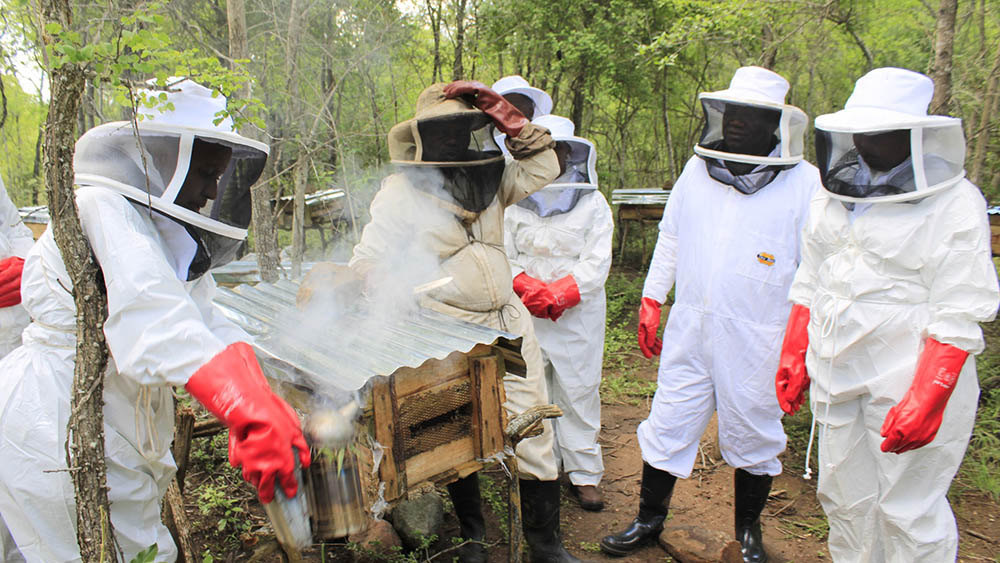
Before welcoming bees to your farm, it is essential to invest in the correct equipment. A standard beekeeping kit includes beehives and trap boxes, full protective clothing (hat, overall, gloves and gumboots), a hive tool, bee brush, smoker, stainless-steel knife and clean white 20-litre buckets for honey handling. These tools are not optional, they are fundamental to safety, hygiene and productivity.
According to Dr Thembi Ndlangamandla, the Regional Veterinary Officer for Hhohho at the Ministry of Agriculture, training is critical. She cautions that bees should never be handled by untrained individuals. “Harvesters must wear full protective clothing to avoid stings. Open fires must never be used during harvesting, only smokers that emit smoke without flames are permitted,” she emphasised.
Setting up the hive: location matters
A successful beekeeping venture starts with proper hive preparation and site selection. Hives must be clean and well baited using wax, propolis or lemongrass to attract swarms. They should also be raised above ground level to prevent damage from mites and other pests.
When choosing an apiary site, accessibility is key, hives should be easy to reach for regular inspection. An apiary can accommodate up to 20 hives, depending on the availability of flowering plants, as bees can forage within a radius of up to three kilometres.
Safety for both bees and people is equally important. A hedge or fence should separate the apiary from humans and animals, and the site must be far from homes, roads and public areas. Ideally, hives should receive morning sun and afternoon shade, be protected from strong winds and have good air circulation. Where natural shade is lacking, it should be created.
Water and food sources must be nearby, whether a river, pond or dripping tap, along with nectar-producing trees and crops that benefit from pollination. Apiaries should be placed on higher ground to avoid flooding and excessive humidity, which can lead to fungal growth and poor honey quality. Areas where pesticides are used should be strictly avoided, as chemicals can kill bees and contaminate honey.
Once bees settle into a hive, relocating them becomes difficult, making careful site selection from the outset absolutely essential.
Managing a healthy colony
Effective beekeeping management follows the floral calendar, as colonies have different needs at different times of the year.
During the dearth season, when food is scarce, slow hive activity or dry combs indicate the need for sugar syrup feeding. Beekeepers should avoid harvesting all available honey, leaving enough for the bees to survive. Regular inspections are necessary to control pests such as ants and wax moths. Hive entrances should be protected with coarse mesh to keep out mice and lizards, and unused combs should be removed to prevent infestation.
In the build-up phase, the goal is to strengthen colonies. A healthy colony should cover at least six to eight combs with bees. Sealed brood from stronger colonies can be transferred to weaker ones, and supplementary feeding may be required if nectar flow is poor. Hive size must be adjusted to match colony strength, ensuring bees can regulate temperature and defend their space effectively.
During the honey flow period, preparation is everything. Hives ready for harvesting should be inspected, with all equipment, including clean containers, protective clothing, smokers and tools, in place ahead of time. If honey buckets are supplied by the market, they should be secured well before harvesting begins.
Beekeeping rewards patience, discipline and respect for nature. When done correctly, it not only yields honey but also supports pollination, biodiversity and sustainable livelihoods, truly turning a simple hive into liquid gold.















Leave a comment