

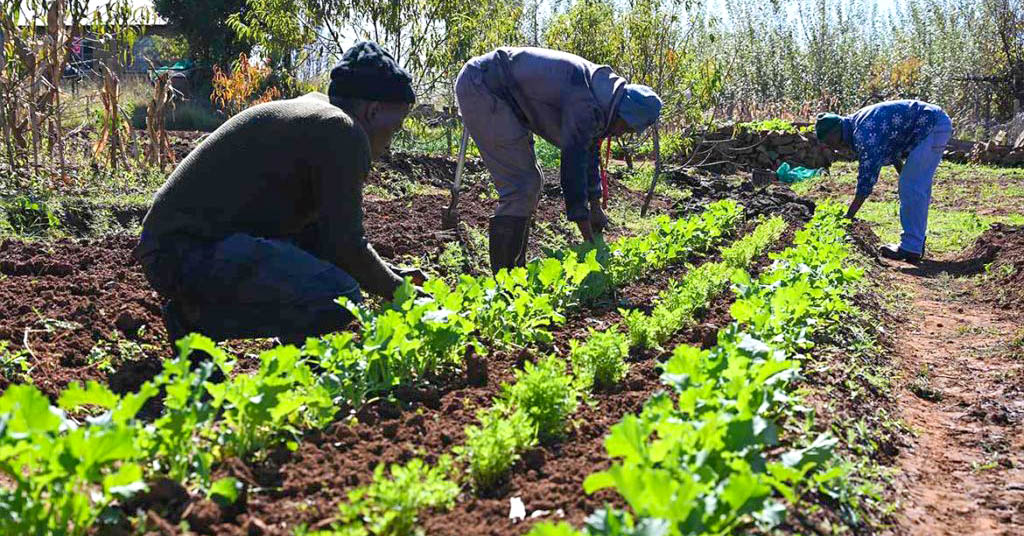
Vegetables remain the backbone of healthy diets, offering vitamins, minerals, fiber and antioxidants that protect against chronic diseases. Nutritionists emphasize that “a plate rich in greens is a plate rich in life,” underscoring their role in food security and public health.
Economic role in rural development
Beyond nutrition, vegetable farming is a driver of rural economies. It creates employment across production, transport, and retail chains, while boosting family income. As one farmer in Manzini noted, “Vegetables put money in our pockets every week, unlike maize which pays once a year.”
Winter: The best season for planting
Winter offers unique advantages for vegetable production:
- Lower pest and disease incidence reduces crop losses.
- Cooler temperatures favour crops like cabbage, broccoli, cauliflower, beetroot spinach, and carrots.
- Stable yields ensure consistent supply to markets.
Agricultural Officer Lucky Mavuso explains: “Farmers who plant in winter spend less on pesticides and enjoy healthier crops. It’s the season where nature itself protects your investment.” However, if not well planed it leads to market gluts which results in farmers making less profits.
Off-season premiums
While winter is ideal for production, summer harvests can fetch premium prices due to scarcity. Farmers who manage irrigation and pest control during hot months often secure higher profits. As one grower put it: “Summer farming is risky, but the rewards are sweet when you’re the only supplier.”
Planning production for the market
Vegetables are highly perishable, making market-oriented planning essential. Farmers must:
- Plan production around demand cycles.
- Calculate harvesting periods and expected yields before planting.
- Start small, then expand as experience and markets grow.
- Shift mindset from “grow and sell” to “grow to sell.” Know your customer before planting to avoid losses.
Pre-cultivation market research
Before planting, farmers should gather market intelligence. Key questions include:
- When is the peak demand and price?
- Which varieties are most preferred?
- What are the supply requirements (quantities and frequency)?
- What are the quality standards expected by buyers?
- Who are the potential buyers and what are their payment terms?
Changing the farmer’s mindset
The shift from subsistence to market-driven farming is crucial. Extension services encourage farmers to think beyond immediate sales. “We must stop planting first and looking for buyers later. Know your market, then plant,” says veteran farmer Sipho Maseko.
Absolutely — after completing a market survey, farmers should be encouraged to seek expert advice before committing to large-scale planting. This step ensures that the information gathered is interpreted correctly and turned into actionable strategies.
Why expert advice matters
- Production planning: Specialists can help align planting schedules with peak demand periods.
- Variety selection: Agronomists advise on which varieties thrive in winter and meet market preferences.
- Pest and disease management: Experts provide guidance on preventive measures, especially during off-season production.
- Financial planning: Extension officers can help farmers calculate expected yields, costs, and profit margins.
















Leave a comment