

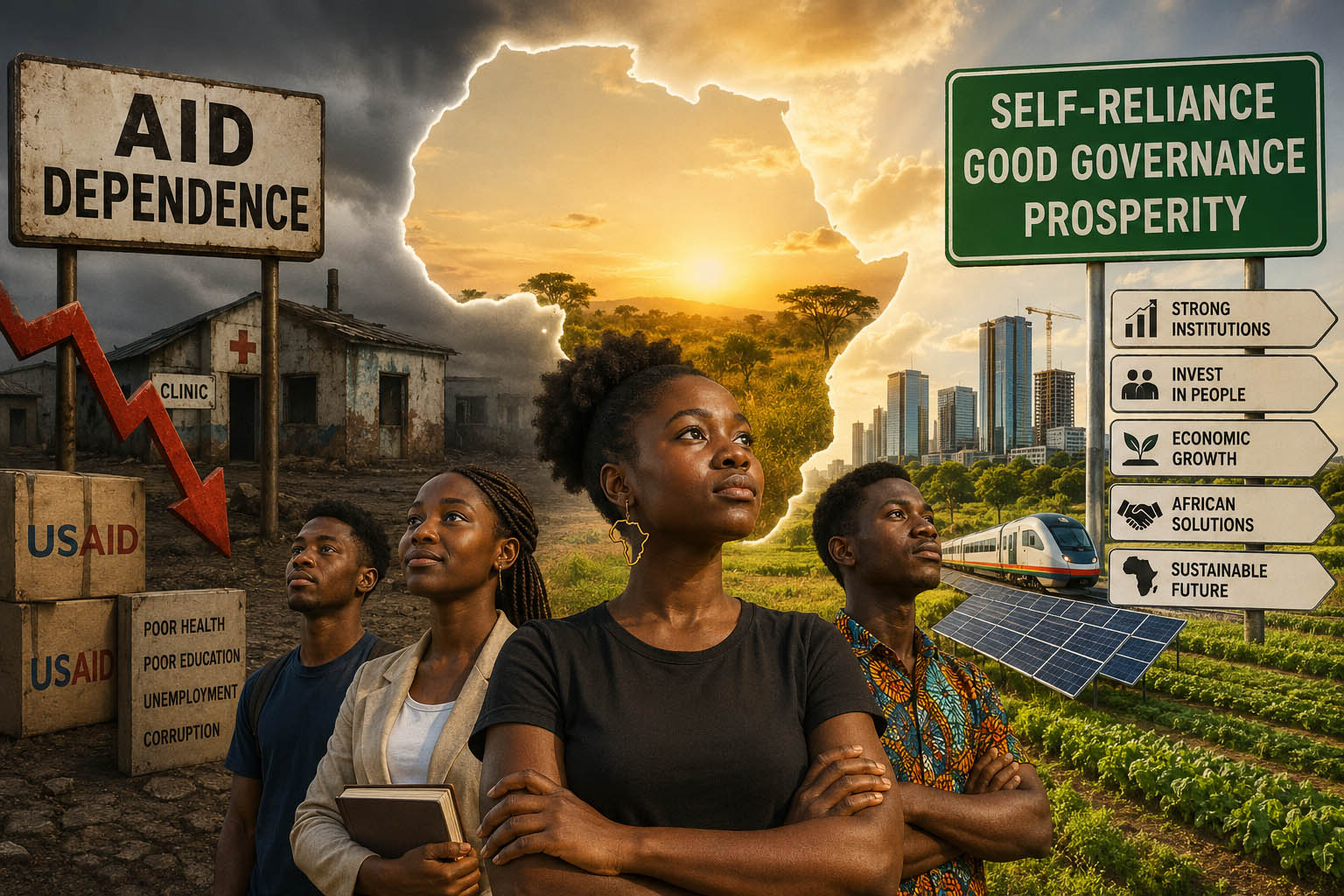
Africa’s youth have delivered a message many leaders have spent decades avoiding. While the abrupt withdrawal of USAID funding has revealed painful gaps in health, education and humanitarian programmes, a notable share of young Africans believes the cuts could ultimately prove beneficial.
Their reasoning is simple. If governments can no longer rely on foreign donors to fill budget gaps, they may finally be forced to govern better, collect revenue more effectively and invest in their own people. That view deserves careful consideration.
Foreign aid has saved countless lives across Africa. Vaccination campaigns, HIV treatment, food assistance and maternal healthcare have all benefitted from international support. It would be dishonest to dismiss these gains. The immediate consequences of funding reductions are already being felt through medicine shortages, clinic closures and disrupted services for vulnerable communities.
However, aid has also produced unintended consequences. Decades of donor dependence have, in many instances, encouraged governments to postpone difficult reforms. Rather than building resilient tax systems, encouraging investment or diversifying economies, some administrations have become comfortable waiting for external partners to finance programmes that should gradually have been absorbed into national budgets.
Former US President John F. Kennedy once said: “The goal of foreign aid should be the creation of conditions in which it is no longer needed.” Those words capture what development assistance should achieve. Sustainable progress cannot be imported. It must grow from accountable institutions, responsible leadership and citizens who demand results.
History provides several lessons. Following the devastation of the Korean War, South Korea depended heavily on foreign assistance during the 1950s. Rather than allowing aid to become a permanent crutch, successive governments invested in education, manufacturing and exports. Within a generation, the country transformed itself from one of the world’s poorest nations into a leading industrial economy.
Foreign assistance played a role, but national planning and disciplined implementation made the difference.
Botswana offers another African example. Following independence in 1966, it received international support but resisted excessive dependence.
Revenue from diamonds was channelled into infrastructure, education and healthcare instead of unsustainable consumption. Strong public institutions and prudent fiscal management helped Botswana become one of Africa’s most stable economies despite starting with limited resources.
Rwanda also rebuilt after the 1994 genocide with substantial donor support. Over time, however, the government deliberately increased domestic revenue collection, expanded local healthcare financing and pursued policies intended to reduce reliance on external assistance. While debates continue about governance and political freedoms, its economic planning illustrates that aid can serve as a bridge rather than a permanent destination.
The opposite is equally instructive. In countries where donor money flowed with weak oversight, corruption often flourished. Billions of Dollars entered Mobutu Sese Seko’s Zaire during the Cold War, much of it disappearing into patronage networks while public services deteriorated. The country accumulated debt without building lasting institutions, leaving future generations to inherit instability instead of prosperity.
Similar concerns have surfaced elsewhere. Large aid inflows into Haiti over many years produced countless projects but limited institutional development. Following the devastating 2010 earthquake, enormous sums were pledged, but questions persisted about coordination, accountability and how much funding actually reached communities. Too often, international organisations, contractors and politically connected elites benefitted more than ordinary citizens.
These experiences explain why many young Africans increasingly question traditional aid models. They are not necessarily rejecting solidarity from abroad.
Instead, they are questioning systems that appear to enrich consultants, political insiders and foreign agencies while unemployment, inadequate healthcare and poor infrastructure continue.
None of this means donor countries should abandon vulnerable populations overnight. Abrupt policy shifts rarely produce orderly transitions, particularly where governments have insufficient fiscal capacity. Humanitarian assistance is still indispensable during emergencies, conflict and natural disasters.
Still, this disruption should become a wake-up call rather than merely another crisis. African governments possess abundant natural resources, youthful populations and expanding markets. Better tax administration, stronger anti-corruption measures, investment in agriculture and manufacturing and greater regional trade could gradually replace dependence with resilience.
The optimism expressed by some young Africans is not naïve. It is a demand for accountable leadership that treats foreign assistance as temporary support instead of a permanent budget line.
Aid should complement national development, not substitute it. Africa’s future will ultimately be determined not by the generosity of donors, but by the courage of its own leaders and citizens.
















Leave a comment