

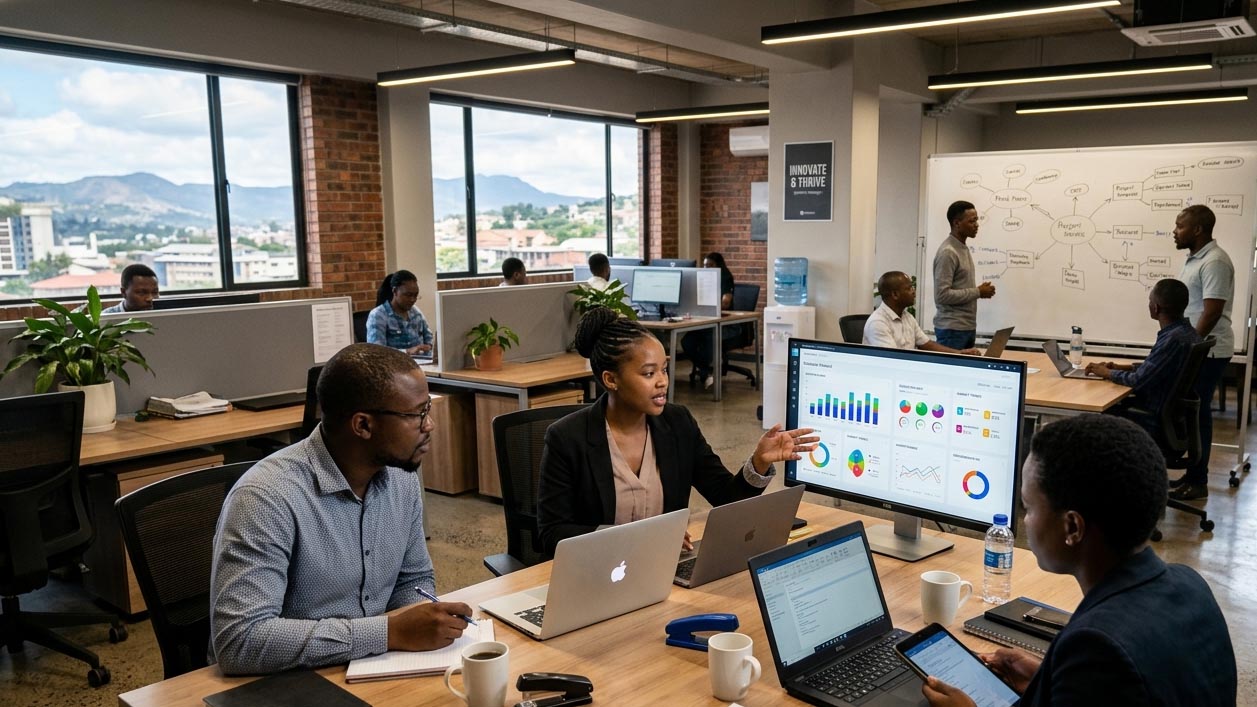
In today’s ever-evolving business landscape, small and medium-sized enterprises (SMEs) face the significant challenge of rethinking and enhancing their performance to maintain a competitive edge. High-performing SMEs are those that have successfully cultivated a culture of excellence, driven by a steadfast commitment to achieving sustained high performance. By increasing the number of high-performing SMEs, we strengthen the economy, trade and overall quality of life for individuals involved.
What sets high-performing SMEs apart from their peers? Let us explore the key traits that define these exceptional organisations in the SME sector:
1. Strong mission and clear purpose:
High-performing SMEs have a well-defined mission that goes beyond mere words on a wall. It serves as a guiding principle that informs all decisions and actions within the organisation. A strong mission boosts employee motivation and engagement, fosters effective collaboration among teams, and attracts like-minded individuals during the recruitment process. Over time, a clear mission fosters trust among customers and partners, contributing to long-term success.
2. Effective leadership:
Leadership in high-performing SMEs goes beyond traditional command and control. Effective leaders motivate and empower their teams, effectively communicating the organisation’s vision and demonstrating how each individual’s role contributes to it.
These leaders strike a balance between stability and promoting innovation, creating an environment where calculated risks are encouraged, and learning from failures is embraced. Leadership development is prioritised at all levels, ensuring the organisation is prepared to face future challenges.
3. Focus on results:
High-performing SMEs not only work hard, but also work smart. They establish clear, measurable objectives that challenge their teams while remaining attainable. Every project and effort is assessed based on how it contributes to these objectives. This strategy fosters a culture of accountability, where employees take responsibility for their work and strive for continual improvement. By keeping everyone focused on core objectives, SMEs can respond rapidly to changes in the market and remain competitive.
4. Data-driven decision- making:
High-performing SMEs base their decisions on objective information rather than relying solely on intuition or tradition. They invest in tools and expertise for effective data collection and analytics.
By leveraging data, SMEs monitor performance measures, analyse trends and anticipate future requirements. For example, data analytics can help HR departments identify skill gaps, refine hiring procedures, and retain valuable personnel. Organisations that make data-driven decisions can allocate resources more effectively, reduce risks, and identify untapped opportunities.
5. Skills-based approaches for transformation:
High-performing SMEs use data to improve decision-making across all aspects of their operations. They leverage advanced analytics to evaluate performance, identify talent gaps and streamline management processes. This emphasis on data allows SMEs to make better strategic decisions aligned with their company’s goals and the capabilities of their staff.
6. Agility and adaptability as core values:
Top-performing SMEs prioritise agility and adaptability. These attributes enable them to adjust rapidly to market developments and changing customer needs, fostering a flexible work environment. Companies that prioritise these qualities can better foster creativity and innovation.
7. Embracing cutting-edge technologies:
High-performing SMEs are quick to adopt and leverage new technologies such as artificial intelligence (AI) and automation. They adapt these technologies to meet their specific needs, staying ahead of the competition and paving the way for others.
8. Continuous learning:
A culture of continuous learning is essential for SMEs to remain adaptable and innovative. It goes beyond formal training and instils curiosity and a growth mindset within the organisation. Top-performing SMEs encourage their employees to explore new ideas, learn from successes and failures and promote internal mobility. Modern learning tools, such as AI-powered platforms, provide tailored development routes. This emphasis on learning ensures that SMEs always have the necessary capabilities to handle new challenges and seize opportunities.


















Leave a comment