MANZINI- Eswatini has been urged to play a role in resolving the widespread concerns over xenophobia and social fragmentation within Southern Africa.
The social fragmentation manifested chiefly, in the recurring crisis characterised by targeted violence, economic scapegoating and vigilante campaigns against African and Asian foreign nationals.
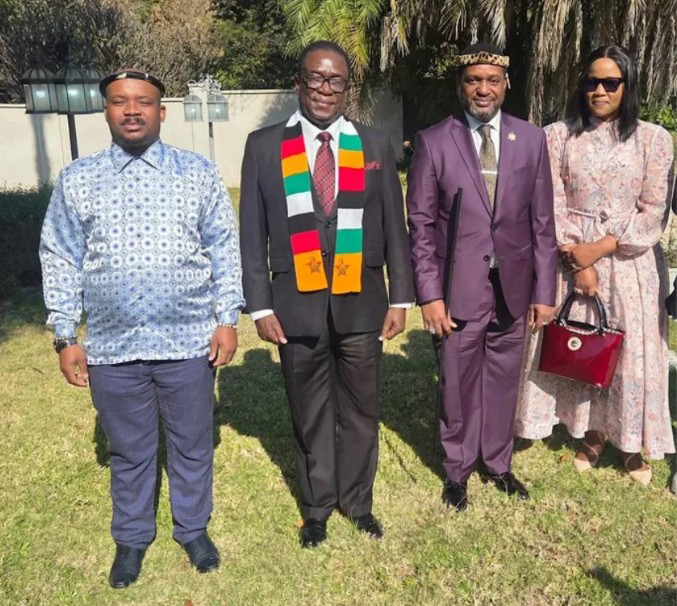
Recently, Zimbabwean President Emmerson Mnangagwa met with amaZulu King Misuzulu kaZwelithini and amaMpondo aseMnyandeni King Ndamase Ndamase in Harare in July 2026, to discuss regional migration challenges, promote social cohesion and strengthen traditional leadership ties between South Africa and Zimbabwe.
Following the meeting, a proposal has been unveiled for the inaugural Southern African Development Community (SADC) Regional Minority Summit, which aims to position diversity as a catalyst for regional economic growth, investment and social cohesion across Southern Africa. Eswatini was also tagged to participate because the kingdom is also widely affected by the migration crisis.
The summit, proposed for Zimbabwe in 2026 under the theme ‘Unity in Diversity: Building Inclusive Regional Growth, Investment and Social Cohesion in Southern Africa’, seeks to bring together governments, business leaders, traditional authorities, minority communities and regional stakeholders to strengthen dialogue on inclusion, economic cooperation and regional integration.
Presented by co-Founder, Prince Sivile Mabandla, the proposal argues that Southern Africa’s history has always been one of interconnected communities rather than isolated States.
The document notes that long before colonial borders were established, communities across present-day Zimbabwe, Eswatini, South Africa, Mozambique, Botswana, Zambia, Namibia, Malawi and Tanzania traded, migrated, intermarried and cooperated through shared economic and cultural systems.
According to the proposal, the summit seeks to revive the spirit of regional cooperation that characterised the liberation era and later gave birth to the Southern African Development Coordination Conference (SADCC) in 1980, which eventually evolved into the SADC 1992.
The proposal states that while SADCC was originally established to reduce dependence on apartheid South Africa and promote collective economic liberation, the proposed summit intends to adapt those principles to modern priorities such as investment, industrialisation, migration management, inclusion and regional economic integration.
The concept paper also highlights the historical contribution of minority communities to Southern Africa’s economic development.
It notes that Indian communities became influential in trade and retail, Portuguese, Greek and Afrikaner communities contributed significantly to agriculture and commerce, while Jewish communities played important roles in finance and manufacturing. Chinese investment has increasingly shaped mining and infrastructure, while migrant African communities have formed the backbone of mining, logistics, agriculture and construction across the region.
Cities such as Johannesburg, Harare, Bulawayo, Lusaka, Maputo, Durban and Mbabane grew into multicultural economic centres through migration and entrepreneurship.
The document argues that minorities should be recognisedas long-standing contributors to industrial growth, infrastructure development, financial systems and regional trade rather than being viewed as outsiders.
It further links the summit to growing concerns over xenophobia and social fragmentation within Southern Africa.
It notes that xenophobic attacks, particularly those experienced in South Africa since 2008, exposed deeper structural challenges including unemployment, inequality, migration management, housing shortages, youth disenfranchisement and economic exclusion.
Rather than allowing migration and minority issues to fuel division, the summit proposes transforming them into opportunities for investment, innovation, entrepreneurship and regional cooperation.
The proposal also draws on examples of reconciliation across the region, including Zimbabwe’s National Reconciliation Policy after independence, South Africa’s Truth and Reconciliation Commission, and SADC’s mediation efforts in countries such as Lesotho, Madagascar, Mozambique and the Democratic Republic of Congo.
It argues that dialogue, consensus and negotiated solutions have long been central to Southern Africa’s approach to resolving conflict and should remain so.
Eswatini is identified as offering a unique governance model for the proposed summit.
The proposal says the kingdom’s traditional leadership system, anchored by the monarchy and Tinkhundla structure, has maintained relatively high levels of social cohesion despite social diversity.
It suggests that Eswatini could provide a case study on how indigenous governance structures can help manage relations between minority and majority communities within a modern state.
Beyond social cohesion, the summit is also envisioned as a platform for economic diplomacy.
According to the proposal, discussions would focus on issues including the proposed SADC Business Council, a regional Minerals and Commodities Exchange, cross-border industrial corridors, digital finance, energy security, rural industrialisation, smart cities and infrastructure integration.
The document notes that Southern Africa’s vast reserves of platinum, chrome, lithium, copper, manganese, coal and rare earth minerals present significant opportunities for regional economic transformation under the African Continental Free Trade Area (AfCFTA).
The proposal identifies Zimbabwe as the preferred host country, citing its liberation history, industrial legacy, mining potential, conference infrastructure and strategic position linking Southern, Central and Eastern Africa.
Potential host cities include Harare, Bulawayo and Victoria Falls.
Ultimately, the proposed summit seeks to strengthen regional integration, reduce xenophobia, promote investment cooperation, enhance social cohesion and broaden minority participation in Africa’s development.
“The proposed Regional Minority Summit represents a historically grounded and forward-looking initiative capable of strengthening Southern Africa’s social and economic future,” the proposal states.