

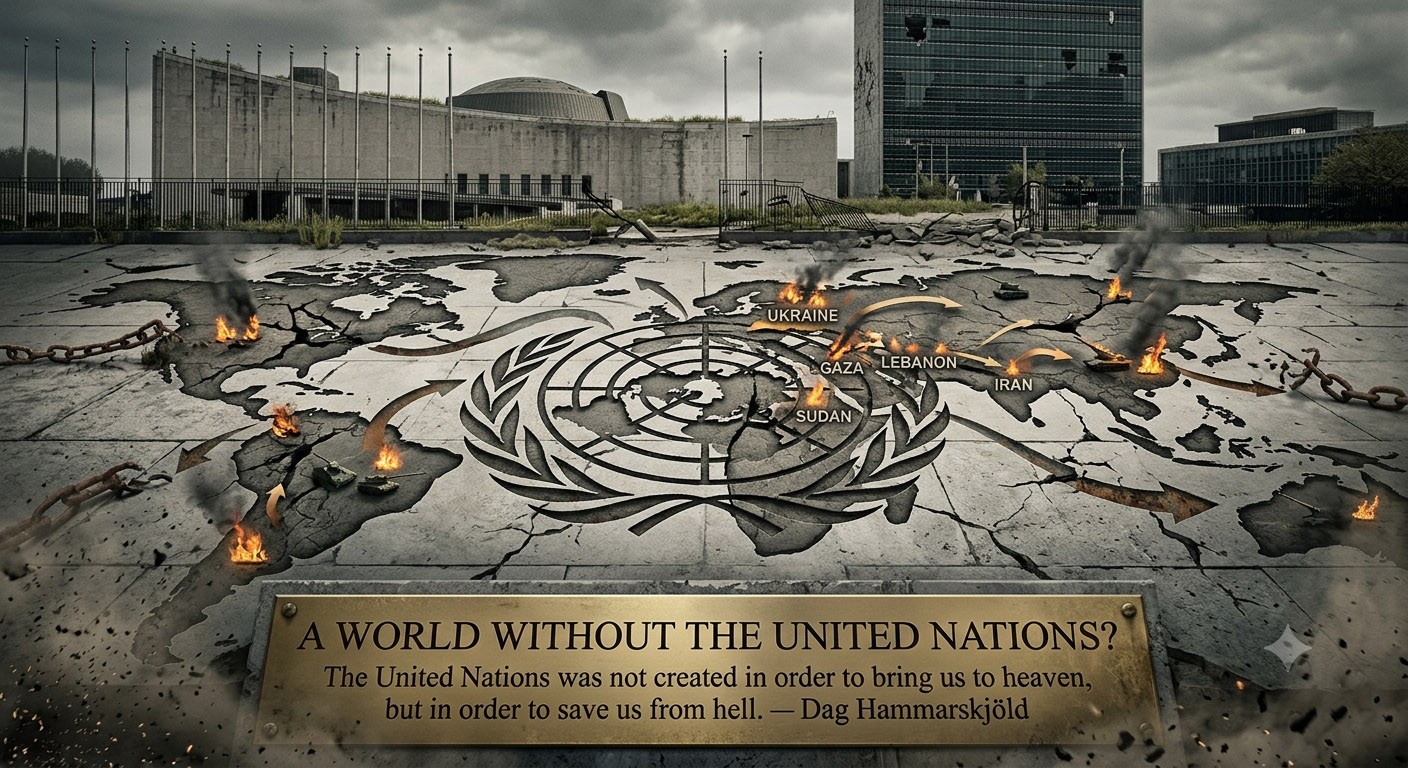
As wars rage on in Ukraine, Iran, Gaza, Lebanon and Sudan, to mention a few, the role of the United Nations in securing global peace is more demanded in recent times.
When the United Nations Charter was signed in San Francisco in June 1945, its preamble laid out a pledge born from the ashes of two catastrophic global conflicts: “To save succeeding generations from the scourge of war.” Central to this architecture was the UN Security Council (UNSC), an executive body granted supreme authority over international peace and security, anchored by five permanent members equipped with veto power.
Eight decades later, that foundational architecture faces a profound existential crisis. The very guardians entrusted with upholding the Charter, the Security Council’s permanent members, have repeatedly bypassed, defied and undermined the instrument they were sworn to protect. From unilateral invasions and military interventions to non-UN-sanctioned military campaigns, the systematic circumvention of collective security has left observers asking a once-unthinkable question: What will become of our world if the United Nations ceases to function? This is indeed a question that country leaders and the people of the world are asking themselves.
When the Charter of the United Nations was crafted in 1945, it was forged as an unprecedented structural shield, a bulwark against the raw power dynamics that had twice plunged humanity into global devastation. Signed by 51 founding nations, the Charter sought to replace the law of force with the force of law.
At its core, the Charter established a framework designed to make aggressive war illegal, create binding mechanisms for collective security and offer a universal platform for dispute resolution.
To this end, the UN Charter explicitly prohibits the threat or use of force against the territorial integrity or political independence of any State, allowing for only two clear exceptions: Military actions authorised by a Security Council resolution under Chapter VII, or legitimate self-defence under Article 51.
Yet history reveals a steady erosion of these principles by those holding the veto power. In recent decades, permanent members have repeatedly conducted major military operations without explicit Security Council authorisation, framing actions under broad interpretations of self-defence, pre-emptive strikes or humanitarian intervention.
The veto mechanism, originally designed to ensure major-power consensus, has increasingly been deployed to shield States and their allies from accountability, reducing the Security Council to political gridlock.
If the trend continues, the world will operate in an era of unprecedented technological and military destruction. The scale of human loss world dwarf those of the two world wars. The flattening of Gaza and parts of Lebanon is a good example.
Without a universally recognised forum for international law, regional powers and global superpowers would operate largely unchecked. Border disputes, resource competition and ideological clashes would increasingly be settled through military leverage rather than diplomacy. Sovereign States, especially vulnerable States, would lose the institutional protections that international treaties currently afford them. This will also result in the dreaded uncontrolled nuclear proliferation. The UN framework—and its specialised agencies like the International Atomic Energy Agency provides vital monitoring and non-proliferation structures. Without multilateral oversight and security guarantees, non-nuclear nations would face immense pressure to develop nuclear deterrents to ensure their survival, dramatically increasing the risk of a regional nuclear arms race.
What is also at stake would be the collapse of global humanitarian aid, in a world where wars have displaced millions, disasters have also taken a toll on humanity, especially impacting poor countries as well as developing nations.
It is well established that the UN system encompasses agencies that provide humanitarian services. These include the World Food Programme (WFP), UNHCR, UNICEF and the World Health Organization (WHO), to mention a few. Without the UN’s global mandate and organisational infrastructure, managing transnational crises, such as mass refugee displacements, famines and global pandemics, response would become fragmented and severely underfunded, leading to unprecedented human cost.
Recommended action
World leaders and the peoples of the world should not bury their heads in the sand. But should act in one voice in terms of calling for the UN to be allowed to pursue its mandate.
The United Nations reforms, which have been a subject of discussion, should now come into effect. The United Nations cannot be based on post-1945 realities because the world has changed.
Veto power by Permanent members should be redesigned to foster accountability, especially if a member violates the UN Charter.
Expand permanent or long-term semi-permanent seats to include unrepresented regions (such as Africa, Latin America and India) to make the council’s mandates more globally legitimate and representative.
UN member States should invest the necessary resources to guarantee UN global effectiveness.
The second UN Secretary said: “The United Nations was not created in order to bring us to heaven, but in order to save us from hell.”









Leave a comment