

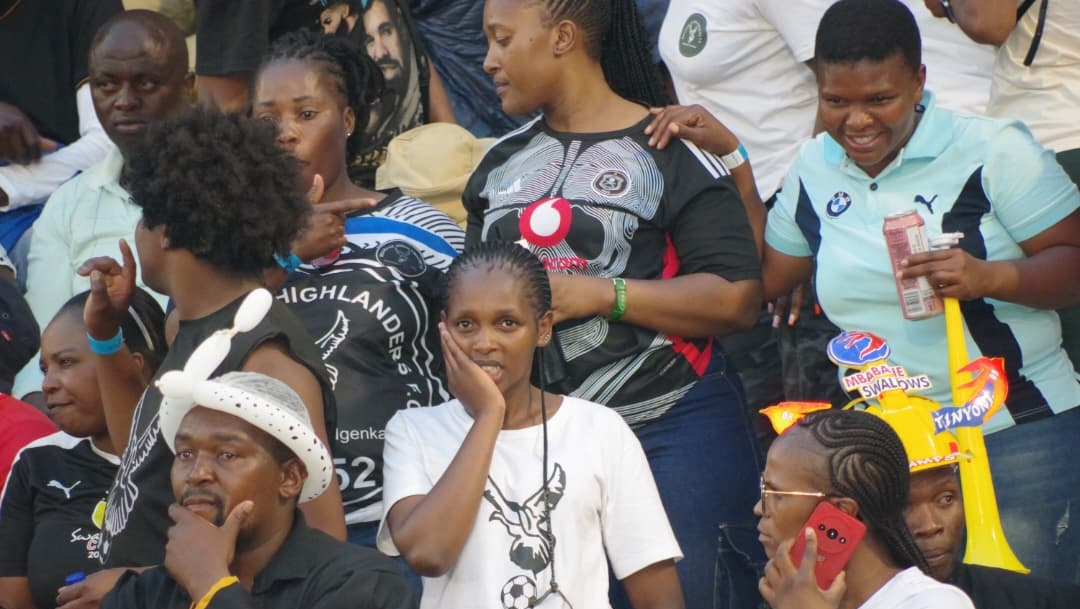
Mbabane Highlanders, a name that resonates with the very soul of Eswatini football, is at a crossroads.
The recent acquisition by South Africa’s popular businesswoman Shauwn ‘MaMkhize’ Mkhize, has promised a new dawn for the ‘Black Bull’. On the surface, the signs are all there: A luxurious new coach bus, a rebranding with a new name (Mbabane Highlanders AM) and a shiny new logo. The optics are impeccable, befitting a club with continental ambitions.
But as the dust settles from the glitz and glamour of the unveiling, a more sobering reality is emerging. The 0-2 upset against minnows Ezulwini United in the 8Bet Trade Fair Cup Last 16 was not just a loss; it was a loud, unvarnished statement about the current state of the team. It revealed a fundamental imbalance, a glaring disconnect between the grand vision and the on-field reality. While the new management has invested heavily in the external facade of the club, the core product—the team itself—appears to be an afterthought. This is a classic case of misplaced priorities, where the wrapping paper is more valuable than the gift inside.
Highlanders’ history is forged in the grit and determination of players who wore the black and white with pride. It is a history of dominant victories, legendary rivalries and a deep-seated legacy that has made them one of the most successful clubs in the kingdom. To return to those heights, the focus must shift from outward-facing rebranding to the inward-facing task of building a quality squad.
The loss of key players like Captain Thando Langa and goalkeeper Qiniso Nyawo to rivals Nsingizini Hotspurs and Moneni Pirates is a significant blow. These were not just squad players; they were pillars of the team. Their departures, reportedly over contract disputes, highlight a deeper issue. It is a puzzling move for a club with a new-found financial muscle to let go of its best talent. Their replacements, if any, were not evident in the opening match, leaving the team with a glaring void in critical positions. A shaky defence and a lack of a proven goalscorer were the most visible frailties against Ezulwini.
Football is, and always will be, a game of players. The best coaches, the most luxurious facilities and the most effective marketing campaigns are all secondary to the quality of the men on the pitch. You can have a state-of-the-art bus to transport your team, but if the players on that bus are not good enough, it will only serve as a mobile monument to mediocrity. The new management seems to have fallen into the trap of believing that the aesthetic appeal of a club is a substitute for a competitive squad. It is not. It is an enhancement, a reward for on-field success, not a precursor to it.
The challenge for Highlanders is to strike a delicate balance between modernising the club and respecting its core identity. Rebranding is essential for a club that wants to professionalise and compete in the modern era. The new coach bus and the fresh look are commendable steps in this direction. But professionalisation is more than just appearances. It is about building a sustainable and successful model, and that starts with player recruitment and retention.
First and foremost, the club must prioritise the acquisition of top-tier talent. The Eswatini Premier League is a small pond, and a club with Highlanders’ ambition and resources should be making a splash not treading water. The message sent by the departure of Nyawo and Langa and the subsequent loss to Ezulwini, is that Highlanders are not a destination for the league’s best players. This narrative must be flipped. The team should be actively scouting, negotiating and securing the services of the most coveted players in the country. It is not about buying every player, but about strategically filling the gaps identified in the team’s performance. The frailties in defence and the absence of a potent striker are the most urgent areas to address. A team with continental football ambitions cannot afford to be without a proven goalscorer.
Secondly, the new management needs to understand the weight of the Highlanders badge. Playing for this club is not like playing for any other team. It comes with a legacy, a culture and an immense fan base that demands success. The pressure is immense and it is a pressure that average players are not equipped to handle. The club needs to blend its existing, relatively unchanged squad with seasoned campaigners—players who understand the pressure, who have won trophies and who can act as mentors to the younger talent. This blend of youth and experience is the secret to building a cohesive and winning team.
Thirdly, the club must address the internal divisions that have surfaced. The ownership battle, a matter which is sub judice and cannot be discussed in detail, is clearly a destabilising force. While the new management may not be entirely at fault, they must take proactive steps to unify the fan base and the players. A club divided on the stands and in the boardroom is a team destined to fail on the pitch. The best way to win over the doubters and the loyalists against the new management is not through a shiny bus, but through convincing wins and a clear commitment to on-field success.
It was disturbing to see some Highlanders fans celebrating the defeat of the team against Ezulwini. The scene was as surreal as it was heartbreaking. During the game, a faction of what should have been Mbabane Highlanders’ most ardent supporters erupted in cheers, not for their own team, but for the opposition. They publicly celebrated the defeat of the very club they claim to love. This was not an act of protest; it was an act of betrayal and it is a stain on the very fabric of football fandom.
The issue, as we all know, is the ownership crisis gripping the club. There is a legitimate, understandable frustration with the current state of affairs and the departure of Bheki ‘Rubber’ Simelane. But there is a line, a sacred boundary that separates protest from treachery. To cross that line, to revel in the humiliation of the black and white stripes, is to declare that your loyalty lies not with the team, but with an individual.
This is a fundamental misunderstanding of what it means to be a supporter. You follow the club through thick and thin. You endure the pain of defeat and savour the sweetness of victory. Your loyalty is to the crest, the colours and the history—not to a director, a player or a coach, all of whom are temporary custodians of the club’s legacy. Even the removed director, whose cause these fans believe they are championing, would surely be appalled. No true football person, no matter their grievance, would ever condone the public humiliation of the team they once led.
The action of these supporters has achieved nothing but damage the club further and raised questions about their own integrity. Had they stayed home, had they protested silently by not attending, their message would have been clear and their dignity intact. Instead, they chose to make a public spectacle of their disloyalty, proving that their allegiance was conditional. They have demonstrated that their passion is not for Mbabane Highlanders Football Club, but for a personal agenda.
This is a lesson for all of us in the football community. The club is bigger than any single person. Its history is written not in boardroom deals but in the hearts of its true supporters. And those hearts, no matter the circumstances, should never celebrate defeat. That is the ultimate, unforgivable sin.
In a nutshell, the new era for Mbabane Highlanders holds great promise, but it risks becoming a gilded cage—a beautiful shell with nothing substantial inside. The rebranding efforts are welcome and they set a new standard for professionalisation in Eswatini football. However, they must be a complement to, not a replacement for the fundamental business of winning football matches. The team’s priorities must be re-evaluated. The focus should be on assembling a quality squad that can compete at the highest level, not just on looking the part. Only then will Highlanders truly be on the path to reclaiming its rightful place at the pinnacle of Eswatini football and beyond. The new bus is a nice touch, but it is the players inside it who will determine the destination. And right now, the destination looks a lot like a bumpy road to mediocrity, when it should be a smooth ride back to glory.


















Leave a comment