

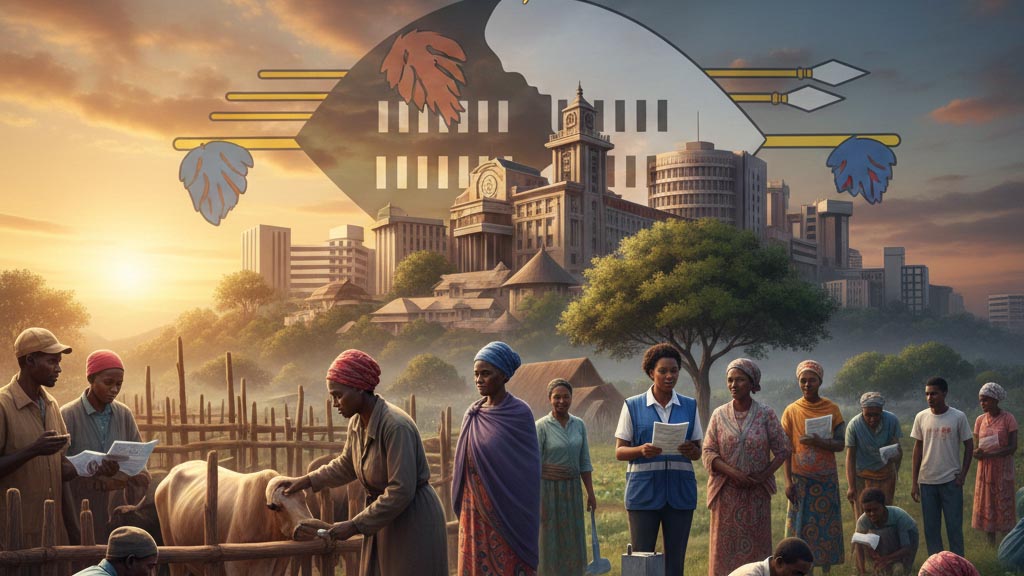
More than six decades ago, United States President John F Kennedy addressed his nation with words that still ring true across the world: ‘Ask not what your country can do for you, ask what you can do for your country.’ Those words should speak directly to emaSwati today.
Eswatini has problems that are too big, too sudden and too many for any government to fix on its own. The abrupt loss of American funding for HIV and AIDS programmes, the foot-and-mouth disease outbreak that has closed vital beef markets, rising livestock theft (goats in particular), the sudden drop in coal demand and the long-standing domestic crises of unemployment, a strained health service, corruption and gender-based violence have arrived simultaneously.
They are overwhelming ministries, emptying our Treasury and pushing thousands of families to the edge. In such times, it is tempting to stand back and ask, ‘what is government going to do?’ That question is fair, but it is no longer enough. For its part, government will argue it has responded with a salary increment for its workers, which has pleased the middle to upper levels, but left the lower ranks and security officers disgruntled.
There is a lot more that government needs to do, but the mistake we should not make is to expect all our solutions to come from Hospital Hill, because they will not. The truth is that ministers and civil servants, even working day and night, can only open export markets if we the people have the goods to export, vaccinate every herd, replace lost foreign aid or rebuild shattered livelihoods.
The scale of the task now demands a national response in which every citizen, every community and every organisation consciously asks, ‘what can I do for Eswatini?’ Farmers and herd owners, for example, are the first line of defence against foot-and-mouth disease. It is rural families who see the earliest signs of illness in their cattle, who know every footpath animals use and who can enforce movement controls long before a veterinary officer arrives.
If communities organise themselves to report cases instantly, respect quarantine zones and assist with vaccination campaigns, the disease can be contained far more quickly than if they wait passively for government teams. Our goats and cattle are being stolen in broad daylight by people we live with and sold to people we know, so only we can put a stop to it.
In the fight against HIV and AIDS, community health motivators, church groups, women’s organisations and youth leagues already know which households have stopped collecting medicines and which young people are at risk. These local networks can monitor treatment adherence, encourage testing and support orphaned and vulnerable children more effectively than any distant ministry clinic ever could.
Their daily presence and trust within neighbourhoods are irreplaceable. In areas hit by mine and factory closures, laid-off workers, teachers and traditional leaders are best placed to identify retraining needs, start small enterprises and keep hope alive among the youth. Community councils and chiefs can coordinate food relief, prevent school dropouts and maintain order, without always waiting for instructions from Mbabane.
We can also adopt the ‘buy local’ campaign to ensure we encourage the growth of indigenous enterprises. Even in the struggle against corruption and gender-based violence, neighbours, families and local authorities often see wrongdoing or danger long before it reaches a police docket or court file. Speaking up early, offering safe refuge and supporting survivors are tasks that begin at the homestead and the community police, not only in government offices.
Thailand kept its HIV programme among the world’s strongest even after foreign funding fell, largely because ordinary citizens, like village health volunteers, took ownership of treatment support and prevention education in their areas. More than a million volunteers now ensure that almost every patient collects medicines on time. Government provided training and supplies, but the volunteers provided the eyes, ears and caring hands that no central ministry could supply.
Botswana has better managed repeated foot-and-mouth outbreaks not just with veterinarians and soldiers, but because farmers and community leaders treated disease control as their own war. They policed grazing movements themselves, reported sick animals immediately and worked alongside government teams to erect fences and vaccinate herds. Their active partnership, not passive compliance, restored Botswana’s beef industry and protected rural jobs.
Eswatini possesses the same deep community spirit and the same strong traditional structures that made success possible in Thailand and Botswana. Chiefdoms, tinkhundla committees, inner councils, churches, youth leagues and women’s groups should stand ready to act decisively if every member accepts that the front line runs through their own homesteads and communities.
We need to urge every liSwati, from the cattle posts of Shiselweni to the suburbs of Mbabane, to move beyond waiting and watching. Ask first and ask every day: ‘What must I and my community do today, this week, this month, to protect our families and secure our future?’ Government has a duty to coordinate, to resource and to remove obstacles.
However, it is the people’s hands, hearts and actions that will guide Eswatini through this challenging time. The point is simple: Government must lead, coordinate and provide resources, but the daily work of saving lives and protecting livelihoods should be done by the people themselves.
Kennedy’s call was never about abandoning hope in government; it was about awakening the ability within citizens. That ability is needed here now more than ever.


















Leave a comment