

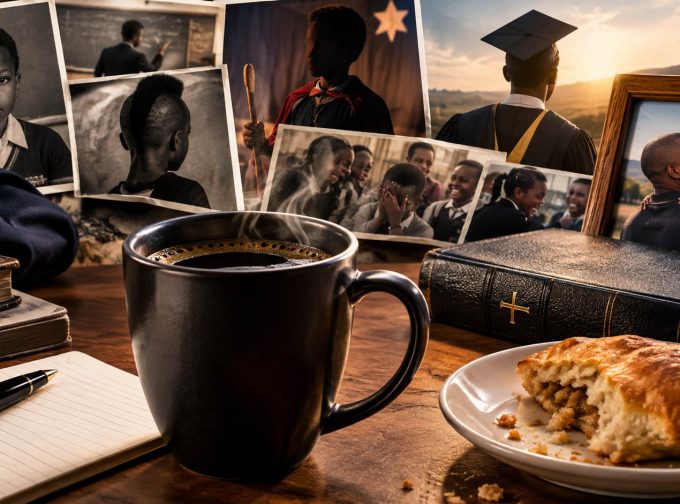
It’s funny how every January, even with our best intentions to be organised, we still struggle to get our children ready for the school year.
There’s always that brief, false hope that ‘this’ January will be easy.
Then back-to-school season hits, and reality sets in.
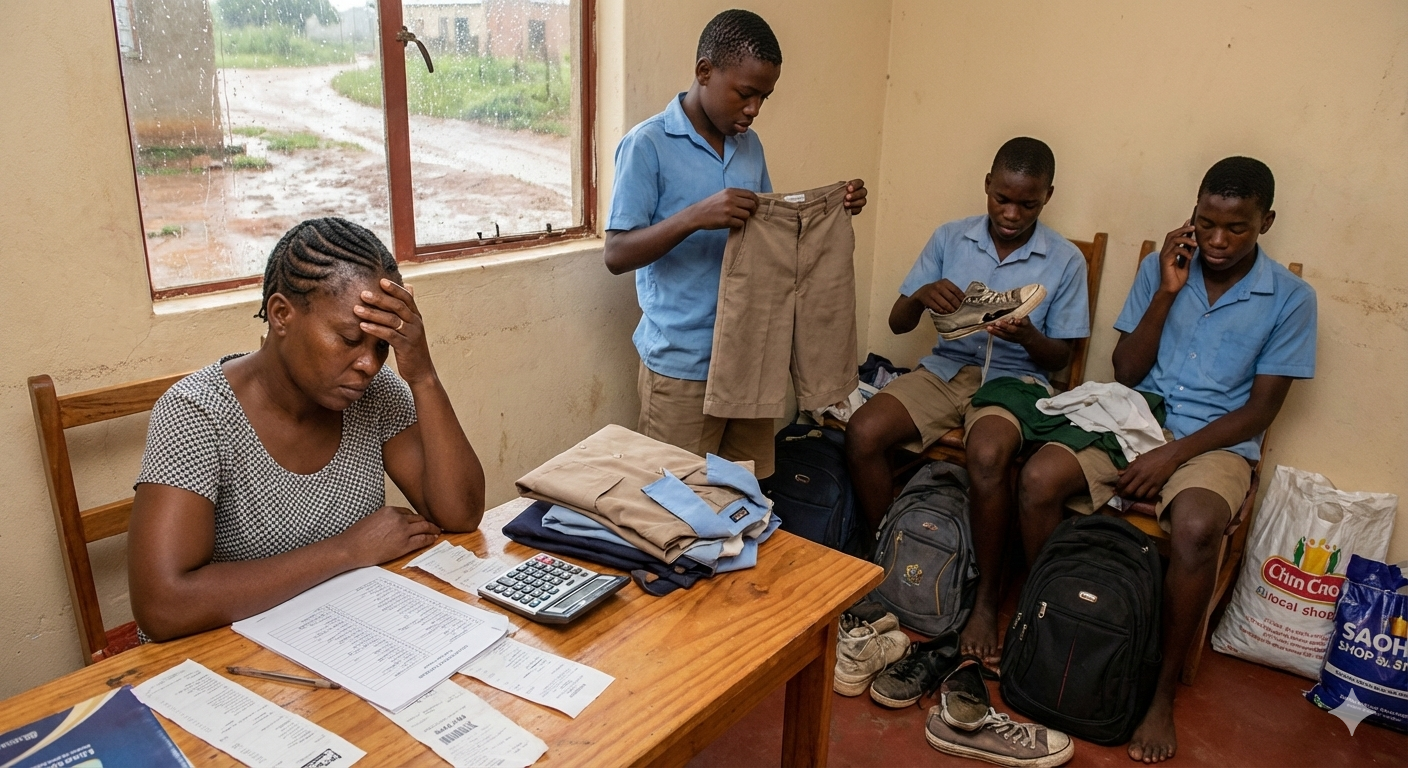
As a single mum with three teenage boys in high school, I face this season with a calculator, a deep breath and the quiet resolve of someone about to deal with growth spurts, school needs and a bank account that didn’t get the memo about rising costs.
Back to school isn’t just an event here; it’s a whole operation. It starts with lists. Really long lists.
Lists that make it seem like my sons attend different private schools in different countries. Shoes, uniforms, sports clothes, school supplies, bus fare, and of course, some new thing that’s required each year for learning or extracurricular activities.
Back-to-school season is when optimism meets the hard truth of numbers and loses.
Having three boys means things never fit for long. Shoes that fit great in October are suddenly too small by January.
Trousers that used to reach their ankles are now way too short.
Trying to convince teenage boys that slightly short pants are okay is a test of persuasion, creativity and just pretending it’s fine.
Every purchase feels temporary, clutching onto receipts in case any items need to be returned.
I’m not even going to touch on the amount of debt most parents start the year off with to ensure their bundles of joy are ready to tackle the new academic year head on.
This season turns parenting into a game of strategy. Who needs new shoes now, and who can wait? Which uniform can be fixed or adjusted? Can one school bag work for two things if we’re careful? These aren’t easy choices; they’re how we survive, made in kitchens and sitting rooms everywhere across social and economic divides.
On the contrary, the shops experience a boon. Prices go up, knowing parents don’t have many choices.
Uniforms become pricey. School books seem to multiply overnight. Supplies come wrapped in plastic that will last longer than the school year itself.
Education might be a basic human right, but for parents like me, getting ready for it often feels like being racked over some medieval torture device.
My sons see this season differently. They’re excited, but also nervous, about new classes, new teachers, new expectations and the social anxiety that is a hallmark of adolescence.
Teenagers notice differences, and school is where those differences are obvious from day one.
They worry about shoes, uniforms, and being that child, whereas parents worry about transport, fees, food and if it will rain.
The environment is always a factor, even if it’s not on the list.
Back-to-school season is during the rainy months, when roads flood and transport is unreliable. Some mornings start with checking the weather.
Has it rained too much? Can we cross the bridge? Will the school transport even make it?
Climate change doesn’t care about the school schedule.
There have been days when one or all of my sons had to stay home – not because they were sick, but because the road to school was too dangerous.
When roads and bridges are flooded, going to school is a risk. No grade is worth a life.
This season also makes a lot of trash. Old uniforms get thrown out because there’s no easy way to pass them on.
Shoes are tossed instead of fixed. Plastic packaging fills trash cans and open spaces. We talk about being green, but it’s hard to make ideal choices when you’re just trying to survive.
Being a single parent adds pressure. There’s no second income to fall back on. No backup plan when money runs out.
Every choice is mine alone. Still, like many parents, I keep going – not because it’s easy, but because education still means hope.
Back-to-school season isn’t about a lack of effort; it’s about a lot of sacrifice.
Parents go above and beyond because they believe school still gives a chance in a world where opportunity feels unsure.
It also shows how much families depend on each other.
Grandparents help with their pensions. Relatives pitch in where they can. Neighbours share rides and information.
The community helps fill the holes left by systems that assume everyone is stable.
Environmental problems make these holes bigger. When a dry spell hurts crops, fees are harder to pay.
When floods damage homes, fixing roofs becomes more important than new uniforms. Climate issues don’t stop because it’s the start of the school year.
However, schools expect things to be normal. Attendance. Focus. Good grades. As if learning happens away from hunger, floods, transport problems and money issues.
It’s ironic to tell children that education is the way out of poverty while making it so hard to get because of money and the environment. We expect them to focus after watching their parents struggle to get them ready.
Still, they show up. Some come with everything new. Others come with just determination.
They sit next to each other, expected to compete fairly, even though they started in different places.
They didn’t. As the school year gets going, the rush fades. Lists are forgotten. Receipts are put away. Stress becomes normal. Until next year, when it all starts again.
Maybe the back-to-school season needs more attention – not just as a busy time, but as a way to see who pays the price of education, who deals with environmental risks, and who adapts while systems stay the same.
For families like mine, back to school is about being tough, figuring things out, and staying hopeful under pressure.
Before children go back to class, families go back to reality.
Also, every January, reality costs a lot. Send comments to: greencitizeneswatini@gmail.com or 7633 0336











Leave a comment