

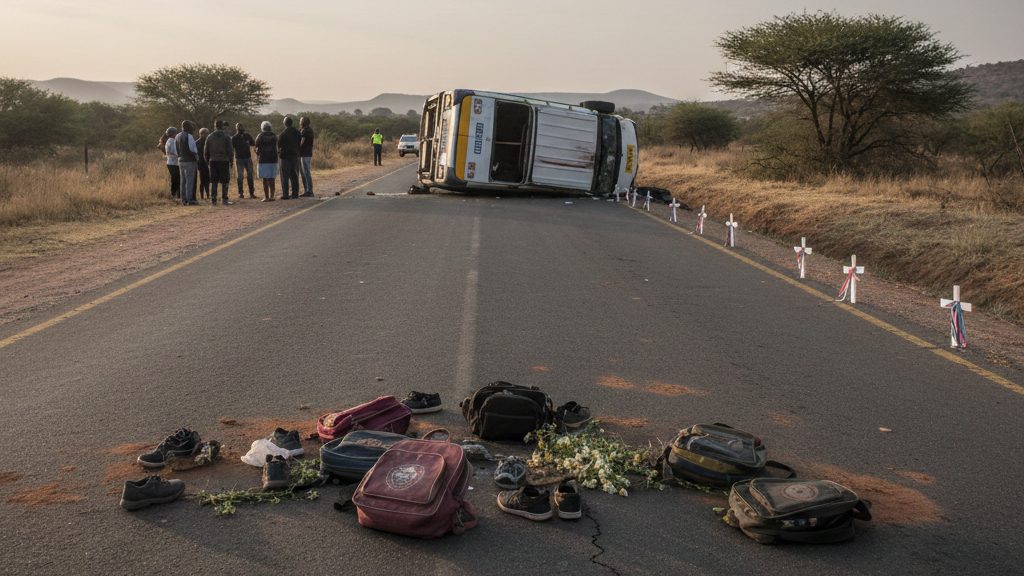
No parent sends their child off to school expecting to receive a call that shatters their world. Yet, that unfathomable tragedy unfolded recently in South Africa’s Gauteng Province, where a horrific road accident claimed the lives of 14 schoolchildren. These were young lives filled with promise, cut short on a road that should have carried them safely to school and back home. Instead, it became the scene of devastation, grief and unanswered questions.
This tragedy has shaken the region and once again thrown a harsh spotlight on a crisis that African countries, including Eswatini, can no longer afford to treat as routine or inevitable. Road accidents have become one of the leading causes of death across the continent, silently claiming lives daily and leaving families and communities broken in their wake.
The Gauteng crash is particularly painful because it involved children and public transport meant to protect them. Early reports point to reckless driving and possible regulatory failures, reigniting debates about the safety of scholar transport, the competence of drivers, and the effectiveness of oversight by authorities.
However, while South Africa mourns, the rest of us must reflect honestly, because the same risks exist on our own roads.
In Eswatini, road accidents are a recurring national tragedy. Fatal crashes spike during weekends, holidays and paydays, often linked to speeding, alcohol abuse, dangerous overtaking and poorly maintained vehicles. Every year, families bury loved ones, breadwinners are lost and survivors are left with lifelong injuries. Yet public outrage fades quickly, replaced by silence until the next horrific headline emerges.
Public transport drivers, in particular, must confront an uncomfortable truth. Among ordinary citizens, minibus taxis and commuter buses are widely regarded as some of the most dangerous road users. Whether fair or not, this perception exists because too many drivers flout traffic laws, overload vehicles, speed recklessly and show little regard for the safety of passengers or other road users. This must change.
Driving a public transport vehicle is not just a job; it is a position of trust. Drivers carry human lives, not cargo. They are responsible for children going to school, workers heading to their jobs, and families travelling between towns. One reckless decision behind the wheel can wipe out multiple lives in seconds, as the Gauteng tragedy painfully illustrates.
Rebranding public transport drivers from being seen as the worst offenders on the road into ambassadors of safety will require commitment and discipline. It starts with proper training, continuous assessment and strict enforcement of professional driving standards. Operators who ignore safety regulations or allow unqualified drivers on the road should face severe penalties, including losing operating licences.
However, responsibility does not rest on drivers alone. Government must urgently restore road safety as a national investment priority.
This means increasing funding for traffic police, road safety authorities and accident prevention programmes. Enforcement must be consistent and visible, not limited to festive seasons or reactionary crackdowns after fatal accidents.
Equally important is infrastructure. Poor road conditions, faded markings, inadequate lighting and unsafe pedestrian crossings all contribute to accidents. Investing in safer roads saves lives and reduces the long-term costs associated with healthcare, insurance claims and lost productivity. Education is another critical pillar.
Road safety awareness should be reinforced in schools, communities and workplaces, shaping attitudes from an early age.
Respect for traffic laws must become part of our culture, not an optional courtesy.
The tempo must be increased. Lives are being lost too frequently for incremental change or polite reminders.
Strong leadership, accountability and sustained action are required. The memory of the 14 children who died in Gauteng must not fade into another statistic.
If there is any lesson to be drawn, it is this: road deaths are preventable. They are the result of choices, policies and priorities. By choosing safety, investing in enforcement, and demanding better from ourselves and those entrusted with public transport, we can stop our roads from becoming graveyards.
Our children deserve to arrive alive.

















Leave a comment