

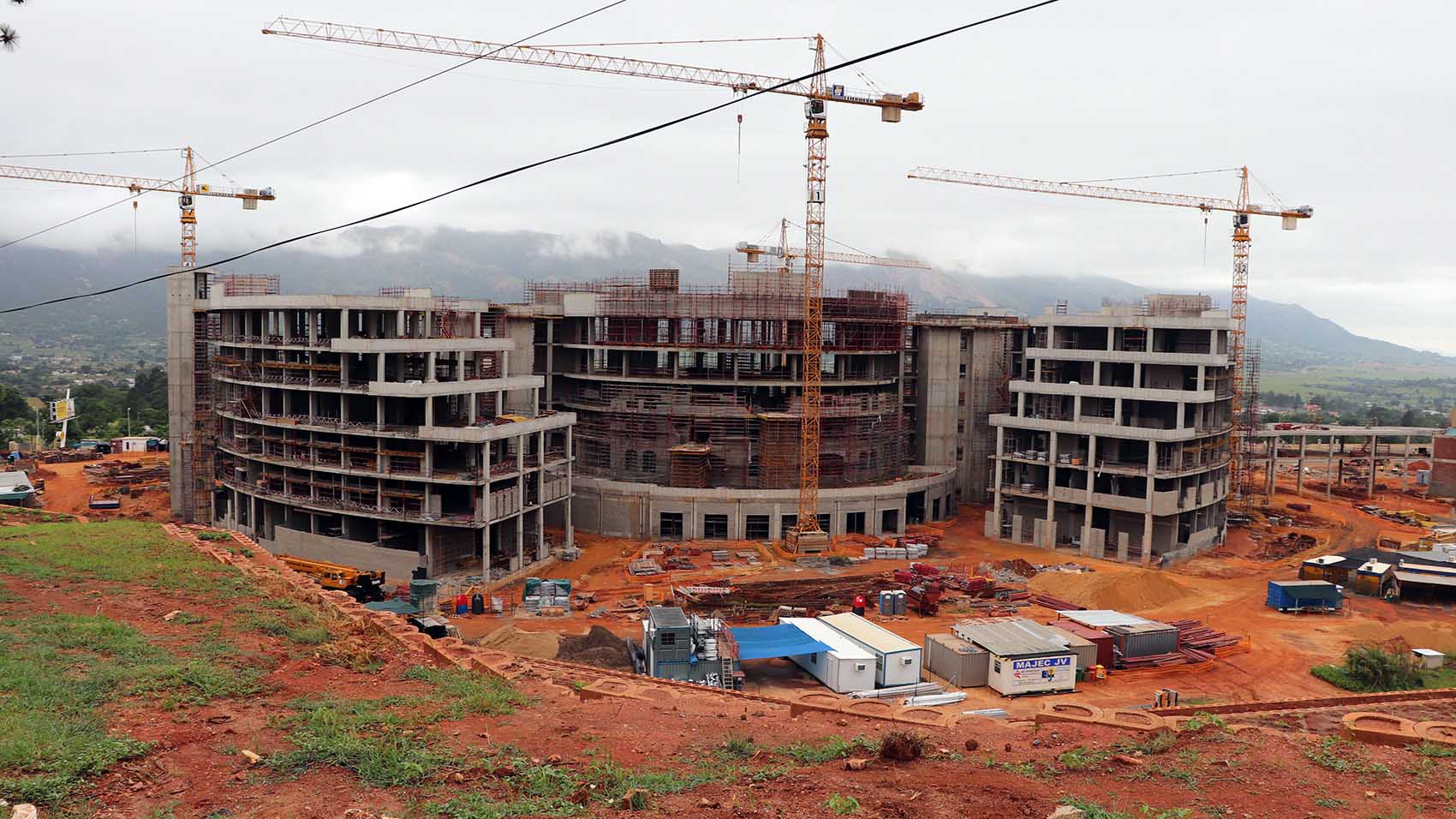
When you want to construct or alter a building in Eswatini, you are required by the Building Act of 1968 to seek the approval of the appropriate Local Authority.
The exception is you do not seek approval for a dwelling occupied solely by the owner (household) for developments outside controlled areas.
You need to have a building permit for a dwelling being constructed in the urban areas and in controlled areas, all buildings used for public – purposes such as shops, butcheries, restaurants, warehouses, factories, churches, rental dwelling and flats, regardless of where they are built, must be approved through the Act.
The agent
Before seeking approval for the construction of a building, you must first have the building plans approved by an architect draughtsman.
This person will be your agent during the application process. Your agent should be familiar with the Building Act of 1968 and other regulations that will apply to your proposed building. If you have difficulty finding an agent, consult your local authority and they will refer you to a qualified agent.
The application
The agent will fill out the building application form (Form A). These forms can be obtained from the Local Authority Office or the Ministry of Housing and Urban Development in Mbabane.
Controlled areas
In the present Act controlled areas have been gazetted as follows:
1. An area falling within the urban boundaries of any city or town.
2.The area extending 366m on each side from the centre line of the Oshoek – Manzini Road.
3.An area or a building in rural areas intended to be used for public purposes e.g. shops, churches.
Submission of the application
When you submit your application to the appropriate local authority, you should submit a complete application that includes, among other things:
1. The application form;
2. Working drawings;
3. A site plan showing access to the public road, existing buildings, plot boundaries;
4. Allocation map;
5. All sewerage, drainage and water plans;
6. If required by the local authority in the case of structural frameworks, the attachment of a structural engineer to your project.
Four copies of all these documents are required. One set of drawings should use the conventional building/construction colour codes. In addition, there is an application fee that must be paid. This fee is paid on submission of the application.
Delays in the processing and approving of the application are sometimes caused by incomplete applications and by proposed building alterations that are not in compliance with the building regulations. Please refer to the Building Act of 1968, local building regulations, and consult your Local Authority on specific requirements of the building application.
Application review & approval process
As the diagram below indicates, the building application process has several stages. After the application is sent to the City or Townships Engineer’s Office.
The application is immediately forwarded to several government departments and public utilities for comments.
These recommendations are based on the function of the department or public utility. For example, the public health inspector looks at health related issues such as sanitary facilities and ventilation.
All the recommendations are compiled by the City or Townships Engineer. He or she might have comments on additional issues that need to be considered by the Local Authority.
The final decision on the application is made by the appropriate Local Authority. In the Cities of Mbabane and Manzini the building application is decided by the City Councils. All other areas in the Kingdom the decision is made by the Local Authority after a recommendation by the Principal Secretary Ministry of Housing and Urban Development.
Appeals
Any person who is aggrieved by the decision issued by the engineer may appeal to the Building Appeals Tribunal within 14 days after receipt of the notice or decision. Please consult your local authority.
Issued by Urban Government Department, Ministry of Housing and Urban Development, Government of Kingdom of Eswatini.

















Leave a comment