

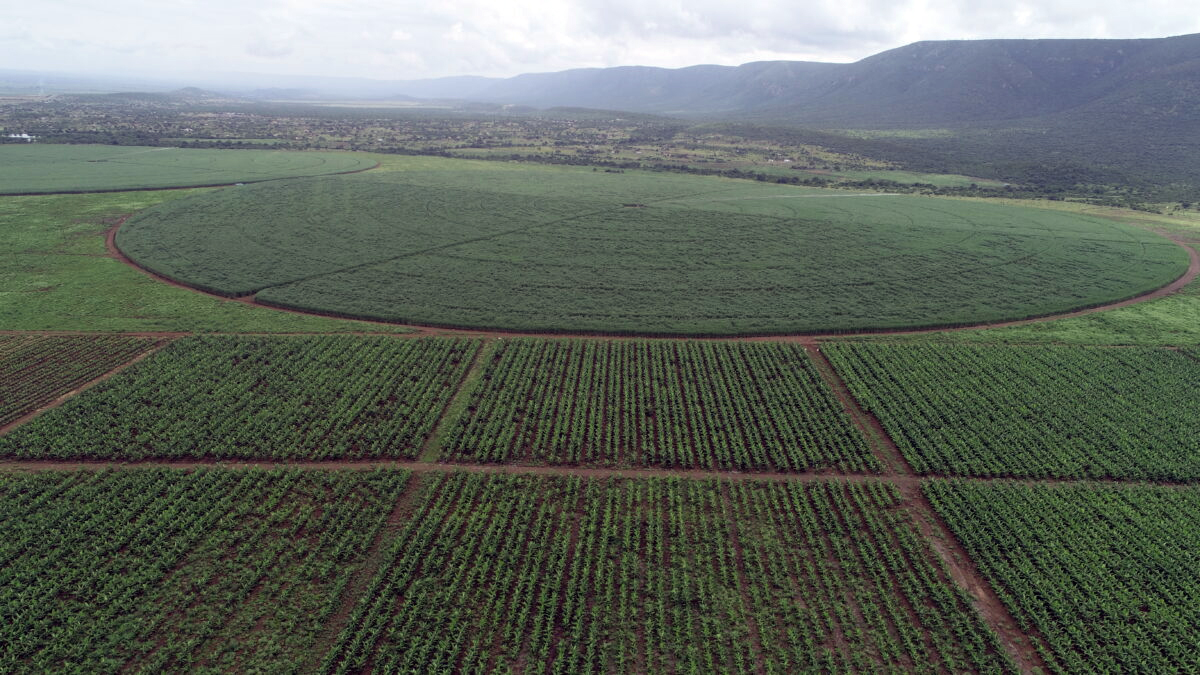
MBABANE – The Lower Usuthu Smallholder Irrigation Project Phase II (LUSIP-II) has delivered its targeted agricultural production outcomes.
The African Development Bank (AfDB) Project Completion Report says the project made significant progress in transforming subsistence farmers into commercial agricultural producers, although delays in developing on-farm infrastructure affected the full realisation of its development objectives.
LUSIP-II, implemented in Eswatini with a total African Development Bank financing commitment of about E855.1 million, was designed to increase agricultural production and household incomes while reducing poverty in the project area.
The project built on the first phase of the Lower Usuthu Smallholder Irrigation Project and focused on expanding access to irrigation water, strengthening agricultural production and establishing market linkages for smallholder farmers.
According to the completion report, the project ultimately achieved its targeted crop-output indicators.
Sugar cane production reached 440 000 metric tonnes against the same target, representing 100 per cent achievement.
Banana production also reached its target of 14 790 metric tonnes, while maize production reached 5 792 metric tonnes and sugar beans 1 622 metric tonnes.
The report rated the project’s development objective as highly satisfactory, although its overall project completion rating was satisfactory.
A major part of LUSIP-II involved constructing the water infrastructure required to support commercial agriculture.
The Main Conveyance System (MCS) included the remodelling of infrastructure from LUSIP-I, a new main supply system, bulk water storage reservoirs and a Supervisory Control and Data Acquisition (SCADA) system.
The project completed 5 988 metres of siphon infrastructure and 33 262 metres of lined main canal, while all five planned bulk reservoirs were completed.
The SCADA system was also established, while four potable water supply schemes were completed and commissioned.
The AfDB report says the completed main conveyance infrastructure became fully operational and supported irrigation covering more than 5 200 hectares.
This infrastructure created the foundation for supplying water to smallholder farmers and enabled the project to pursue its broader objective of moving rural households towards commercial farming.
The secondary irrigation distribution system was also completed and made operational.
However, the report notes that the pace of development was not uniform across the project.
While the main conveyance and secondary distribution systems progressed well, on-farm infrastructure development lagged behind.
This included infrastructure directly connected to agricultural production, such as roads, drainage systems, irrigation equipment and land preparation.
The delays affected the ability of some farmer companies to begin production as originally planned.
Project delayed by two years
MBABANE – Despite the infrastructure and production gains, LUSIP-II took considerably longer to implement than originally planned.
The project was initially expected to take 4.7 years, but actual implementation took 7.5 years.
The completion report attributes the delays to several factors, including the COVID-19 pandemic, which caused an almost two-year disruption.
National unrest during 2020 and 2021 also contributed to implementation delays, while land acquisition and stakeholder engagement took longer than anticipated.
Delays in the release of funds also affected implementation.
In 2024, government had allocated E102.145 million for the project but released E80.023 million.
The report says this shortfall affected progress on some components, particularly farm development and the commencement of planting by targeted farmer companies.
The timeliness component of project efficiency was consequently rated at two, despite other areas receiving stronger assessments.















Leave a comment